Israeli military uploaded millions of photos of Palestinians to Amazon
AI Daily Synthesis
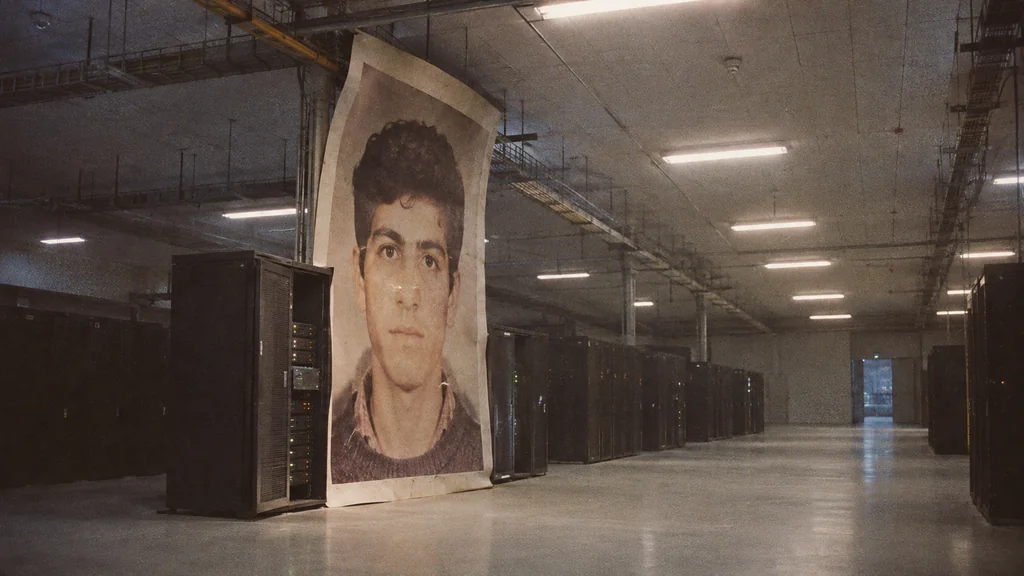
Image composition · tobriefThe Israeli military transferred about 3.5 million photographs of Palestinians to an Amazon data centre near Tel Aviv. In early 2024, it told the company it would use Rekognition, Amazon’s facial recognition service. That is what a Guardian investigation, based on leaked documents and military sources, found. The story extends beyond the war in Gaza. It shows how surveillance of an entire population can rely on the same commercial infrastructure that hosts apps and online shops around the world.
The archive belongs to Rolling Stone, part of an Israeli military software unit. Soldiers’ accounts had already described it as the military’s central intelligence system for the Palestinian population (Breaking the Silence). Israel controls the population registers for Gaza and the West Bank, which is why Rolling Stone had amassed millions of identity card photographs, according to the Guardian (Yahoo).
Two questions about the archive remain unanswered. The figure counts images, not people, and the images’ origin has not been established. The report does not say that all of them came from the registers. Nor does it say they came from checkpoints, as a summary by the Greek news outlet Newsbomb claimed.
From storage to an index
What does “uploaded to the cloud” mean in practice? Imagine moving millions of files into a warehouse. They are there, but no one can yet identify a person by their face. To do that, Rekognition must first “read” each photograph. It detects the face, turns its features into a numerical signature and records that signature in a “collection”. The collection stores the numbers, not the images themselves (AWS). That is the warehouse’s index.
Then comes the search. Someone takes a new photograph, and the service creates its signature. It compares that signature with the entire collection and returns a list of possible matches, each with a similarity score. A result acquires a name only when it is checked against information the user holds, such as an identity register. Amazon itself describes the algorithms as probabilistic and recommends human review before decisions affecting rights or access (AWS).
That distinction matters. Storage alone does not activate any of these functions. Someone must invoke them or set up separate automation that starts them when a file is uploaded (AWS S3). The documents show a transfer and a stated intention. They do not show whether the archive was ever indexed or searched.
How the technology had already been used
The military was not starting from scratch. In 2023, Amnesty International documented facial recognition systems at checkpoints in Hebron, a city in the West Bank. They photographed Palestinians without consent, and their results could lead to delays or arrest (Amnesty). An academic study published this month records that even children were photographed (IJMES).
During the war, the technology reached Gaza. In the war’s early stages, Rekognition was used to identify Israeli hostages and people the military considered suspected militants. At makeshift checkpoints, soldiers photographed displaced people and matched their faces against Rolling Stone’s databases. The Guardian’s documents show that Amazon Web Services (AWS) infrastructure supported this operation at times (Yahoo). The cost of a mistake had already become clear: in 2024, the New York Times reported cases in which a different facial recognition programme in Gaza wrongly identified civilians as militants (NYT).
Military sources also spoke of a small group of soldiers who worked on a facial recognition programme for Gaza from AWS’s offices in Tel Aviv. AWS did not deny it. It said customer visits are routine meetings and that it has no “visibility” into what customers run on its servers. The military declined to comment on “services related to operational needs” (Jerusalem Post).
The new revelation adds the scale: an already documented surveillance system is linked to commercial infrastructure of immense size. The location where the archive ended up is known. Nimbus is a 2021 agreement with Amazon and Google to provide cloud services to the Israeli state. It required AWS to provide the military with a separate space in its data centres near Tel Aviv, with stronger digital and physical security. This is the so-called “walled garden”, where Rolling Stone had been transferring data since 2023 (Guardian, 2026). In other words, the archive is in a space the contract created for the military. The same contract also limits the companies’ ability to suspend services, even when they judge that their own terms of use have been breached. A joint investigation by the Guardian, +972 Magazine and Local Call revealed this last year. Such a suspension could be deemed discriminatory and lead to penalties (Guardian, 2025).
Amazon says it cannot see what customers do on its servers. Under the Nimbus terms as described in the documents, even if it could, it would struggle to stop it.
Details about this article
- Model:
- claude-opus-5-5
- Generated:
- 11/16/2026, 6:23:05 PM
- Pipeline run:
- incremental_20261116_163014
- Watermark:
- SynthID (Google's invisible watermark)
- Human review:
- None before publication