Italy cleared Russia shipment after Polish stop
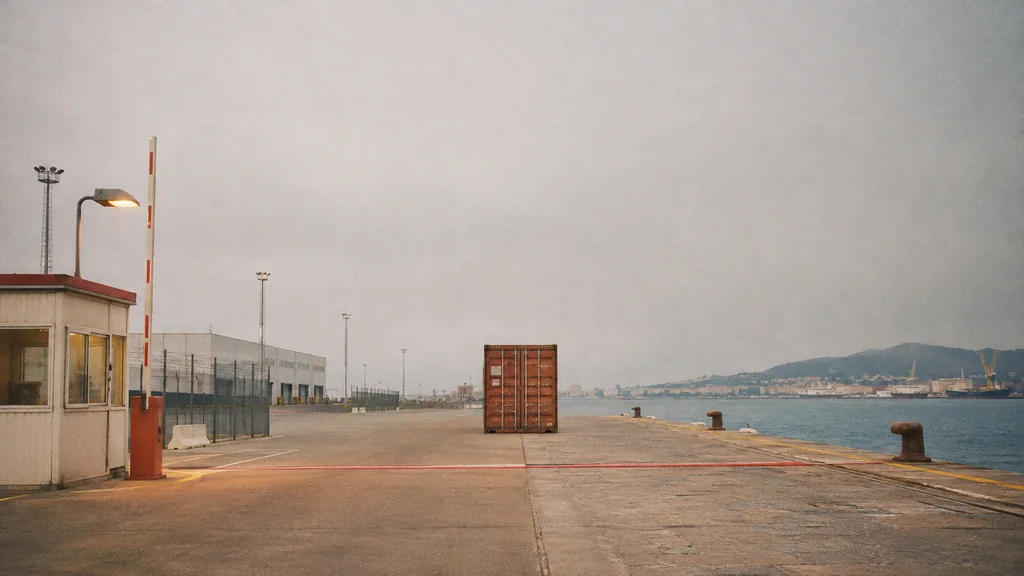
One country stops the shipment; another clears its way to Russia.
Image composition · tobriefItalian customs cleared a shipment bound for Russia under a sanctions exemption. Polish officers stopped it at the EU's edge and sent it back, and Italy then cleared it a second time and let it leave for Russia from an Italian port, according to a report published on 10 November by the European Court of Auditors (ECA report). EU sanctions have slashed direct trade with Russia, but each country's customs service still decides for itself, and the Commission says it cannot overrule an individual clearance.
The Court of Auditors is the EU's independent audit body. It examines how EU money is spent and EU rules are applied, but its findings carry no legal force, and this report proves no crime. The public account names neither the goods, the exporter, the end user nor the Italian officials who signed off, and no penalty or court ruling has found the re-export unlawful.
A stop at one border, a clearance at another
The exporter relied on an exemption in Regulation 833/2014, the core EU law restricting trade with Russia, which permits some narrow non-military uses. Exporters declare such exemptions themselves instead of applying for a licence in advance (Commission customs FAQ). Italian customs accepted the claim, so no individual export licence was required (ECA report).
Goods stay under customs supervision until they physically leave the EU. That rule lets officers at the exit point stop cargo another country has already cleared (Commission customs FAQ). Polish officers did exactly that, and the shipment went back to Italy. Italian customs cancelled the original declaration, cleared the goods again and released them.
The published account does not say what the Polish officers objected to, or whether Italy dealt with that objection before signing off a second time. Italian clearances met resistance elsewhere too. Lithuanian customs stopped another shipment that Italy had cleared under the same exemption, according to Rapporteur, though what happened to it next is not reported.
The auditors warn about forum shopping, meaning exporters route goods through whichever customs office is most accommodating. The route alone does not prove this exporter did so. When Polish and Italian officers disagreed, nobody above them settled it. The Commission told the auditors that individual clearances belong to member states and that it had no mandate to intervene (Bursa).
Trade collapsed, but the checks never lined up
The sanctions have bitten. EU–Russia goods trade fell from €252.8 billion in 2021 to €58.3 billion in 2025, and direct exports of the goods most useful to Russia's defence industry have virtually stopped since 2023 (ECA report). The auditors do not credit the whole fall to sanctions, and they cannot say how much Russia's war capacity suffered.
Countries do not check the same way. Bulgaria recorded zero breaches since 2022 among goods from other member states leaving through its customs, while Latvia logged about 2,100 such irregular shipments in 2024 alone (ECA report, Eurocom). With no common count of shipments inspected, that gap does not prove Bulgaria waves cargo through. It does mean nobody can compare national enforcement with confidence.
Part of the problem is wording. Customs law and sanctions law sometimes use different terms, and the Commission's guidance is advice rather than binding law. An exemption that looks valid in one office can look doubtful at the next border.
Who holds the stamp
The division of power explains the deadlock. Governments adopt sanctions together in the Council (where national ministers decide), but national officers inspect cargo, judge exemptions and prosecute breaches. The auditors recommend that the Commission clarify ambiguous rules and examine national differences by 2027, then set common monitoring criteria by 2028 (ECA report, Paperjam). These are recommendations, and the auditors cannot order anyone to act on them.
The Commission replies that it has already strengthened coordination and guidance, and it points to a new EU Sanctions Office (ANSA). Coordination and guidance shape how officers read the rules. They leave untouched the point the Commission itself made to the auditors: the decision to release a shipment stays with national officials.
The sanctions cut direct trade with Russia hard, but an exemption is only as tight as the most lenient customs office willing to accept it. A Polish objection did not stop an Italian clearance, and under the current rules no EU body had the power to settle the disagreement between them.
Details about this article
- Model:
- claude-opus-5-5
- Generated:
- 11/11/2026, 2:07:31 AM
- Pipeline run:
- eu_pipeline_20261111_005008
- Watermark:
- SynthID (Google's invisible watermark)
- Human review:
- None before publication