Kulbergs leads at 35.6%, coalition unclear
One uncertain share of the vote could reshape Latvia’s next government.
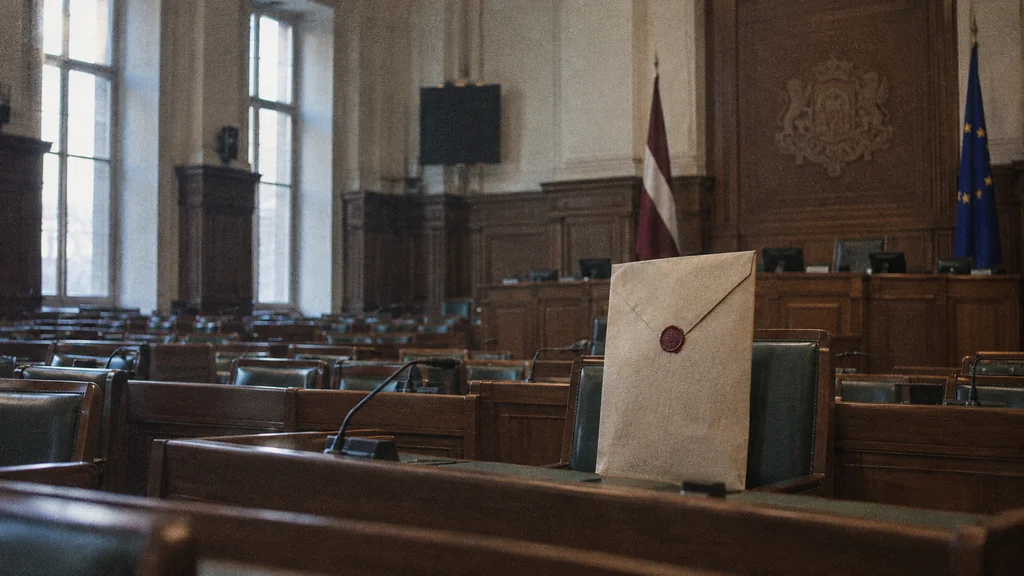
Image composition · tobriefPrime Minister Andris Kulbergs's United List took 35.6% in a joint exit poll after Saturday's vote, more than 24 percentage points ahead of its nearest rival (Apollo/LETA, BNN). The lead makes him the clear favourite to form Latvia's next government. It does not tell him who his partners will be, because hours after polls closed there was still no official seat count.
One small party could change the arithmetic
Behind United List, five parties bunched together, from Latvia First at 11.3% down to New Unity at 6.7%. All of them cleared the 5% of the national vote a list needs to win any of the 100 seats (Delfi/LETA). The Union of Greens and Farmers fell short at 3.7% (Rzeczpospolita).
That small number carries more weight than it looks. Pollsters questioned more than 6,500 voters, and about 30% refused to say how they had voted (Apollo/LETA). Refusals ran higher in Zemgale, the region where the Greens and Farmers traditionally do well.
If those silent voters lean the way the region usually does, the party's real share could sit closer to the threshold than the poll suggests. Nothing in the data says by how much. The poll also missed everyone who voted before Saturday, more than 169,600 people (LSM). Their ballots will be counted even though the survey never captured them.
The count itself started late. Some citizens who voted early also voted on election day, and only a person's last ballot counts, so officials first had to check the electronic voter register for those double votes. According to TVNET, counting got under way across the country only after several hours of delay. The reports describe a slow start rather than any dispute over ballots. They do not show that the count has been checked and confirmed.
Partners matter more than percentages
A majority in the Saeima, Latvia's 100-seat parliament, is 51 votes. Seats are shared out across five electoral districts once the threshold has removed the small lists, so poll percentages do not convert neatly into seats (BNN).
The poll still points to plausible partners. Polish coverage sketched coalitions built on United List and the nationalist National Alliance, joined by either the centre-right New Unity or the liberal Progressives (Rzeczpospolita). Both options leave out Sovereign Power/Young Latvians. Euronews described that party as critical of support for Ukraine and of higher defence spending (Euronews Polska).
Those routes assume the Greens and Farmers stay out. If they clear the threshold in the real count, they take seats from every other party, and each possible coalition has to be worked out again. A party that looks surplus tonight could become necessary, or the reverse.
Kulbergs had not commented on possible partners by election night, Germany's Deutschlandfunk reported. His silence fits a leader who knows his options depend on numbers he does not yet have.
Watched from Tallinn to Vilnius
Latvia's neighbours followed the night closely. Estonia's public broadcaster ERR framed the race partly as a contest between east-facing and west-facing views (ERR). Lithuania's LRT had already forecast difficult coalition talks (LRT). Polish and German outlets carried the exit poll within hours.
The attention reflects a regional interest in how Latvia's next cabinet will lean. No coalition deal or programme has answered that yet. The party most sceptical of Ukraine aid has no agreed route into government, and none of the partners the poll points to has signalled a change of course.
Certification will decide how much room Kulbergs has. If the Greens and Farmers stay below the threshold, the coalitions the poll already suggests remain open, and he can choose among parties that broadly share his direction. If they get in, he will face a more crowded chamber and harder bargaining over every seat he needs. The Central Election Commission's final table will show which of those governments Latvia gets.
Details about this article
- Model:
- claude-opus-5-5
- Generated:
- 10/4/2026, 2:00:44 AM
- Pipeline run:
- eu_pipeline_20261004_005006
- Watermark:
- SynthID (Google's invisible watermark)
- Human review:
- None before publication