Kyiv heat plant hit as launch warnings fail
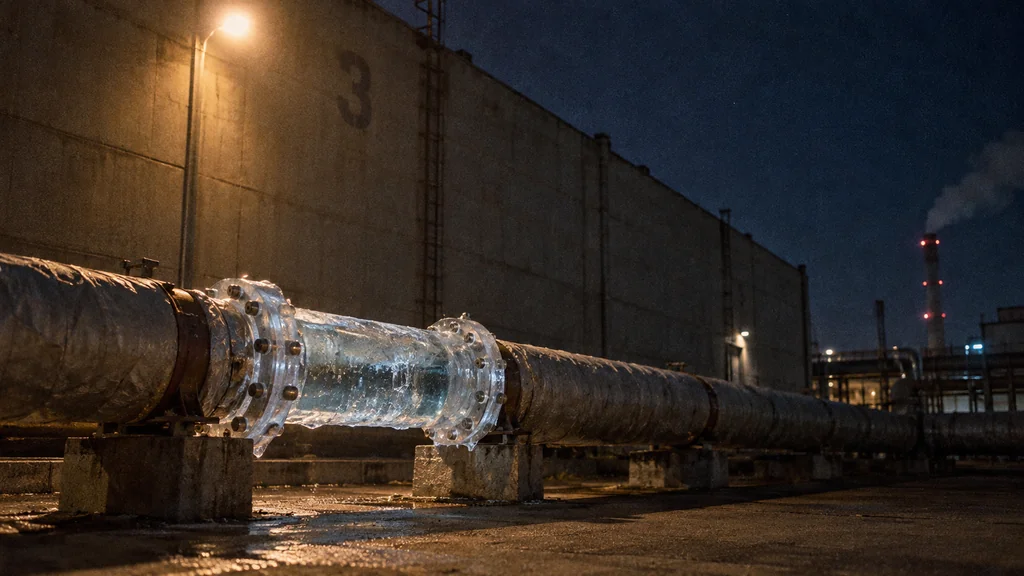
Kyiv waits to learn how much warmth the strike has taken.
Image composition · tobriefA Russian ballistic missile struck Kyiv's Darnytsia combined heat and power plant No. 4 at about 22:40 on 13 October, according to President Volodymyr Zelenskyy. He said allies again sent no launch warning (Ukrainska Pravda, Radio Svoboda). Other outlets have repeated his account, but nobody has published what the missile damaged. Residents of a city heading into winter do not yet know how much of their heating was lost.
The same attack hit a nine-storey apartment building. Citing Mayor Vitali Klitschko, the BBC reported one person killed and 13 injured, four of them seriously (BBC). That toll excludes a separate morning incident, when debris from intercepted targets damaged a private home and injured one woman (TSN).
Why this plant matters
A combined heat and power plant makes electricity and also the hot water piped into radiators across whole districts. This one serves Kyiv's Dniprovskyi district and parts of Darnytskyi, and when a strike hit it in February 2026, more than 1,000 buildings lost heat and hot water, including schools and medical facilities (BBC).
Whether this hit is worse or milder is unknown. No operator or city bulletin has put a figure on lost output, homes newly without heat, or a repair timetable (Radio Svoboda). Kyiv already had scheduled power cuts that day, but grid operator Ukrenergo and the utility DTEK set them before the strike, so they say nothing about this damage (Suspilne).
A ceasefire nobody signed
The strike landed in the middle of an argument about a truce. Donald Trump declared an energy ceasefire on 11 October. Asked why neither Kyiv nor Moscow had confirmed it, he replied, "They agreed because I said they agreed" (Kyiv Independent).
Zelenskyy had offered to stop striking Russian refineries if Russia spared Ukraine's grid. The Kremlin has spoken only of continuing contacts. Zelenskyy says Ukraine held fire on Russian energy sites for two days (AP).
No published document sets a start time, defines which plants or weapons count, or names who checks for violations. Kyiv calls the strike a breach, but a breach requires terms. By Zelenskyy's account, Russia hit a heat plant during a pause Moscow never publicly accepted.
The warnings that did not arrive
Zelenskyy's second complaint concerns the missiles themselves. After the first strike, on 12 October, Air Force spokesperson Yurii Ihnat said no launch data came from partners and Ukrainian radar picked up the missiles only mid-attack (Ukrainska Pravda). A ballistic missile reaches Kyiv within minutes, so Ukraine relies on allies, chiefly American satellites, to flag launches. A Norwegian specialist quoted by Reuters said Europe has far less capacity than the US to provide that kind of space-based warning (Reuters via TimesLIVE).
The explanations conflict. Politico reported that US personnel blamed bad weather for the first gap, an account Kyiv doubted (Politico). Foreign Minister Andrii Sybiha denied any general intelligence cutoff, and Trump insisted, "We are helping them, and we are sharing intel" (AP). No public evidence shows that anyone withheld a warning on purpose. Nobody has explained why the warnings failed on consecutive nights either.
European governments are paying to fix what the missiles break. Chancellor Friedrich Merz pledged about €350 million for Ukrainian energy infrastructure on 4 October, covering generators, substations and repairs (German government). That money can help rebuild a damaged plant. It cannot account for a missed launch warning, and Europe has no satellite network of its own ready to fill that gap.
Two answers would tell Kyiv's residents where they stand. The plant's operator owes them a damage assessment stating how much heating capacity was lost and for how long. Washington owes Kyiv an account of what its sensors detected on those two nights, and what it passed on.
Details about this article
- Model:
- claude-opus-5-5
- Generated:
- 10/14/2026, 1:38:30 AM
- Pipeline run:
- eu_pipeline_20261014_005006
- Watermark:
- SynthID (Google's invisible watermark)
- Human review:
- None before publication