Kypseli: Doukas calls for residents to be relocated, Hellenic Metro disagrees
AI Daily Synthesis
Image composition · tobriefAthens Mayor Haris Doukas today called on Elliniko Metro, the state company overseeing the project, to move residents of all the buildings classified as “red” in Kypseli, a neighbourhood in Athens, into safe accommodation immediately, at the expense of the company and the contractor (Avgi). He based his request on a recommendation by experts from the Technical Chamber of Greece (TEE) for immediate work on the foundations of the building at 92–94 Spetson Street. According to Athens Transport, the company says the experts’ findings do not require residents to move out because of danger (Athens Transport).
The tunnel boring machine for Athens Metro Line 4 remains stopped beneath Kypseli while subsidence and cracks in the buildings above it are investigated (Imerisia). In a temporary order on 8 October, the Athens Court of First Instance had granted residents’ request to receive the studies and expert reports on the damage (Flash,).
What the letter says
Doukas addressed the letter to Elliniko Metro chair Spyros Chrysanthopoulos and chief executive Christos Fafoutis. He writes that, according to a letter from the company to affected residents, the experts recommended immediate measures “to improve and restore the support beneath the corresponding foundation footings along the front of the building” (Naftemporiki). Footings are the wider parts of the foundations that support the columns. The mayor then gives his interpretation: “In other words, they are pointing to an immediate danger” (Athens Voice).
The letter gives 92–94 Spetson Street as an example but does not list the other “red” buildings. A letter from the contractor, AVAX, signed by project director Miltiadis Bougalis, had conveyed the recommendation to residents. Efimerida ton Syntakton, which published the letter on 13 November, noted that TEE’s expert assessments of the buildings had yet to be completed (EfSyn).
The response: residents would move only for the work
As Athens Transport reports, Elliniko Metro plans to move residents temporarily only where the work requires it, not because the buildings are in danger (Athens Transport). That same day, Infrastructure Minister Christos Dimas said, “There is no structural stability issue, there is no danger,” attributing that assessment to specialists and TEE. His main argument was that, if there were a danger, evacuations should already have taken place. He added that the contractor would pay the cost if an evacuation were needed (Flash).
Dimas made the remarks in an interview during which he debated live with Alexandros Koutroularis of the Kypseli Residents’ Initiative. The minister said the company had sent 16 reports to the City of Athens, with a request that they not be circulated more widely. Koutroularis replied that residents still could not make them public because of a confidentiality clause. In his reading, the reports call for structural studies under KAN.EPE., Greece’s code for assessing and strengthening existing buildings (Flash).
What is happening on Spetson Street
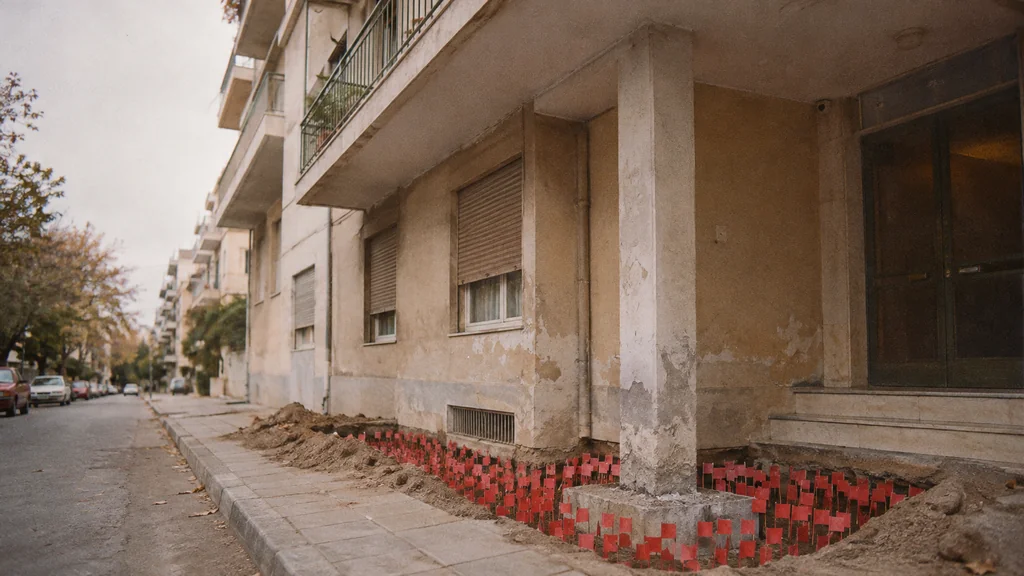
At 92–94 Spetson Street, crews are exposing beams and columns and opening access to the foundations to determine whether reinforcement is needed. Imerisia describes the work as investigative rather than repair work. One possible next step is to inject cement grout into the ground. The final method awaits approval from the relevant bodies and independent experts (Imerisia).
Residents give a different account. According to the Initiative, the work began with material being stripped from columns and continued with excavations and sampling without residents being informed. Its lawyer, Ioannis Kampagiannis, asked for an explanation in writing and received no reply. The same statement says that, when residents gathered at the worksite on 11 November, the project manager told them verbally that the work was “preparations for restarting”. Work then stopped pending a written response (Flash). Reports said that temporary support was planned at 92 Spetson Street (Ta Nea). Residents say no structural study had been completed and they remain in the building without that support (Flash).
Residents’ technical adviser Nikos Krasakis argues that cracks, including in load-bearing parts of the buildings, reduce their ability to withstand an earthquake and require studies of structural adequacy, repair and reinforcement. He estimates that about 20 buildings have been affected between Kypseli Square and the point where the tunnel boring machine stopped (To Vima).
According to the Ministry of Infrastructure’s account, inspections take place at three levels (Insider). The first expert report classified five buildings as “red” at the first level, while the company classified none as “red” at the third: two different assessments by different assessors (Reporter). Deputy Infrastructure Minister Nikos Tachiaos said on 19 October that, if there is a danger, the city’s planning department makes the decision through formal danger assessments. He said the contracting consortium must repair the damage at its own expense (Dnews). City councillor Petros Konstantinou also called today for an evacuation and a meeting of all parties (Athina 9.84).
The ministry does not expect tunnelling to resume before 2027 (Imerisia). Until then, residents of 92–94 Spetson Street are living above footings for which the experts have called for “improvement and restoration” of their support. The mayor reads the recommendation as a warning of immediate danger; the minister sees no danger. Residents say the 16 reports that Dimas says the company sent to the City of Athens remain subject to a confidentiality clause.
Details about this article
- Model:
- claude-opus-5-5
- Generated:
- 11/16/2026, 6:21:02 PM
- Pipeline run:
- incremental_20261116_163014
- Watermark:
- SynthID (Google's invisible watermark)
- Human review:
- None before publication