Latvia’s €116 million rail deadline looms
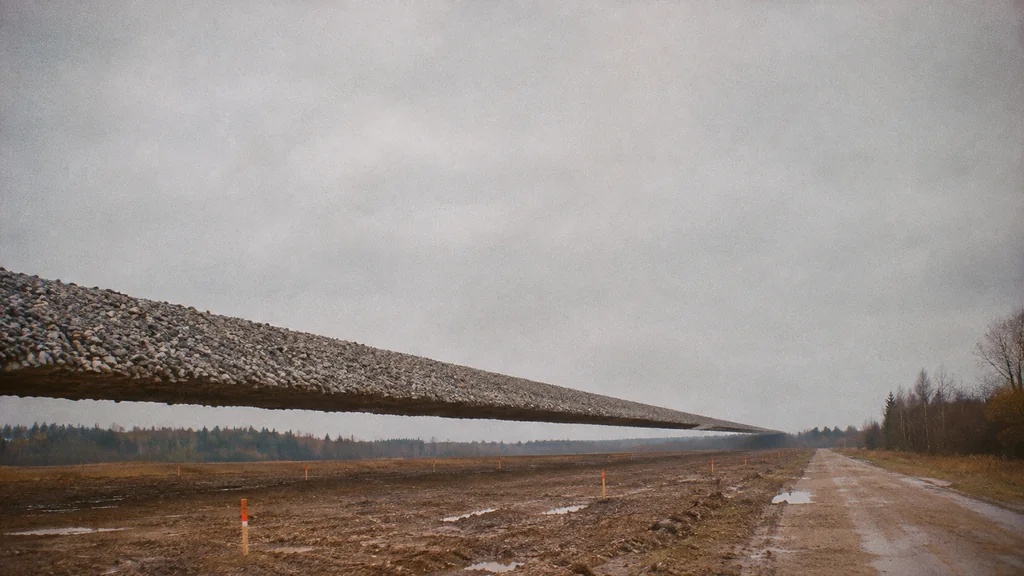
Latvia’s promised rail works remain suspended as the grant deadline approaches.
Image composition · tobriefLatvia risks losing €116 million in EU rail funding because the construction that grant money was supposed to pay for is still not built, and the grant's spending window closes at the end of 2026 under the current terms. TV3's investigative programme reported the risk on Saturday and said officials from the European Commission and its grants agency, CINEA, arrive in Latvia today for a three-day inspection of the sites and the paperwork (TV3).
The money comes through the Connecting Europe Facility (CEF), the EU programme that co-finances cross-border transport, and a grant is a promise to reimburse eligible costs by a set date, not cash handed over up front. The agreement Latvia signed in October 2022 put €124.1 million of EU support toward the first main-line works near the Lithuanian border, with €21.9 million of Latvian co-financing. Its published deadline for eligible work is 31 December 2026, and a 2024 ministry table showed none of the EU money used at that point (Ministry grant table). Money moves only when accepted work is invoiced, so a late embankment and unused money are the same problem. The €116 million is an estimate of exposure, not an announced clawback; the current payment ledger is not public.
A cheque written before the design existed
Latvia signed the deal in autumn 2022, before the final construction designs existed and about a year before it hired a consortium led by France's Eiffage and Poland's Budimex (LTV). When reporters visited the stretch toward the Lithuanian border in May, they found a cleared corridor, access roads and no railway embankment. The prices that later came back were far above the grant's assumptions. Transport ministry deputy state secretary Kristīne Pudiste says some unit prices in the construction contract run several times the market price (TV3). RB Rail, the three Baltic states' joint company, puts Latvia's border section at €10.3 million per kilometre, about 2.3 times the Estonian level and 66% above Lithuania's, a method the ministry contests (LSM). A ministry-commissioned consultancy review identified €108 million, or 24.8%, of potential savings on a 33-kilometre stretch through cheaper design. Those savings stay on paper until the engineering and approvals follow (Ministry).
On 18 August, the cabinet backed a proposal to move the grant's activity deadline to 31 December 2028 and asked RB Rail to submit the change to CINEA; no public document confirms the agency accepted it (Ministry). A cabinet vote changes what Latvia requests, not what the grant says.
Who pays if the deadline wins
If CINEA refuses, the bill lands first on Riga: redesign and any ineligible costs fall to the national budget. The agency can move the freed commitment to other transport projects (CEF regulation). Latvia sits between Estonia and Lithuania, so a missing Latvian stretch delays the value of what both neighbours are building. Estonia's section from Pärnu to the border is scheduled for 2034 (Estonian government); Lithuania's 54 kilometres to the border remains at the design stage (LTG). Latvia is not the corridor's only unfinished piece; it is the one watching a deadline arrive. An accepted extension would let Latvia spend the EU money on the embankment it was meant to buy; a refusal would leave the same link to be financed later while the redirected money serves another project. Where designs and money align, work moves: Poland signed a 4.084-billion-złoty contract in September to upgrade 95 kilometres between Białystok and Ełk (PKP PLK). Across the whole project, the European Court of Auditors put the estimate at €23.8 billion in 2023 prices, up from €5.8 billion in 2017 values, and rated the prospect of full service by 2030 as low (ECA).
Nothing has been taken back yet. The inspection does not decide the money; it tests whether Latvia's two-year extension request arrives with a buildable, affordable plan attached. Whether the money stays with the railway or returns to the EU pot is CINEA's call.
Details about this article
- Model:
- deepseek-v4-pro
- Generated:
- 11/9/2026, 2:20:11 AM
- Pipeline run:
- eu_pipeline_20261109_005008
- Watermark:
- SynthID (Google's invisible watermark)
- Human review:
- None before publication