Latvia seeks immunity for border gunfire
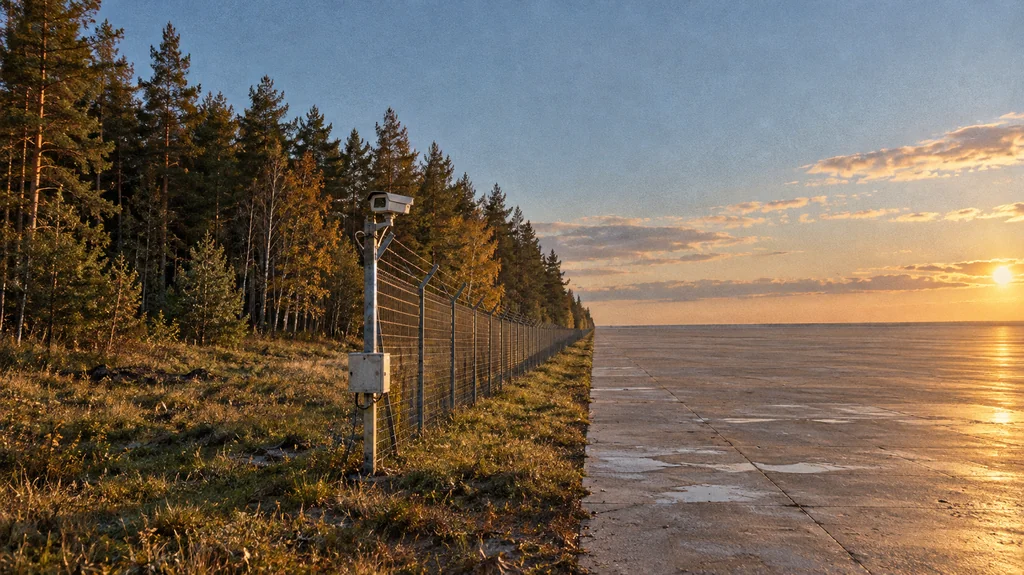
Latvia weighs broader force at a frontier where the evidence remains incomplete.
Image composition · tobriefLatvia's Interior Ministry wants border guards, soldiers and police on the Belarus frontier to be able to use force without warning, and to be shielded from liability when they do. Its main evidence is a sharp rise in damage to border equipment: 61 cases this year against 23 in all of 2025, State Border Guard deputy chief Ivars Ruskulis told parliament on 20 October (Delfi/ELTA). The ministry has not yet explained that count or shown what current law stops guards from doing.
Two numbers, one missing register
The figures have a twin. In mid-September, Daugavpils border official Valdis Jukšs said an August storm had damaged the same fence in 61 places, 23 of them critical (LSM). Jukšs gave 23 as a subset of 61 storm breaches. Ruskulis gave the same pair as totals for two different years.
The match does not prove an error. But no one has published the register behind Ruskulis's tally, defined what one "case" is, or said whether fallen trees count. Until someone does, the rise describes real damage, not necessarily sabotage.
Deliberate damage does happen. Latvian officials say masked men crossed from Belarus, wrecked an electrical cabinet and stole cameras shortly after armed escorts pushed migrants toward Latvian soldiers (To Brief). Nobody has shown how many of this year's cases look like that.
What the draft would change
Under the ministry's draft, an officer could use a firearm, explosives, physical force or a service dog without warning in two situations: when defending against an attack, or on detecting actions that threaten border security or infrastructure. Officers would be exempt from civil, criminal, administrative and disciplinary liability, and the draft's own check is written notice to prosecutors within 24 hours if someone is wounded or killed (ReTV).
That trigger defines when force could be used without a warning. It would not settle whether a particular shot was proportionate, and that question is where the fight lies.
Ruskulis's case is about seconds. A guard may be close to someone smashing a camera, he argued, yet lose him while shouting a warning and firing a warning shot. By then the person is running back into Belarus (LSM). Officers on the ground describe the same hit-and-run pattern.
The broadcaster paraphrased him as saying weapons are allowed only against armed attacks that threaten a guard's life. The statute says more. The State Border Guard Law already permits firing to detain someone who crossed the border illegally when no other means exists, and it lists situations where no warning is required (likumi.lv).
That matters for his example. A saboteur who slipped over from Belarus has crossed illegally, so the existing detention power already reaches him. The ministry has not said which existing no-warning exceptions fail to cover that moment. What the draft adds is a new no-warning trigger tied to equipment, plus immunity.
Latvia's own institutions push back
The sharpest objection came from the Prosecutor General's Office. An ordinary amendment, it said, cannot switch off criminal review of whether force was proportionate (TVNET/LETA). That cuts directly against the immunity clause.
Others pressed on narrower points. The Foreign Ministry warned of a clash with the European Convention on Human Rights (the treaty enforced by the Strasbourg court). The Ombudsman objected to covering a dog and a gun with the same broad wording. Parliament's own lawyers asked the ministry to name the precise power it lacks. The committee sent the text back for a narrower joint redraft within a week (ReTV).
Brussels has offered no shortcut. Prime Minister Andris Kulbergs says the Baltic states and Poland want EU-level legal protection for border personnel. At their 15–16 October summit, EU leaders only welcomed the Commission's intention to work on crisis rules for borders, which it has yet to propose, and promised to return to the subject (European Council). They granted no immunity and lifted no duty to investigate a death.
The record supports a narrower verdict than the ministry's pitch. Hit-and-run sabotage on the Belarus border is real, and guards may well need clearer rules for it. But the ministry has not shown how many reported incidents were deliberate. Nor has it identified a situation that current law, with its existing power to fire to detain illegal crossers, cannot handle. Before the redraft returns, the Border Guard owes parliament its register, and the ministry owes it that missing case.
Details about this article
- Model:
- claude-opus-5-5
- Generated:
- 10/25/2026, 1:25:28 AM
- Pipeline run:
- eu_pipeline_20261025_005006
- Watermark:
- SynthID (Google's invisible watermark)
- Human review:
- None before publication