Latvia Weighs €4.9m Amid Ammunition Scandal
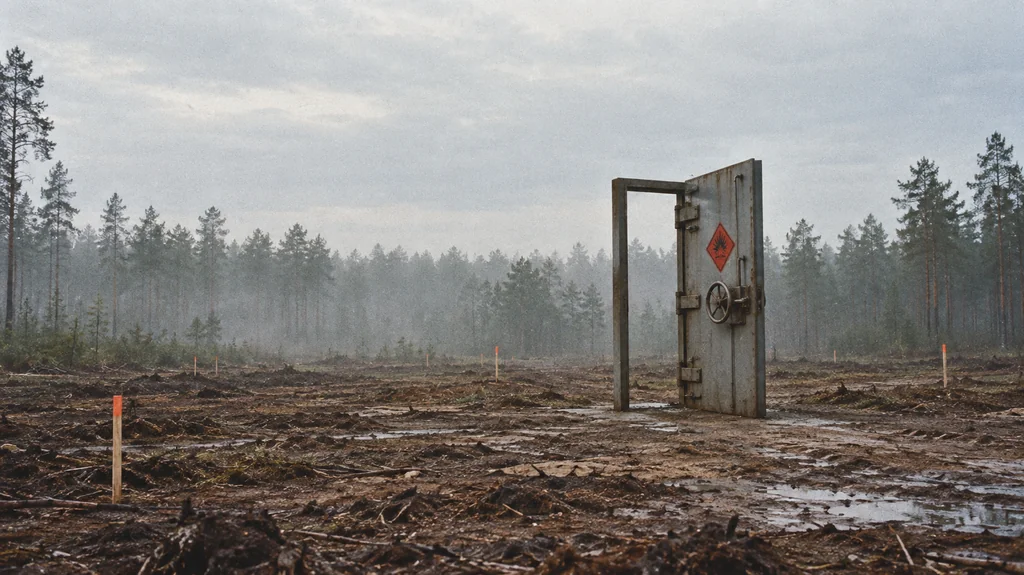
Latvia’s safeguards remain open while public money waits at the threshold.
Image composition · tobriefTwo former Estonian defence procurement officials now run a proposed munitions factory in Latvia. Latvia's state development bank is evaluating public support. On the public record, Latvia has offered reassurance while withholding the checks behind it.
Magnus-Valdemar Saar was director-general of Estonia's Centre for Defence Investments (RKIK, the agency that purchases military equipment). Katri Raudsepp was his deputy. Together they oversaw a procurement that advanced nearly €60 million to an unproven supplier for artillery shells that never reached Ukraine (Riigikontroll). Both left RKIK by mid-2025. By March 2026, both held management positions at Wolfram Europa, a company proposing to build a warhead and explosives complex near Jēkabpils in eastern Latvia (LSM, TVNET).
What the Estonian record shows
Starting in August 2024, RKIK paid advances to an Italian-registered company called Datasel for ammunition destined for Ukraine. Estonia's National Audit Office later found problems with €71.6 million of €72.1 million in outstanding supplier advances (Riigikontroll, Euractiv). Datasel had never produced large-calibre shells.
The central fact: RKIK cannot show why it selected Datasel. Its files do not reveal who checked the company's finances or production capacity. Nor can it reconstruct who approved the choice (ERR). Not a single usable round reached Ukraine. The first €15 million advance came from the European Peace Facility (the EU's off-budget fund for military aid), and Estonia now faces having to repay those sums (ERR). On 10 September, Estonian authorities announced the European Public Prosecutor's Office would take over the investigation. No one has been charged.
The gates Latvia hasn't opened
Wolfram promises up to €200 million in investment and around 200 jobs (Dienas Bizness). Three separate Latvian institutions sit between that promise and public commitment, and none has shown its work.
Latvijas valsts meži, the state forest manager, controls building rights on the proposed site. Whether it has formally granted them or is still evaluating the application has not been clarified. ALTUM, Latvia's state development bank, is evaluating approximately €4.9 million in public support, according to LSM. ALTUM has not approved the funding. Latvia's Defence Ministry told Latvian Television it discussed the Estonian controversy with Wolfram after the scandal became public and saw no reason to change its favourable view. Whether that opinion is a formal prerequisite for ALTUM's decision or political backing without legal force remains unclear.
None of these three bodies has disclosed whether it contacted Estonian authorities, examined Saar's and Raudsepp's records, or checked who owns Wolfram and where its money will come from. No memorandum or source-of-funds review has been published.
The Latvian subsidiary was registered in January 2026 with share capital of €2,800 (Dienas Bizness). Wolfram has named no bank facility, construction contractor, technology licensor or financier backing its programme. The defence ministry is not an investor or guaranteed buyer (Resilience Media).
Before the money moves
Saar argues the Estonian dispute concerns his former public office and should not affect the Latvian project. The two appointments do not prove that Wolfram will repeat Datasel's failures, and no evidence links the two companies' supply chains or finances. But that is precisely why documented checks matter: only a vetting record can separate a clean project from a pattern.
Latvia can still demand that evidence before approving support. ALTUM can attach milestones, guarantees or clawback conditions. The forest manager can require ownership disclosure before finalising land rights. Each gate remains open. Once land, subsidies and political endorsement are committed, the incentive to ask hard questions drops sharply.
Europe is spending heavily to rebuild ammunition capacity, and the urgency is real. Estonia's case shows what happens when urgency replaces basic procurement discipline. Latvia's defence ministry, ALTUM and Latvijas valsts meži each owe the public a documented answer to a direct question: what did you check, and when?
Details about this article
- Model:
- claude-opus-4-6
- Generated:
- 9/14/2026, 1:38:48 AM
- Pipeline run:
- eu_pipeline_20260914_005006
- Watermark:
- SynthID (Google's invisible watermark)
- Human review:
- None before publication