Lecornu’s budget needs Socialist abstention
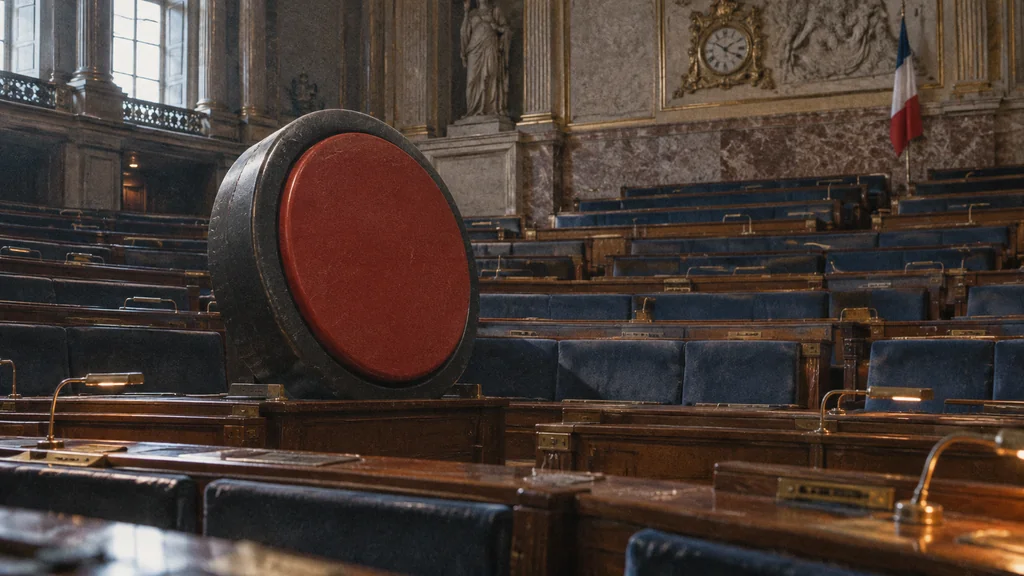
France’s budget may survive on votes its opponents choose to withhold.
Image composition · tobriefPrime Minister Sébastien Lecornu has no majority in the National Assembly, France's lower house. His budget for next year therefore survives only if enough opponents decline to bring him down. The Socialists have named their price, which is a budget that asks more of wealthier taxpayers. Employers are pushing the other way, and Assembly debate opens on 13 October (AEF).
What the government is asking for
The government wants the deficit to fall from a forecast 5.4% of GDP this year to 5.0% in 2027 (French government). Even that would leave France well above the EU's 3% ceiling (EUR-Lex).
To get there, ministers presented €43 billion of new savings and tax measures on 1 October. They call the package a €54 billion effort by adding €11 billion from earlier measures now taking effect (French government, To Brief).
The government's effort figures are measured against what next year would cost if nothing changed. Actual spending does not fall by anything like those sums. The figures count money not spent compared with that projection.
Two attacks from opposite sides
Patrick Martin, president of the employers' federation Medef, puts the cost to business at nearly €20 billion and says the budget will deepen France's economic weakness (Franceinfo). Medef has not published how it reached that figure, so it is an employers' estimate, not a line in the bill.
Some pieces can be checked. Firms get discounts on their payroll charges. Counting profit-sharing payments when those discounts are calculated would cost companies about €3.7 billion, according to BFMTV.
The Socialists see the opposite problem: big companies paying less. A surcharge on large-company profits survives and would raise about €5 billion in 2027, but the government itself describes it as roughly a third smaller than in earlier years (Budget Ministry). A tax can still bring in billions while bringing in less than before. Without Medef's workings, nobody can say how its total treats that cut.
On 2 October, the Socialist leaders in both houses of parliament and party leader Johanna Rolland wrote to Lecornu demanding changes "without delay" (Le Monde). Their letter alleges that pensioners pay before high earners, that benefits for the poor are frozen while inherited wealth gets relief, and that most of the savings fall on middle and lower incomes (Libération).
They want a lettre rectificative, the government's formal rewrite of its own bill, before debate opens. They also argue that they helped make the 2026 budget possible. Without changes, they warn, Lecornu could pass this one only with at least the passive support of the far-right National Rally, which they call a political and moral mistake before the presidential election (Libération).
Why abstaining is the Socialists' weapon
The Socialists can help bring the government down by voting for a censure motion, or let it survive by abstaining. A motion passes only with 289 votes, an absolute majority of the 577-seat Assembly, and abstentions count for nothing (French Constitution). The Socialists never have to vote for the budget. They only have to stay out of a yes vote alongside the National Rally and the rest of the left, and the final count still depends on every other group.
Lecornu has pledged not to use Article 49.3, which adopts a bill without a vote unless a censure motion succeeds. Before the presentation, however, Le Figaro reported that it remained a fallback.
Brussels cannot settle this fight. France has been under an excessive-deficit procedure, the EU's process for disciplining overspending governments, since 26 July 2024, with 2029 set as the horizon for correction (Council of the EU). The Commission judges the overall spending path, not whether pensioners or corporations carry it. That choice belongs to Paris.
Investors are watching too. The gap between French and German ten-year borrowing costs reached about 1.5 percentage points on 2 October (Agefi). The same week brought heavy selling of government bonds from the US to Europe (Corriere della Sera), so the budget's own effect cannot be separated out.
The Socialists have made the question of who pays the condition for holding back from censure. Lecornu can shift the burden without dropping his 5.0% target (French government), but each concession needs offsetting savings or taxes elsewhere, or the deficit lands higher. He owes the Socialists an answer on a rewrite before debate begins. Whether that answer keeps him in office also depends on MPs he has not yet had to win over.
Details about this article
- Model:
- claude-opus-5-5
- Generated:
- 10/3/2026, 2:07:38 AM
- Pipeline run:
- eu_pipeline_20261003_005006
- Watermark:
- SynthID (Google's invisible watermark)
- Human review:
- None before publication