Leipzig DNA trail reaches parcel bombs
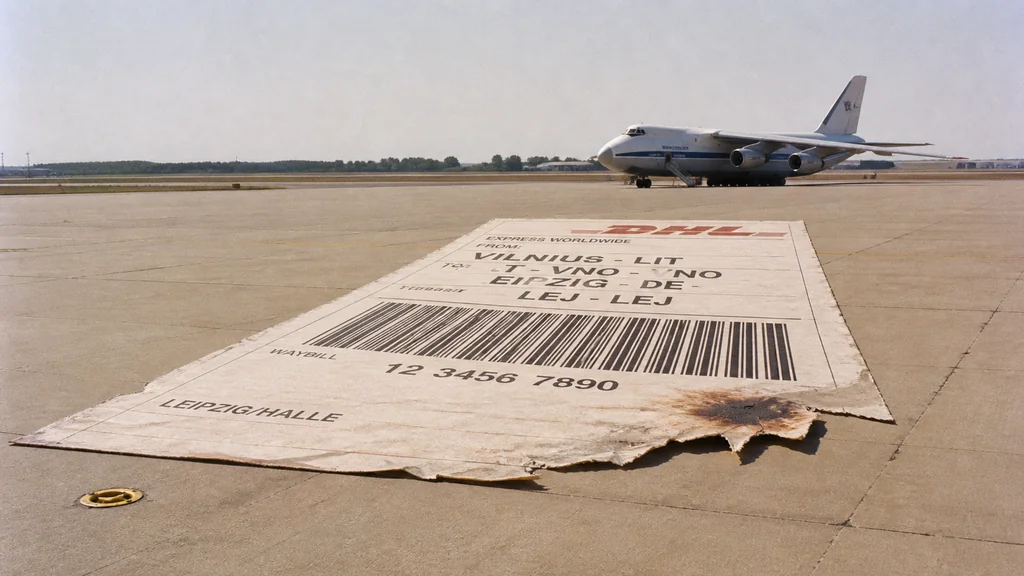
A reported DNA match stretches across two attacks on European freight.
Image composition · tobriefA reported DNA match has pulled the Leipzig airport drone attack toward an earlier parcel-bomb investigation. The link matters because it may connect two different forms of attack on European logistics routes across two years. German prosecutors have not confirmed it (t-online, Euronews).
On 4 August, an explosive drone struck the wing of an Antonov cargo aircraft at Leipzig/Halle airport, bounced off and failed to detonate. An airport worker found the separated charge nearby (Tagesspiegel). Germany's Federal Public Prosecutor, the office that handles terrorism and state-security cases, took over, citing suspected attempted detonation and dangerous interference with air traffic (Presseportal/GBA).
Now forensic material recovered from the drone reportedly matches DNA from the investigation file behind Europe's most concrete hybrid-sabotage prosecution to date.
The parcel case the DNA points to
In July 2024, four parcels carrying incendiary devices were sent from Lithuania toward the UK and Poland through DHL and DPD freight routes. One ignited at Leipzig airport. Another caught fire in a British warehouse. A DHL security executive testified in Vilnius that the Leipzig parcel detonated on the ground only because the flight was delayed: the plane was due to depart at 05:30, and the device fired at 05:43 (LRT, Yahoo/BNS).
Eurojust, the EU agency that helps national prosecutors coordinate cross-border criminal cases, assembled a joint investigation team. That team identified 22 suspects and found further devices in Latvia and Estonia (Eurojust). BBC reporting based on case documents described suspects allegedly paid to move RDX explosives and drone parts suitable for carrying a bomb (BBC).
Lithuanian prosecutors have gone furthest with attribution, stating that the parcel attacks were organised by Russian citizens linked to Russian military intelligence. Five defendants now face terrorism charges in Vilnius. That attribution applies to the 2024 parcel case. It does not automatically extend to the 2026 drone (LRT).
What a DNA trace can and cannot do
Lithuanian and German media report the DNA was previously registered in Lithuania and matches material from the Leipzig parcel file (15min, MDR). But several outlets stress that no individual has been identified (Tag24, Liga). Shared DNA may connect evidentiary files. It does not yet prove the same cell, the same handler, or Russian state tasking for the drone.
If prosecutors add the drone case to the existing joint investigation team, evidence-sharing between countries gets faster and harder to block. Whether they will is an open question with real operational stakes (Eurojust JITs).
Governments cannot wait for prosecutors
Eastern-route countries are reading Leipzig as a warning about their own airports and freight hubs. Poland's Rzeczpospolita cited expert Aleksander Olech warning that Rzeszow-Jasionka, the civilian airport that became a key Ukraine-support hub, needs stronger counter-drone protection (Rzeczpospolita). Czechia is moving toward rules that let trained staff at critical-infrastructure sites act against drones in defined areas, with draft legislation sent into inter-ministerial review and effect planned from July 2027 (CT24, Ekonomický deník).
Germany is reinforcing counter-drone police capacity (RTBF), and EASA (the EU's aviation safety agency) has issued drone-incident guidance for airports (EASA). But no single European authority can order a drone shot down over a civilian cargo airport. That decision still depends on which country you are in, which agency spots the drone first, and whether anyone has pre-authorised engagement.
Governments have to harden targets before prosecutors can prove who ordered the attack. Until German prosecutors confirm the DNA link, the case is not proof of escalation from parcel bombs to armed drones. It is proof of Europe's deeper problem: security agencies must respond faster than courts can attribute. German prosecutors are the ones who owe the next answer.
Details about this article
- Model:
- claude-opus-4-6
- Generated:
- 8/11/2026, 10:35:34 AM
- Pipeline run:
- eu_pipeline_20260811_005006
- Watermark:
- SynthID (Google's invisible watermark)
- Human review:
- None before publication