Lithuania clears 100 hectares for Klaipeda expansion
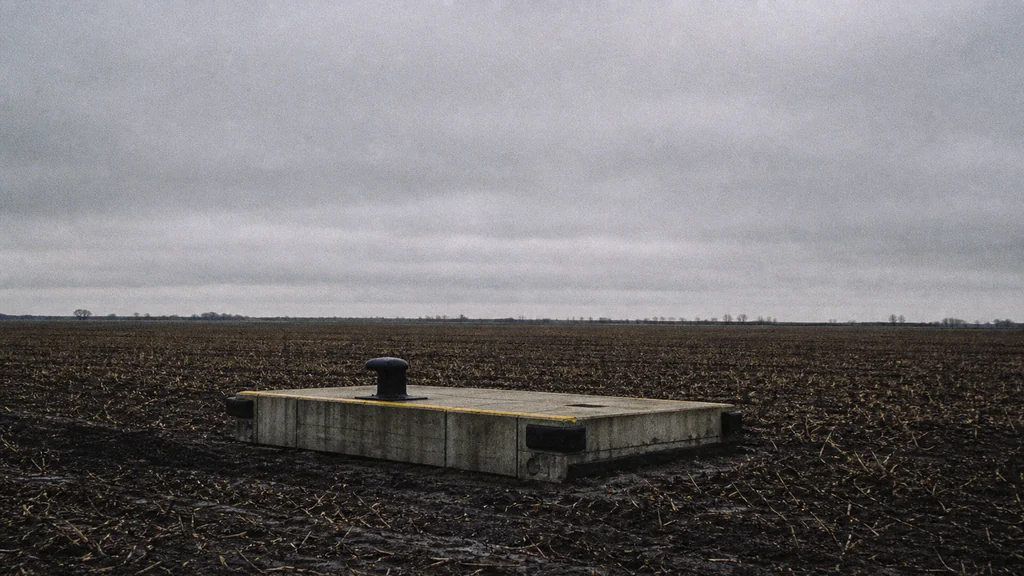
A maritime endpoint stands ready in a landscape where the connections remain missing.
Image composition · tobriefLithuania's parliament voted last week to open roughly 100 hectares of new territory south of Klaipeda, the country's only seaport. The Seimas approved the expansion for cargo, logistics, green energy and what officials describe as military-mobility use — infrastructure built for commerce but available to armed forces in a crisis (lrytas, Atvira Klaipeda). The commercial ambition is real. The security pitch is a reasonable assumption without a budgeted logistics plan behind it.
What makes that gap visible is geography. Klaipeda sits on NATO's eastern flank, on a thin strip of Baltic coast where fuel pipelines, railways and roads connecting the three Baltic states to the rest of Europe are weak or unfinished. A bigger port matters for NATO reinforcement only if heavy equipment can move from the docks inland. The connections for that are not ready. The project tests whether the EU's growing appetite for dual-use investment produces real military capability or just gives commercial projects a defence label.
What the expansion delivers
The southern extension would add about 1.3 km of deepwater quays and dredged channels toward the Curonian Lagoon (LRT). Port chief Algis Latakas says Klaipeda has run out of land for major investors. He claims 14 global investors have expressed preliminary interest, though none have signed binding commitments (LRT).
Private capital would go in first. Investors contribute at least €300 million and lease territory for up to 50 years, while the port authority covers roughly €600 million in base infrastructure (Atvira Klaipeda). The combined price tag, public and private, reaches an estimated €1.4 billion (lrytas). Lithuania's Transport Ministry claims the expansion would generate about €7 billion in economic benefit over 25 years, though it has not published the methodology.
The security label and its missing pieces
Lithuanian officials have tied the project to defence. The new government programme reportedly lists Klaipeda alongside Rail Baltica and military-mobility works as national priorities. The EU and the European Investment Bank now treat dual-use port infrastructure as eligible for defence-related financing, which makes the label useful for attracting money (EIB).
Lithuania's funded military infrastructure, though, sits elsewhere. The EIB completed a €290 million financing package for the Rudninkai military base south of Vilnius, designed to permanently house a German Bundeswehr brigade (EIB, Klaipeda.diena). Germany's defence ministry has confirmed the brigade's target of full readiness by 2027 (BMVg). A permanent heavy brigade needs a maritime entry point for vehicles, ammunition and resupply, and Klaipeda is the only candidate. The logic connects. But no public document links the port expansion to a specific German-Lithuanian logistics requirement.
The inland gaps make the same point from a different angle. NATO's CEPS fuel pipeline network (the alliance's system for moving jet fuel and diesel across Europe) still effectively ends in Germany. Poland is building roughly 300 km of new pipelines to push it eastward, but the Baltic states remain unconnected (Defence24, WP). Rail Baltica, the European-gauge railway meant to link the Baltic states to Poland, faces slipping timelines on the Polish Białystok-Ełk section (Suwalki24) and slow progress in Latvia (Garaza.lv). Any reinforcement bound for Lithuania would also pass through the Suwalki corridor, the narrow land bridge between Poland and Lithuania squeezed between Belarus and Russia's Kaliningrad exclave. In a crisis, fuel and heavy equipment would still move by tanker, rail car and truck.
Lithuania is building the endpoint before the corridor behind it is finished. The port's commercial case stands on its own: Klaipeda is running near capacity with limited land for new terminals, and investor interest appears genuine. The military-mobility label remains a description of potential. The documents that would make the dual-use claim verifiable — an independent demand study, a military-use concept, published concession terms — have not appeared. Klaipeda's expansion is a large commercial bet wrapped in a security narrative that the eastern flank makes easy to sell but hard to test.
Details about this article
- Model:
- claude-opus-4-6
- Generated:
- 7/15/2026, 2:28:51 AM
- Pipeline run:
- eu_pipeline_20260715_005006
- Watermark:
- SynthID (Google's invisible watermark)
- Human review:
- None before publication