Lithuania’s new radars face a readiness test
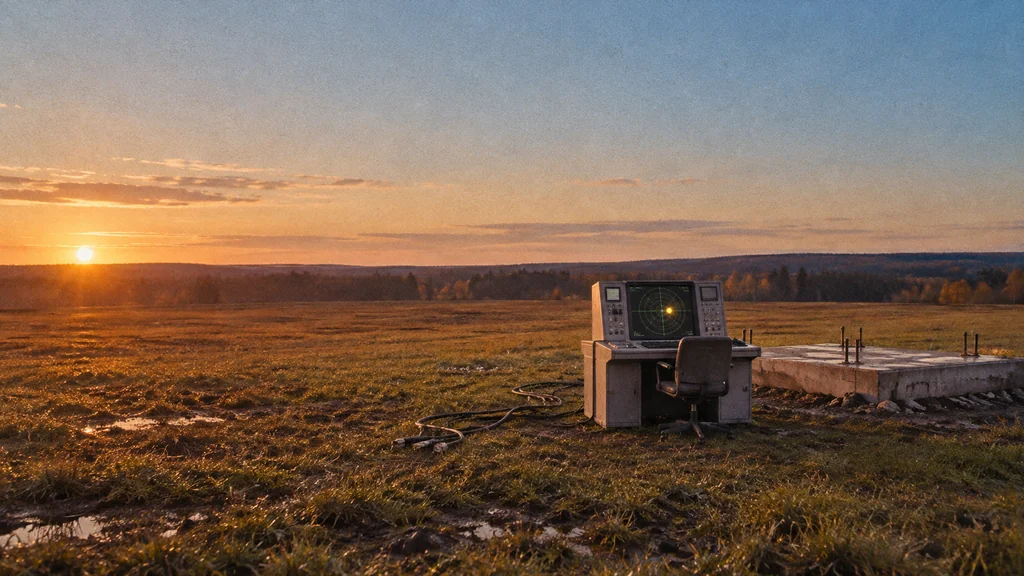
Lithuania has new eyes on the sky; readiness remains unproven.
Image composition · tobriefLithuania's armed forces have begun installing new US-made Lockheed Martin AN/TPS-77 radars, the Defence Ministry announced on 20 October (Lithuanian Defence Ministry, Delfi). The radars have arrived, but nothing published so far shows they work as part of the country's air defence. That matters because on 18 October an unidentified flying object sent Lithuanians to shelters and drew in Poland and Latvia (Reuters).
Delivered is not the same as ready
The order dates from 2023, when the US Air Force contracted Lockheed Martin to supply three of these medium-range radars to Lithuania, with training and spare parts (US Defense Department, SAM.gov). The ministry's announcement leaves out the facts that would show readiness. It does not say how many units arrived, where they will stand, whether they passed testing or when they enter service.
The ministry also describes their connection to NATO's shared air-defence network in the future tense (Lithuanian Defence Ministry). That connection takes work. When NATO's communications agency brought earlier Lithuanian radars online, it ran factory tests, checks at the installation site and a flight test with real aircraft before their data fed alliance surveillance (NATO Communications and Information Agency). No comparable record exists yet for the new units.
These radars were also not designed around the threat now worrying Lithuanians. Lockheed Martin rates their low-altitude range at 150 kilometres against a typical fighter jet, and gives no figure for a small, slow drone (Lockheed Martin). The ministry concedes such drones are hard to spot by conventional means, and it is buying separate short-range radars and drone interceptors for that job (Lithuanian Defence Ministry).
Tracked, unseen and disputed
On 18 October, Lithuania did see the object on its screens. Defence Minister Robertas Kaunas said ground radars and fighter-jet radars both tracked it (LRT). Fog stopped the pilots from seeing it, however, and the rules required visual identification before any order to shoot it down.
Where it came from is contested. Lithuanian officers say the object arrived from the direction of Poland (Polskie Radio). Warsaw has not accepted that account. Poland's Operational Command, which directs the Polish military's day-to-day missions, said its own systems had not registered such a crossing (Polskie Radio). Poland's Defence Ministry has promised a joint review with Lithuania of radar data from both countries and their neighbours, and says it is awaiting the findings (Polish Defence Ministry).
Latvia reacted too. Under the BALTNET treaty, the three Baltic states each run a national air-surveillance centre, and those centres share radar tracks (BALTNET agreement). Latvia warned residents in several districts and later said the object never entered its airspace (Latvian armed forces). Its statements do not say what information prompted the warning, so the record does not show whether the BALTNET channel carried it.
What new radars can and cannot answer
The hardest choice from that morning falls outside any sensor. Prime Minister Gintautas Paluckas's successor, Inga Ruginienė's government...
Lithuania's prime minister has said the government will consider changing the rules for downing drones (LRT). Who may fire, and on what evidence, is a political and legal decision that ministers, not equipment, will settle.
Better radar coverage could still help in a future dispute like the one with Poland, because more tracks give investigators more to compare. It could not have supplied what was missing on 18 October: a pilot's eyes on the object through fog.
The evidence that would turn an installation into a capability sits with Kaunas's ministry. It would need to show how many units passed acceptance, what the tests found, and whether their tracks reach the Baltic centres and NATO's network. Until then, the record of 18 October stands as it is: Lithuania detected the object, nobody identified it, and the new radars' contribution to closing that gap remains unproven.
Details about this article
- Model:
- claude-opus-5-5
- Generated:
- 10/21/2026, 8:20:27 AM
- Pipeline run:
- eu_pipeline_20261021_072148
- Watermark:
- SynthID (Google's invisible watermark)
- Human review:
- None before publication