Fighting in Congo disrupts Ebola contact tracing
AI Daily Synthesis
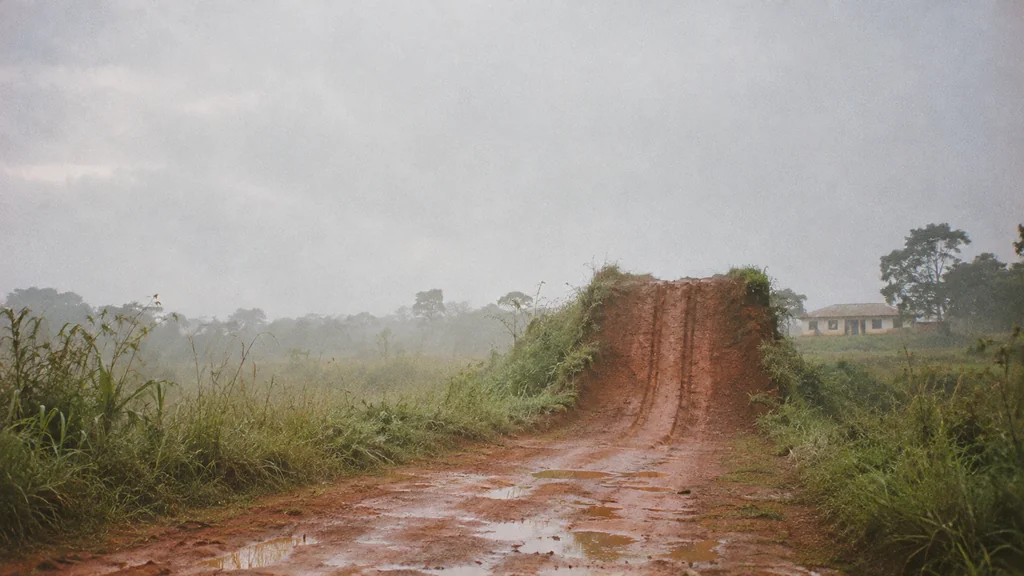
Image composition · tobriefThe Ebola outbreak in the Democratic Republic of the Congo (DRC) is the second-largest on record by cumulative cases, behind only the 2014–16 outbreak in West Africa (CDC). By 24 November, it had exceeded 12,000 confirmed cases and reached nearly 5,900 deaths (ECDC). That same day, amid fighting in Ituri province in northeastern DRC, about 5,000 people being monitored as contacts of patients, one in seven, had no recorded check-up (Health Ministry bulletin).
Fighting between the army and the armed group CRP north of Bunia, Ituri’s provincial capital (Actualité.cd), reached the hospital in Akwe over the weekend. Staff took shelter in its maternity ward (UN News). On Tuesday, peacekeepers from MONUSCO, the UN mission in the DRC, escorted 10 health workers out (MONUSCO). Catherine Smallwood, a World Health Organization (WHO) official, told AP that about a dozen people reached Bunia after being trapped for three days: “They were really caught in the crossfire.” It is unclear whether the two figures refer to the same people.
The fighting cut off the road to Mongbwalu, and the WHO temporarily moved its team to Bunia. There, on 25 November, operations were continuing and some local teams were cautiously returning to work (AP). In the surrounding communities, public health professional Jackson Oular told DW that surveillance and care had been disrupted. No one has publicly confirmed that services in Akwe are running again.
This disruption matters more than it would in other outbreaks because of the virus causing it. Bundibugyo is a different species from the Zaire Ebola virus, rather than a variant of it (WHO). The tools developed for Zaire do not cover it, and approved antibody treatments are indicated only for Zaire (FDA). Candidate treatments are being tested in a clinical trial (MSF). Even Ervebo, the approved vaccine for Zaire, is now being tested in the TUMAINI trial to see whether it also protects against Bundibugyo. The WHO expects results from the vaccine trial in early 2027 (WHO).
Why every day of monitoring matters
Contact tracing is like following the branches of a tree. You start with a patient and find people who may have been exposed, such as a relative who cleaned up vomit or changed soiled sheets without protection. You check on them every day. If someone falls ill, they are isolated, and a new branch starts from them (CDC).
The method works for Ebola because of two features of the virus. It spreads through direct contact with bodily fluids. A person also becomes infectious only when symptoms appear, which can take up to 21 days (WHO). Someone checked daily can therefore be isolated on the day they fall ill, before exposing their family. A gap of a few days does not prove that new transmission has occurred. But it creates an opening: a contact can fall ill without being seen and leave behind people who appear on no list (CDC).
The 5,000 people that Tuesday were not lost to follow-up permanently; there was simply no recorded check-up for them that day. The gap, however, existed before the fighting. In a retrospective count, the Africa Centres for Disease Control and Prevention (Africa CDC) found that only 1,146 of 10,659 confirmed cases, about one in nine, had first appeared on a contact list (Africa CDC). The remaining cases were recorded, but their chains of transmission had not been identified in time. The European Centre for Disease Prevention and Control (ECDC) considers it likely that the outbreak is larger in both case numbers and geographic reach, though it gives no figure (ECDC).
Meanwhile, the response has expanded. In mid-November, the WHO counted nearly 2,000 beds across 104 centres and about 3,000 people who had recovered. In Bunia, where teams have access, new cases had fallen by about half (WHO Africa). For readers wondering about Europe, the ECDC rates the risk to the general EU population as very low (ECDC).
In Ituri, the beds and laboratories are now in place. For a virus without a vaccine, containing the outbreak depends on something simpler: whether a contact tracer can knock on the same door every day without coming under fire.
Details about this article
- Model:
- claude-opus-5-5
- Generated:
- 11/26/2026, 5:29:42 PM
- Pipeline run:
- incremental_20261126_163012
- Watermark:
- SynthID (Google's invisible watermark)
- Human review:
- None before publication