Parliamentary study: fires and drought weigh on public finances
AI Daily Synthesis
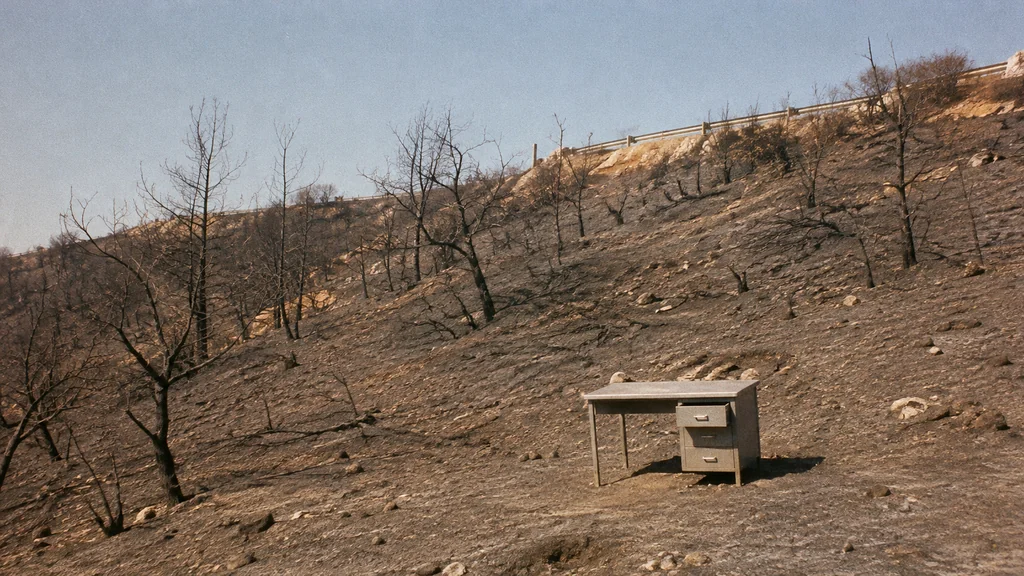
Image composition · tobriefA year of disasters like 2023 costs the Greek state in two ways. It loses about €400 million in tax revenue because the economy produces less, and pays another €745 million or so in compensation and support measures (Parliamentary Budget Office, Insider, Money Review). Since 2024, the state has budgeted €600 million a year for such years, an allocation that must also cover prevention (Financial Report). The figures come from a study of 52 Greek regions published on 23 November by the Parliamentary Budget Office, which advises Greece’s parliament on fiscal policy. It was co-authored by Marina-Eliza Spaliara and the office’s coordinator, Giannis Tsoukalas (Sofokleous10, Parliamentary Budget Office).
The two amounts measure different things. The €400 million is a model estimate: a year like 2023 leaves the economy about 0.3% smaller over three years, reducing tax receipts (Insider). The €745 million covers spending on fires and floods. Floods leave no trace in annual economic growth, but weigh on homes, infrastructure and the budget (Parliamentary Budget Office). We wrote about their economic cost in July. Compensation, then, cost almost twice as much as the lost taxes.
The annual €600 million allocation is spent within the year. Money left over in a mild year is not kept for a severe one, so the study proposes a fund that can carry money over between years (Voria). The 2027 budget divides the €600 million among five public bodies. The largest share, €250 million, goes to the General Secretariat for Public Investment, a Greek government agency (budget explanatory report).
What Rhodes lost
The July 2023 fire on Rhodes, a Greek island in the southeastern Aegean, burned an area equal to 6.9% of the Dodecanese island group (Oikonomikos Tachydromos). Three years later, the region’s trade, transport, accommodation and food service businesses produce, according to the model, about 4.8% less value than they would have without the fire (Parliamentary Budget Office). In money terms, the difference is about €73 million a year at current prices (Oikonomikos Tachydromos).
The example reflects a broader pattern. For every 1% of land burned, growth in those services is about 0.8 percentage points lower over three years, with the largest blow coming in the year after the fire (Parliamentary Budget Office). The office attributes the delay to fewer bookings in the following season and the time needed to restore infrastructure. The study offers this explanation without measuring it separately.
In agriculture, the damage falls elsewhere. A year of heat and drought like 2022 or 2023 cuts agricultural growth by about 3 percentage points in each region. Across Greece, it removes €200 million to €240 million from the value produced by agriculture (Parliamentary Budget Office). The income loss is greater in mainland Greece, where agriculture accounts for a larger share of local economies (Euro2day).
The 2038 scenario
Lost taxes and compensation also feed into the study’s debt scenario. If a year like 2023 recurs every three years from 2027, debt in 2038 will be 1 to 3 percentage points of GDP above the projections in Greece’s Medium-Term Fiscal Plan (Parliamentary Budget Office). At the economy’s current size, each percentage point is about €2.5 billion, given that the €745 million in compensation amounts to 0.3% of GDP (Money Review). A single bad year leaves debt less than one percentage point above the projection. The gap grows because the blows accumulate before the economy can recover (Zougla). The authors describe the simulation as illustrative, not a forecast.
One cost is left out of the simulation: rebuilding public infrastructure. The study gives no separate estimate for it either (Parliamentary Budget Office). Even the study’s adverse scenario therefore counts only part of the bill. The 1 to 3 percentage points include lost taxes and compensation. The roads and networks that have to be rebuilt will be paid for from the same budget, without being counted in the total.
Details about this article
- Model:
- claude-opus-5-5
- Generated:
- 11/24/2026, 4:22:08 AM
- Pipeline run:
- incremental_20261124_033011
- Watermark:
- SynthID (Google's invisible watermark)
- Human review:
- None before publication