Moldova powers up its Transnistria bypass
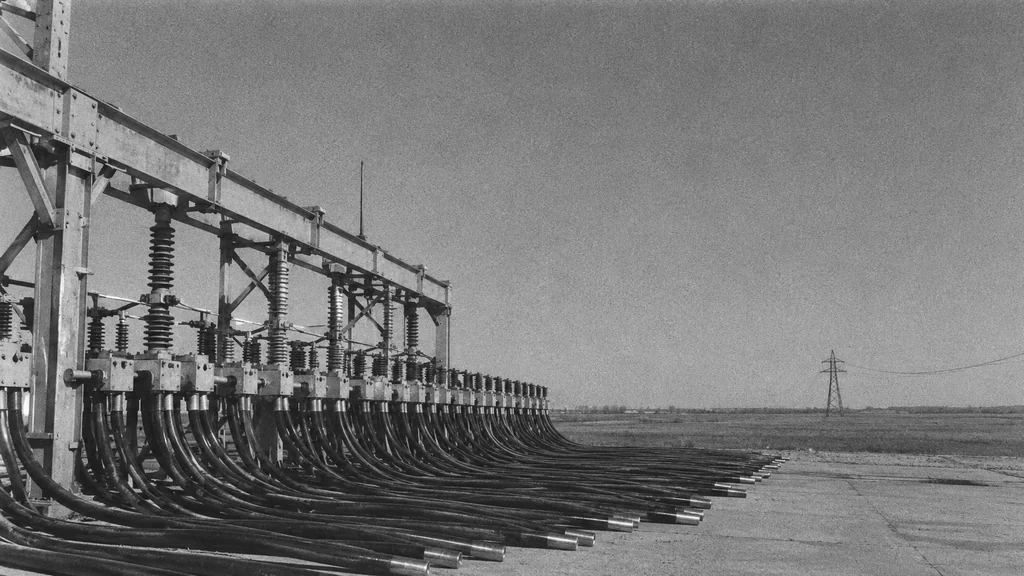
Moldova’s new route still needs electricity to reach Vulcănești.
Image composition · tobriefOn Sunday, Moldova's energy ministry put a 157-kilometre power line under voltage, running from Vulcănești, where electricity arrives from Romania, to the capital Chișinău across 35 localities (Energy Ministry). Imported power now has a route to the capital that does not pass through the Cuciurgan junction in Transnistria, the region outside government control (Moldova 1). Putting a line under voltage is not the same as running it day to day, and the cost of the bypass has not yet reached electricity bills.
The old route went through Transnistria
The entry point is not new. Romanian electricity has reached Vulcănești through an existing high-voltage link from Isaccea (Energy Ministry). What was missing was a route inside the country that did not depend on Tiraspol.
Until now, power moving from the south toward Chișinău had to pass through the Cuciurgan junction, also called MGRES, which Chișinău does not govern (Moldova 1). That held even for electricity bought on European markets: the purchases had changed, the geography had not.
The purchases changed some time ago. Moldova's central bank records that direct Russian gas imports stopped in May 2023, and Cuciurgan stopped supplying the right bank of the Dniester, where most Moldovans live, on 1 January 2025, after covering roughly 68% of that side's electricity before the switch (National Bank of Moldova). What remained was the physical route: power entering from Vulcănești and bound for Chișinău still crossed a junction outside the country's control.
What the announcement does not show is routine use. The ministry's project office lists testing and commissioning work, meaning running the line under real operating conditions, still ahead (UCIPE). President Maia Sandu and EU Commissioner Marta Kos described the inauguration as the end of Russian energy dependence (Energy Ministry), a formula that goes further than the record. What changed on Sunday was the route; the source of supply had changed earlier, and the price is still set elsewhere.
Who gains control, who gets the bill
The gain is control of the route, not savings. Once the line carries power in routine operation, Tiraspol loses its remaining physical grip on right-bank supply: an interruption or a dispute at Cuciurgan can no longer sit between Chișinău and the electricity it bought. The price will still be set in regional markets, where Moldova is a buyer, not a price-setter.
The bypass cost about €61 million, roughly €27 million of it for the line itself, financed through a World Bank loan (UCIPE). Energy Minister Dorin Junghietu said on 2 November that Moldelectrica, the grid operator, will ask the energy regulator to fold that investment into the transmission tariff, the network charge inside every bill, after full commissioning (Radio Moldova). If the regulator approves, consumers pay for the line whatever happens to market prices.
Bills are already under pressure. Premier Energy, the supplier for the centre and south, has asked the regulator to raise the household tariff from 3.59 to 4.64 lei per kilowatt-hour before VAT (Radio Moldova). That request predates the new line; the line's own cost, if approved, would land in the same bill on top.
The bypass's own weak point sits before the line begins. In March 2026, the Romanian link into Vulcănești was cut for about five days after attacks near Ukrainian energy infrastructure (Moldelectrica). A route to Chișinău cannot move electricity that never arrives at the border.
Chișinău now controls the route its imported electricity takes, or will once commissioning ends. It does not control the price, nor the Romanian border on which every kilowatt depends. The next test is whether the line carries the capital's power day after day, and that test sits with Moldelectrica and the regulator that must still approve the network charge.
Details about this article
- Model:
- deepseek-v4-pro
- Generated:
- 11/9/2026, 2:15:51 AM
- Pipeline run:
- eu_pipeline_20261109_005008
- Watermark:
- SynthID (Google's invisible watermark)
- Human review:
- None before publication