Montenegro closes three chapters, Croatia presses demands
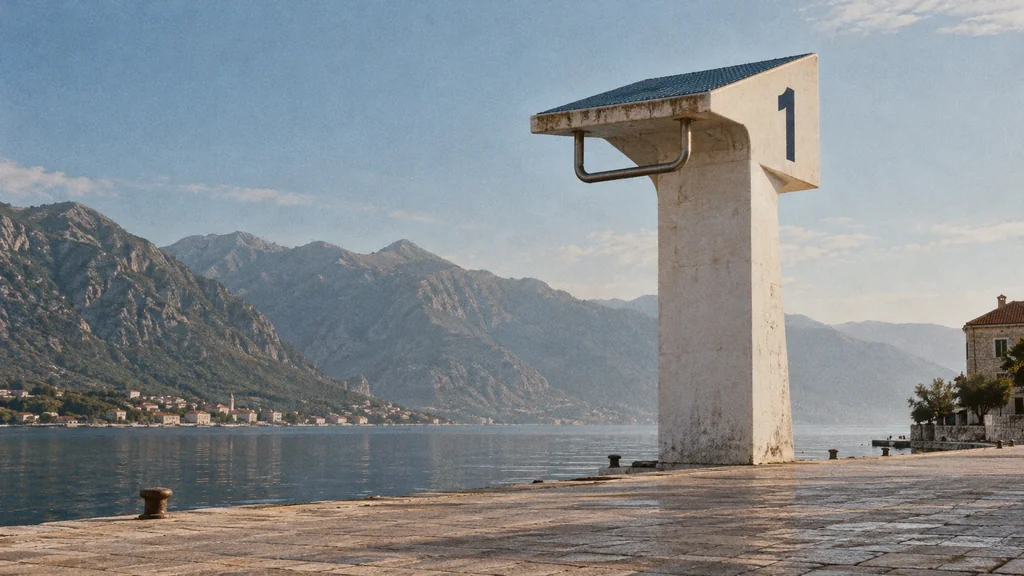
A dispute over a Kotor pool joins Montenegro’s EU accession demands.
Image composition · tobriefMontenegro provisionally closed three more chapters of its EU membership talks on 12 October, covering economic and monetary policy, statistics and social policy. That brings its tally to 21 closed out of 33 opened (Council, European Commission). Croatia, a neighbour whose consent every closure needs, has published demands it wants met first. The public record does not show that Zagreb has blocked any chapter still open.
A chapter is a policy area where a candidate must prove it can apply EU rules. "Provisional" means agreed for now, because the EU can reopen a chapter until the whole deal is done (European Commission). Prime Minister Milojko Spajić wants the remaining chapters closed by the end of 2026, a treaty signed in 2027 and membership in 2028 (Montenegrin government).
What Zagreb is asking for
Most of Croatia's demands concern the 1990s war. Its foreign ministry wants compensation for former detainees of the Morinj detention camp, protection of a memorial plaque there, answers on 14 missing people and war-crimes prosecutions (Croatian foreign ministry). It also wants property claims by Croatian families settled.
Other demands show how far a bilateral list can reach. Zagreb wants a swimming pool in Kotor, named after Zoran Gopčević, renamed. It wants maritime border talks to continue and the training ship Jadran returned, which Croatia says it owns. The sources reviewed here record no ruling on that ownership claim. Foreign Minister Gordan Grlić Radman rejects the word "blockade" and says Croatia is insisting on fundamental issues (HRT).
The European Commission, the EU's executive, assesses a candidate's progress and recommends when a chapter is ready. It cannot close one alone. Under Montenegro's 2012 negotiating framework, every EU government must agree first (negotiating framework). Croatia gets a second vote at the end, because Article 49 of the EU treaty requires every member state to approve admission and ratify the accession treaty (EUR-Lex).
Part of the list overlaps with what the EU itself asks. The Commission's 2025 report examined how Montenegro handled war crimes under Chapter 23, the rule-of-law chapter on courts and fundamental rights (Commission report). The 2012 framework asks for good-neighbourly relations and peaceful border settlement. It says nothing about who owns a ship or what a pool is called (negotiating framework).
Reported objections, not confirmed holds
The broadest claim came on 24 September, when Euronews reported Croatian holds on four chapters: transport (14), courts and rights (23), justice and security (24) and foreign policy (31) (Euronews). Later reporting narrowed that picture. Montenegro's Vijesti had reported the transport objection in July, but on 9 October it called the objection's status unclear (Vijesti). RTCG's October account of Croatia's eight demands ties six of them to Chapter 23 and the ship and border issues to Chapter 31 (RTCG).
The official record says less still. The Council's 12 October record lists the closures, and transport remained open without any stated reason (Council). Chapter 24 faces EU hurdles of its own, such as bringing visa policy into line with EU rules (Commission assessment). The sources cited here do not establish a current Croatian hold on it. An open chapter is not, by itself, evidence of a veto.
The case matters beyond Montenegro. On 6 October, the Commission proposed qualified majority voting, under which no single country can block, for decisions taken during the talks rather than at the end (Commission communication). The final admission vote under Article 49 would still need every government. Other candidates know the risk. Bulgaria's grievances against North Macedonia were written into the EU's 2022 framework for Skopje, turning a bilateral dispute into an accession condition (OSW).
Zagreb consented to the three closures on 12 October, as every government had to (Council). On the latest reporting, its demands bear mainly on Chapters 23 and 31 (RTCG). Croatia is pressing bilateral demands and holds the votes to make them matter, at each chapter closure and at final admission. This record does not establish that it has used those votes to block a chapter that is still open.
Details about this article
- Model:
- claude-opus-5-5
- Generated:
- 10/15/2026, 1:39:49 AM
- Pipeline run:
- eu_pipeline_20261015_005006
- Watermark:
- SynthID (Google's invisible watermark)
- Human review:
- None before publication