Myanmar owes reparations; Europe weighs pressure
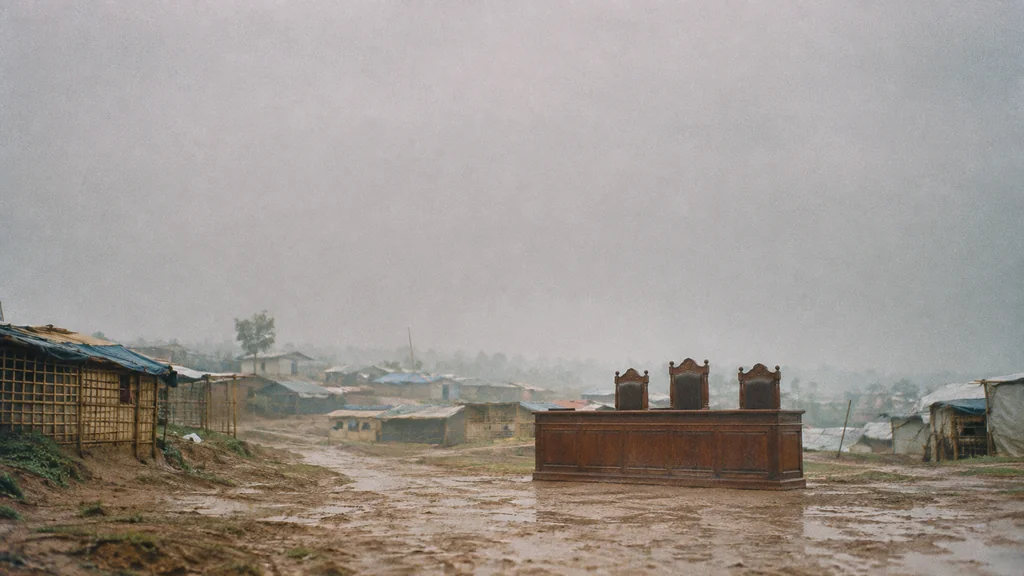
The court orders a safe return; the path home remains closed.
Image composition · tobriefThe International Court of Justice, the UN's court for disputes between states, ruled on 19 November that Myanmar committed genocide against the Rohingya during its 2017 military campaign in Rakhine State. The vote was nine to six (ICJ judgment summary, UN News). The UN calls it the first time the court has found a state responsible for genocide (UN News). The court cannot enforce its own judgment. The EU has issued a statement but announced no new sanctions in response, while Britain has acted separately.
What the judges found
The Gambia brought the case under the 1948 Genocide Convention, arguing that stopping genocide is every signatory's business. In 2022 the court accepted that a country with no direct stake could sue (ICJ 2022 judgment).
Myanmar said its "clearance operations" answered attacks by an armed Rohingya group. The majority accepted that the insurgency was real, then looked at what soldiers did. That included executions of men and boys, methodical village burning and evidence of at least 1,834 acts of rape (ICJ judgment).
The test was strict. Genocidal intent had to be the only reasonable inference from the whole record. The judges accepted an estimate of about 10,000 dead in a targeted population of roughly 815,000, according to the ICJ judgment summary. They also counted sexual violence as serious harm and as a measure to prevent births.
The finding has limits. The court rejected The Gambia's incitement charge and confined genocide to the 2017 period. The six dissenters did not deny that the Rohingya suffered gravely. Their objections, set out in the ICJ judgment summary, included that expulsion or collective punishment remained plausible explanations, and that UN reports compiled under a lower standard of proof weighed too heavily.
A state's guilt, not a general's
No commander was convicted. Individuals are tried by a separate body, the International Criminal Court, whose Myanmar inquiry covers only crimes linked to Bangladesh, because Myanmar never joined it (ICC).
The ICJ judgment is final and orders reparations. Myanmar must prosecute suspects, compensate Rohingya victims and allow safe, voluntary return, then report back within two years (ICJ press release).
Return looks distant for the roughly 1.2 million Rohingya refugees in Bangladesh (bdnews24). Rakhine is again a war zone. In September, the UN's investigative mechanism for Myanmar said the fighting made return unsafe (IIMM).
Europe helped argue the case; the EU has added no new pressure
European governments helped frame the legal question. In a joint written submission, a group including Germany, France and the UK argued that sexual violence can amount to genocidal acts and reveal intent (joint intervention). The judges did count sexual violence among the genocidal acts. Nothing in the record shows that the submission decided the outcome.
Filing an opinion on how to read the treaty does not make a country a party to the case. If Myanmar ignores the judgment, the UN Charter lets the other party, The Gambia, turn to the Security Council, which "may" act (UN Charter). Any permanent Council member can block that action. Other governments can still ask the Council to debate the case.
Britain did. Its foreign secretary requested an urgent Security Council session and expelled Myanmar's defence attaché (UK Foreign Office).
The EU's response was a spokesperson's statement urging Myanmar to implement the ruling "without delay." It announced no new measures (EEAS). The bloc already sanctions 105 people and 22 entities. Member governments renewed that list in the Council in April, months before the verdict (Council).
The ruling is a day old, and Brussels may still move. Adding names to that list would take a fresh decision by the same member governments. The court has set out what Myanmar owes, but it has no means to collect. Any further European pressure is a political choice for EU capitals. So far they have not made it, while Britain has acted on its own.
Details about this article
- Model:
- claude-opus-5-5
- Generated:
- 11/20/2026, 1:52:01 AM
- Pipeline run:
- eu_pipeline_20261120_005008
- Watermark:
- SynthID (Google's invisible watermark)
- Human review:
- None before publication