NATO watches Black Sea ships, without escorts
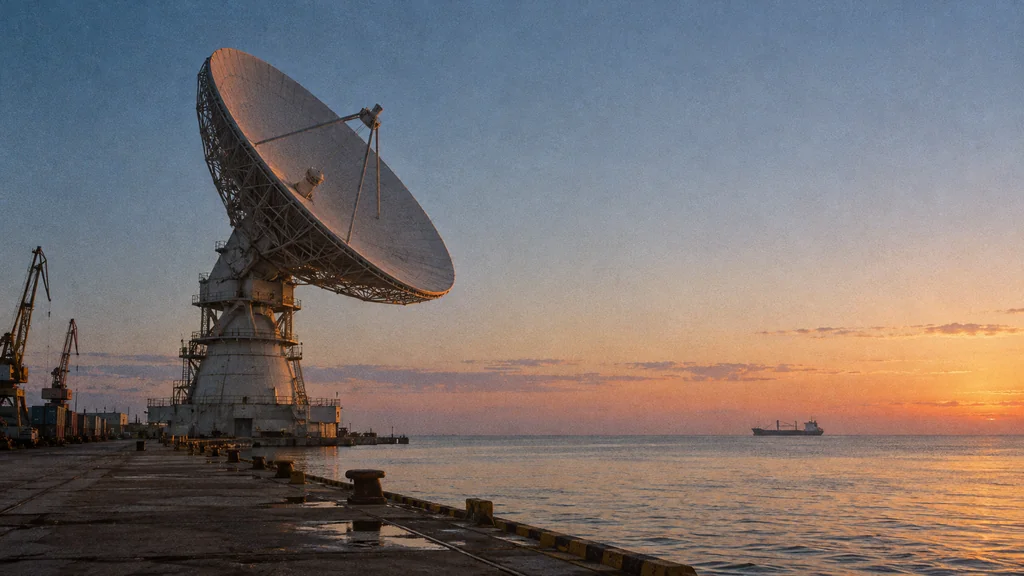
NATO promises more eyes over a sea where crews still lack cover.
Image composition · tobriefNATO's military headquarters said on 20 October that allies "have or will send" patrol aircraft, radars, drones, intelligence staff and explosives teams to the Black Sea after attacks on merchant ships (NATO, Reuters). As announced, the package adds no armed escort for those ships and no new mission to shoot down drones (Stars and Stripes). No official has described a direct link that would warn a ship's crew when a drone is coming.
The attacks have already cost lives. The San Marino-flagged Wine Trader caught fire on 15 October off Sulina, the Romanian port where the Danube meets the sea. Five crew were rescued and seven went missing (Agerpres). A day earlier the Yara J burned in Romanian waters, and Romania's acting defence minister said military and coastguard radar saw no drone approaching it (AP).
What the allies have promised, and what they haven't said
Romania had asked allies for anti-drone protection over the Black Sea (Radio România). Bulgaria wanted patrol aircraft, counter-drone systems and troops (To Brief). The crisis went to the North Atlantic Council, NATO's top political body, where every member has an ambassador and decisions need the agreement of all (NATO, NATO).
Ambassadors discussed the attacks there, but no council decision or operational order has been published. The public announcement names no quantities, no contributing countries and no arrival dates. Nothing released so far says what Romania or Bulgaria will actually receive.
The one visible asset predates the meeting. A US Navy patrol aircraft is already flying from the Bulgarian port of Varna over the western Black Sea (BTA). It remains unclear whether NATO counts that plane as part of its new package (Stars and Stripes). Bulgaria's defence ministry describes its job as reconnaissance rather than striking targets, and its data flows to NATO, not to the ships below (BNT, BNR).
What a crew can rely on
More sensors do help. They see past a ship's horizon, build a shared picture of the sea and preserve evidence after a strike. Romania showed on 17 October how detection can turn into defence: its F-16s shot down two drones after they entered Romanian airspace (Romanian defence ministry).
That interception rested on national jets acting over national territory. It establishes nothing about protection for a foreign-flagged ship farther offshore.
Time makes that gap hard to close. British government guidance offers a worked example: a drone spotted two kilometres away at 60 kilometres per hour arrives in two minutes (UK Department for Transport). In that window someone must judge the threat, warn the right ship and, if anyone can, fire. Denmark's advice to its own ships in the region stays basic. Crews should keep the AIS transponder (the beacon that broadcasts a ship's position) switched on, follow navigational warnings and, in immediate danger, call Mayday on VHF radio channel 16 (Danish Maritime Authority).
Who sent the drones is still unproven
EU foreign-policy chief Kaja Kallas has called the strikes suspected Russian attacks (Telex). NATO's public account names no perpetrator (Reuters). The gap between suspicion and proof runs straight through Bulgaria's own government.
The dispute concerns material found aboard the ship Chelsea-3. Bulgaria's prime minister has described it as drone remains. His defence minister said on 20 October that he did not know whether it was drone parts or debris from a blast (BTA). The formal finding will come from Bulgaria's military prosecutor, not from NATO. Explosives teams can establish what hit a ship, but fragments alone cannot show who sent it.
On the record so far, NATO has announced more ways to detect and investigate attacks and no new armed protection for merchant ships. Because delivery details remain unpublished, nobody outside the alliance can yet say how much closer the sea is being watched. Armed cover for ships beyond Romanian and Bulgarian airspace would have to come from Bucharest and Sofia, or from the allies who have not yet said what they are sending. None of them has announced it.
Details about this article
- Model:
- claude-opus-5-5
- Generated:
- 10/21/2026, 8:16:01 AM
- Pipeline run:
- eu_pipeline_20261021_072148
- Watermark:
- SynthID (Google's invisible watermark)
- Human review:
- None before publication