Norway voids three oilfield approvals
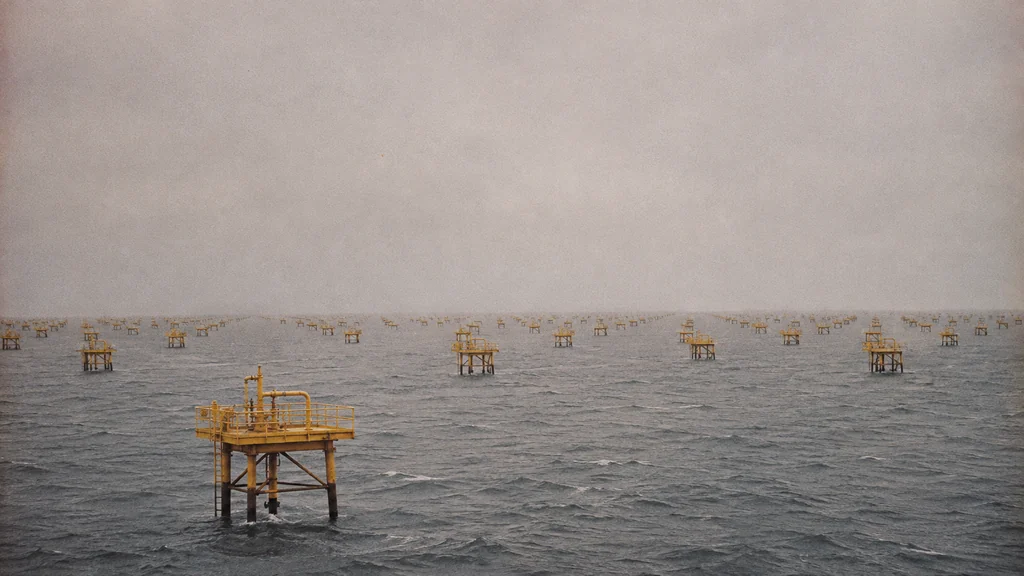
Norway must weigh each new field against the offshore whole.
Image composition · tobriefNorway's Supreme Court ruled on 13 November that the government must count the emissions from burning its oil and gas, and must weigh each new field against everything already approved off its coast (Supreme Court of Norway). On that basis it voided the approvals of three North Sea projects. Production continues for now, and the government remains free to approve the projects again once it has done the assessment properly.
Approvals voided, licences intact
The judgment orders no shutdown. The court struck down the Energy Ministry's approval of each project's development plan, which is the final permission before a field is built and run. The companies' production licences were never on trial, because the firms holding them were not parties to the case (Advokatbladet).
That leaves a clear chain of responsibility. The judges have voided the ministry's decisions, the ministry must assess the projects again, and the operators keep working in the meantime. Two of the fields already produce: Breidablikk since October 2023 and Tyrving since September 2024. The third, Yggdrasil, is still under construction (Offshore Directorate). Energy Minister Terje Aasland said he would correct the permitting flaws promptly and expects output to continue (Reuters).
The challenge came from Greenpeace Nordic and Nature and Youth Norway in 2023. They won in Oslo in January 2024 and again on appeal in November 2025 (Columbia Law School).
Unanimous on counting, split on scale
Before approving a large project, a government must publish an environmental impact assessment. This is a public record of likely harm, produced while the decision can still change. Norway is outside the EU, but it applies the EU's assessment rules through the European Economic Area, the agreement that extends the single market to it. The ministry's assessments counted emissions from drilling and running the platforms. They left out what customers, mostly abroad, release when they burn the oil and gas.
All 11 judges held that those combustion emissions must be counted and their effect on warming evaluated (Supreme Court of Norway). The EFTA Court, which interprets the shared EEA rules for Norway, had read the law the same way in 2025 (EFTA Court).
The decisive vote was much closer. By six to five, the judges required each project's emissions to be weighed together with those of every other existing and approved Norwegian offshore field. The ministry had done real arithmetic. It estimated that burning Yggdrasil's expected output would release about 265 million tonnes of CO₂ equivalent (Ministry's Yggdrasil review). On 12 May 2026 it again refused to reverse the approvals (Columbia Law School). What it never did was set any project against the rest of Norway's fields, and that missing comparison sank its case.
The judges also drew limits. Officials need not trace specific floods or health effects. Nor must they test projects against the 1.5°C carbon budget (the CO₂ the world can still emit while keeping warming to that level), and no field must be refused simply because its fuel will be burned (Supreme Court of Norway).
Why it reaches beyond Norway
Norway supplied 30.9% of EU gas imports in 2025, so the way it approves fields matters to European buyers (Council of the EU). European companies hold stakes in the three projects. Poland's Orlen, a partner in Tyrving and parts of Yggdrasil, told the PAP news agency that operator Aker BP expects work to continue on schedule (Parkiet).
The legal reasoning travels further than the gas. A Norwegian ruling binds no EU court, but EU states apply the same assessment rules, and Denmark has already run through the same cycle. Its Energy Appeals Board overturned the approval of the Hejre field on 11 November 2025 over a similar gap (Danish Energy Appeals Board). In May 2026 the Danish Energy Agency approved Hejre again after estimating 35.392 million tonnes of lifetime combustion emissions in its central case (Danish Energy Agency). The Danish case shows how this works in practice: a reviewing body forces the count, the government produces it, and the project can still go ahead.
Aasland's ministry now owes Norway a new assessment that weighs Breidablikk, Tyrving and Yggdrasil against everything already approved offshore. It must then make a decision it can defend on that record. The court did not take the decision away from the minister. It took away his ability to approve new fields without stating what Norway's offshore fields, taken together, add to global warming.
Details about this article
- Model:
- claude-opus-5-5
- Generated:
- 11/14/2026, 1:54:01 AM
- Pipeline run:
- eu_pipeline_20261114_005009
- Watermark:
- SynthID (Google's invisible watermark)
- Human review:
- None before publication