November Ukraine talks have narrow powers
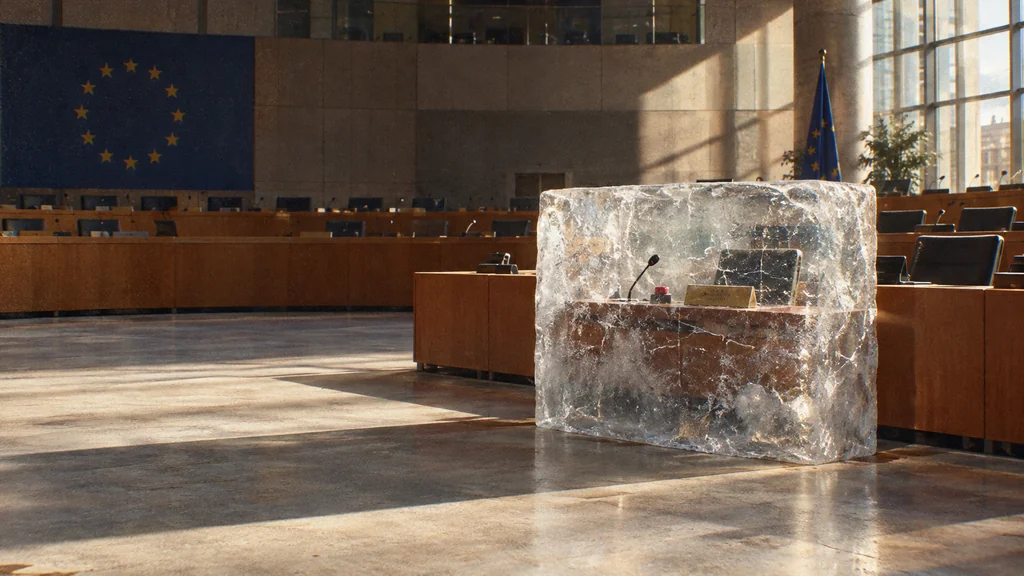
Europe’s sanctions remain a decision for its own governments.
Image composition · tobriefUkraine, Russia and the United States have each said publicly that their negotiators will meet again in the first half of November (Ukrainian presidency, TASS, Reuters). The meeting is still tentative, and it brings together officials, not presidents. Such a meeting cannot settle territory, and it cannot make Europe give up its sanctions or commit its troops.
A meeting of officials, not presidents
Little beyond the month is fixed. None of the three governments' public statements gives a confirmed date, a confirmed city, a delegation list or an agenda. A US official told Reuters that Abu Dhabi and Switzerland were both possible venues (Reuters).
The level of the meeting matters more than the venue. US envoy Steve Witkoff described the talks as continuing "at technical level" (Anadolu), which means teams of officials. Kyiv wants this round to prepare a meeting between Volodymyr Zelenskyy, Vladimir Putin and Donald Trump, and none of the three has agreed to one.
Russia has not yet named its own team. Putin's aide Yuri Ushakov said Putin had not decided who would represent Russia (TASS).
Zelenskyy sums up Kyiv's proposed agenda as energy, grain and people (Kyiv Independent). The "people" item, meaning prisoners, has the firmest record. Three-way rounds in Abu Dhabi and Geneva in January and February 2026 produced prisoner exchanges but no reported political breakthrough (Euronews).
Energy shows how quickly even a narrow arrangement can come apart. Kyiv has accused Moscow of breaching a pause in strikes on energy infrastructure. The Kremlin says no such pause ever existed (To Brief).
Zelenskyy says only leaders can discuss territory, the largest question of all. Putin wants talks to settle the long-term security of both countries in a final deal rather than produce a short ceasefire (Interfax-Ukraine). The two sides still disagree about what the talks are for.
Decisions that stay in European hands
Moscow says the first round will be strictly trilateral, with no European delegation (The Moscow Times). EU leaders set out their own position at their summit on 16 October. They declared that the Union will decide matters within its competence or affecting its security (European Council conclusions).
Sanctions are the clearest case. EU foreign-policy sanctions are adopted by the Council, the body where national ministers sit, and generally by unanimity, so any single government can block a decision (Council of the EU). Washington cannot lift those sanctions on Europe's behalf. Neither can a room of officials in Abu Dhabi or Switzerland.
That explains why Zelenskyy wants the sanctions kept in place. His argument is about timing. If Europe eases pressure on Moscow, including over the Russian assets frozen in Europe, before Russia shows what it will accept, Ukraine arrives at any leaders' summit with less leverage (Radio Svoboda).
Unanimity also gives a veto to governments with priorities of their own. Slovakia ties its position on sanctions to protecting its economy and its oil supplies (Slovak foreign ministry). Any shift in Europe's sanctions policy has to work through that politics in the Council, not at a table in the Gulf.
Security guarantees also run through national capitals. Chancellor Friedrich Merz says any German military contribution would come only after a ceasefire and would need approval from the Bundestag, Germany's parliament (German government). No negotiating team can commit German soldiers around that condition.
If the November round goes ahead as described, it may deliver what officials can arrange on their own, such as another prisoner exchange. Its mandate has not been published, so even that is uncertain. A wider settlement depends on presidents who have not agreed to meet. It also depends on European governments, which will decide sanctions and security commitments in the Council and in their own parliaments, well away from the negotiating room.
Details about this article
- Model:
- claude-opus-5-5
- Generated:
- 10/26/2026, 1:33:13 AM
- Pipeline run:
- eu_pipeline_20261026_005007
- Watermark:
- SynthID (Google's invisible watermark)
- Human review:
- None before publication