Onsemi’s Czech retreat costs 819 planned jobs
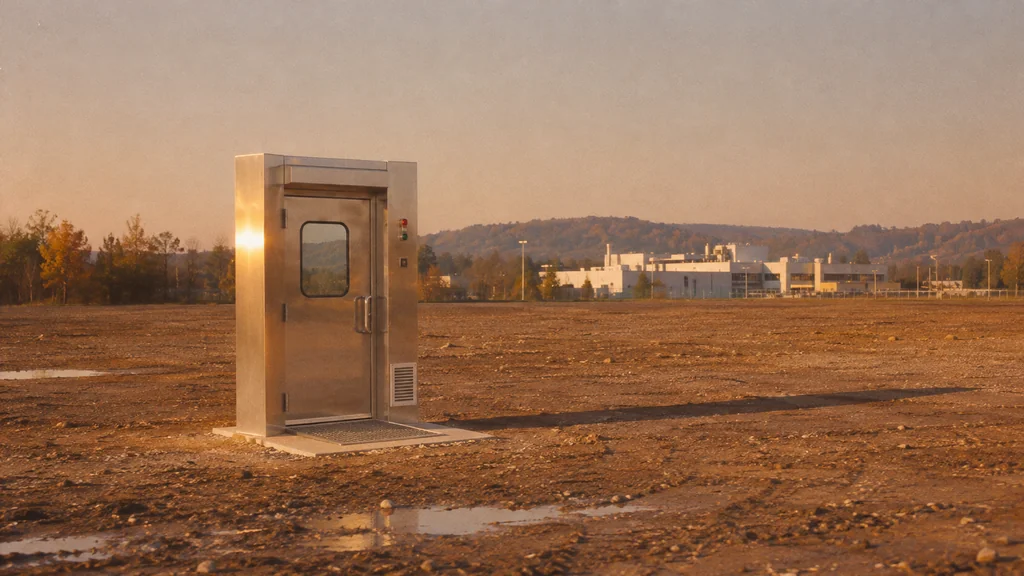
Rožnov’s chip factory keeps running as its planned expansion disappears.
Image composition · tobriefOnsemi and the Czech industry ministry agreed on 6 November to end the planned expansion of silicon-carbide chip production in Rožnov pod Radhoštěm; the company blames changed conditions on the global silicon-carbide market and the project's own economics, not anything about the Czech business environment (Onsemi and Czech ministry, Czech industry ministry). The investment, announced in June 2024 at up to $2 billion, was meant to create 819 jobs (European Commission, Czech industry ministry). The ministry now expects none of those jobs to appear, while the plant already operating in the town, and its design centre, stay open (Czech industry ministry).
The company's wider numbers frame the decision without showing its internal calculation. Onsemi's automotive revenue fell from $3.901 billion in 2024 to $3.081 billion in 2025, about 21 percent (SEC filing). In February, Reuters reported silicon-carbide suppliers holding excess inventory as electric-vehicle demand trailed forecasts and Chinese rivals cut prices (Reuters).
What Europe was going to get
Power chips are the parts that control and convert electricity inside electric vehicles, chargers and factory machines; silicon-carbide versions waste less energy than ordinary silicon ones. Onsemi planned to run the whole production chain on one site, from growing the crystals to cutting finished chips from 200-millimetre wafers, the large discs chips are made on. The European Commission called that integrated setup the first of its kind in the EU, and wrote that in a shortage the plant would have filled priority orders for European buyers (European Commission). The point for those buyers was a fallback line inside the EU.
The money that was never paid
Public money for a project like this moves in steps. The European Commission first permits the state to offer support, the national government then awards the grant, and only after that is anything paid. Here, the Commission cleared a direct Czech grant of CZK 11.9 billion (about €450 million) in November 2025 (EUR-Lex). The supplied documents record that clearance; they record no later award and no payment, and the 6 November announcement mentions neither (EUR-Lex, Onsemi and Czech ministry).
Who loses what
Rožnov loses work that was planned, not work that exists. The 819 jobs disappear along with the construction, equipment and supplier orders that a plant of this size would have generated, and no published estimate sizes that wider loss. The people at the existing plant keep their jobs, and Onsemi says it expects to hire more people in Czechia, without giving a number or a date (Czech industry ministry).
European buyers lose a fallback supplier of power chips, but not their only one. STMicroelectronics says its 200-millimetre silicon-carbide line in Catania, Italy, started scaling up production this year (ST filing), and Bosch has shipped more than 60 million silicon-carbide chips from Reutlingen, Germany, since late 2021 (Bosch). The cancellation narrows the list of European suppliers; it does not empty it.
No job was ever created under the cancelled expansion, and no subsidy payment is documented. The promised jobs and the extra European supply will not arrive through this project. The factory already in Rožnov keeps running, and Onsemi says it plans further investment and hiring in Czechia, but has given no figure and no timetable (Czech industry ministry).
Details about this article
- Model:
- deepseek-v4-pro
- Generated:
- 11/7/2026, 2:27:30 AM
- Pipeline run:
- eu_pipeline_20261107_005008
- Watermark:
- SynthID (Google's invisible watermark)
- Human review:
- None before publication