Orlen drops Qatar gas deal as Hormuz stalls
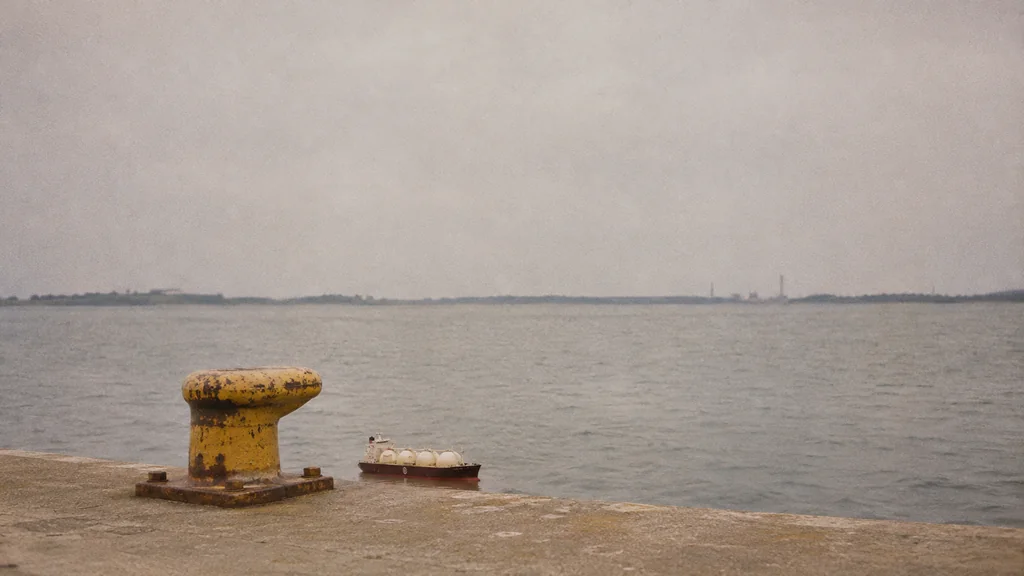
Europe’s gas buyers are replacing cargoes that never reached their berths.
Image composition · tobriefIran's Revolutionary Guards said on Tuesday that three oil tankers were burning in the Strait of Hormuz, two of them after striking naval mines (Press TV, Anadolu). Two independent reports from the same day describe attacks on tankers in the region. Neither mentions a mine, and neither identifies any ship Iran says was hit.
That gap matters to shipowners and the insurers who cover them, because they cannot price a danger they cannot identify. For Europe's energy buyers, the more measurable damage was already done before Tuesday.
What Iran claimed, and what it left out
The claim came in two statements. The first said a supertanker had hit a mine and a second tanker had caught fire, without saying what caused the fire (Press TV, n-tv). The second, issued hours later, added a third tanker burning after a mine strike in the eastern part of the strait (Anadolu).
Neither statement named a vessel or gave a flag, position or casualty figure. German outlets that carried the first claim said they could not verify it (n-tv).
What the independent reports show
UK Maritime Trade Operations (UKMTO) is a British naval service that collects incident reports and warns merchant ships. Its warning for Tuesday records that the master of an unnamed tanker reported being hit by an "unknown projectile" about 19 nautical miles northeast of Lima, Oman (UKMTO).
The crew was safe and no pollution was reported. The warning names no ship, mentions no mine and blames no one.
The second account came from ADNOC Logistics & Services, the Emirati state shipping group. It said one of its vessels was damaged in an attack that afternoon in UAE waters inside the Gulf, without giving a name, weapon or damage estimate (ADNOC).
AP reported that it was unclear whether the Iranian, Omani and Emirati reports were linked at all (AP). So neither report verifies Iran's mine strikes, and counting either ship among Iran's three would invent a connection no source makes. They do not rule the claims out either. They describe something else.
Who was already paying
Very few ships were making the trip anyway. IMF PortWatch data put traffic at about 3.9 transits a day in the week to 8 November, against roughly 85 a day in 2025 (IMF PortWatch, Overwatts).
Owners who do sail buy war-risk cover, the extra insurance charged for a voyage through a conflict zone. In late August, the Dutch insurers' association reported premiums of 3–8% of hull value (the insured value of the ship itself), and said underwriters weigh whether mines have actually been cleared, how many ships have passed without incident and which route is chosen (Verbond van Verzekeraars). That older figure shows what drives the price. A confirmed mine strike would feed straight into the first two factors, which is why insurers need to know what happened on Tuesday. No premium change dated to Tuesday has surfaced.
European gas buyers felt the disruption well before the latest claims. On Tuesday, Poland's Orlen gave notice ending one of its two long-term contracts to buy LNG (liquefied natural gas, chilled into liquid for shipping) from QatarEnergy, a deal covering roughly 1 million tonnes a year (Puls Biznesu).
Orlen's filing blames months without cargoes and prolonged force majeure (a clause that suspends a contract when events beyond a party's control block delivery). It does not mention the alleged mine strikes.
Orlen is not the only buyer affected. Italy's Edison had already said it replaced 27 of 38 scheduled Qatari cargoes (Edison).
The record from Tuesday establishes two attacks: a projectile strike off Oman (UKMTO) and damage to an Emirati vessel. It does not verify Iran's claimed mine strikes, and it ties no new European price, premium or lost delivery to them. The reports could later prove connected. For now, Hormuz costs Europe through cancelled contracts and replacement cargoes, and that bill was running long before Tuesday.
Details about this article
- Model:
- claude-opus-5-5
- Generated:
- 11/11/2026, 2:07:32 AM
- Pipeline run:
- eu_pipeline_20261111_005008
- Watermark:
- SynthID (Google's invisible watermark)
- Human review:
- None before publication