Washington: Trump and Xi agreed on human control of military AI
AI Daily Synthesis
Image composition · tobriefUS Treasury Secretary Scott Bessent said on 20 November that President Donald Trump and Chinese President Xi Jinping agreed on a rule in Shenzhen, a city in southern China: artificial intelligence would not initiate major military operations on its own (Reuters). If confirmed, the principle that “humans decide” would extend beyond nuclear weapons, on which the two countries had previously reached agreement, to conventional warfare.
On the programme Squawk on the Street, Bessent said humans must “always be involved in every military decision” made by “SI”. The term means “super intelligence” and is Trump’s preferred name for AI (CNBC transcript, CNBC). He added that the technology “should not be allowed to act autonomously in major military actions”. Shortly afterwards, he put it more simply: no major operation starts without a human.
The two leaders spoke in broader terms. Trump said at the White House that they had agreed on “some common guardrails” for AI, but gave no details (AP). China’s account quoted Xi calling for AI to “always remain under human control”, without mentioning weapons or operations (Xinhua). No joint text has been published. Beijing’s silence neither disproves what was said in private nor confirms it.
The difference from the previous step is clear. In 2024, then US President Joe Biden and Xi agreed that decisions on the use of nuclear weapons would remain in human hands (White House readout). Bessent’s wording reaches a much wider area, where AI already helps with planning and targeting. Analysts at the Center for a New American Security (CNAS) had proposed precisely that extension (CNAS). It does not ban military AI. It defines who has the final say.
What “human in the loop” means
Think of a spam filter. In one version, it flags a message as suspicious and waits for you to decide whether to delete it. In another, it follows rules you have set, deletes the message itself, and you simply monitor it. In military terms, the first version puts a human “in the loop”: a sensor detects something, AI suggests a possible target, and a human approves or rejects it. The second puts a human “on the loop”: the system acts within preset limits while an operator watches, ready to stop it.
Time determines which version can be used. A surveillance image allows time for careful review, while an incoming missile leaves seconds. That is why US Department of Defense Directive 3000.09 calls for “appropriate levels of human judgment” in the use of force (DoD directive). As the Congressional Research Service explains, that does not mean a human finger on every shot (CRS). In fast-moving situations, human judgment shifts to setting the limits in advance.
The first version is already used in real operations. According to an official at US Central Command, the Maven system helped identify missile launchers in Yemen and unmanned vessels in the Red Sea, and operators approved or rejected its suggestions (Wired). In Scarlet Dragon exercises, a team of about 20 people using the same system did work comparable to that of the targeting centre for the 2003 invasion of Iraq, which employed more than 2,000 people (CSET, CSIS). That was a hundred times fewer people in an exercise that measured speed, not errors.
Speed is also the risk. In Iraq in 2003, the automated Patriot system shot down two allied aircraft, killing three people, while operators monitored it under time pressure (Pentagon investigation). Patriot was not modern AI. But it shows that having a human in the loop matters only if that person understands the warning and has time to intervene.
Neither side has said publicly what counts as a “major” operation under the Shenzhen agreement or how much human involvement would be enough. The Chinese statement mentions only a broader strategic stability action plan, with no date (Chinese foreign ministry). There is, however, a mechanism ready to use. In September, the two sides had agreed to hold talks on AI by November and establish a bilateral communication channel for AI incidents. Before the summit, it was not known what would count as an “incident” or who would handle the channel (AFP).
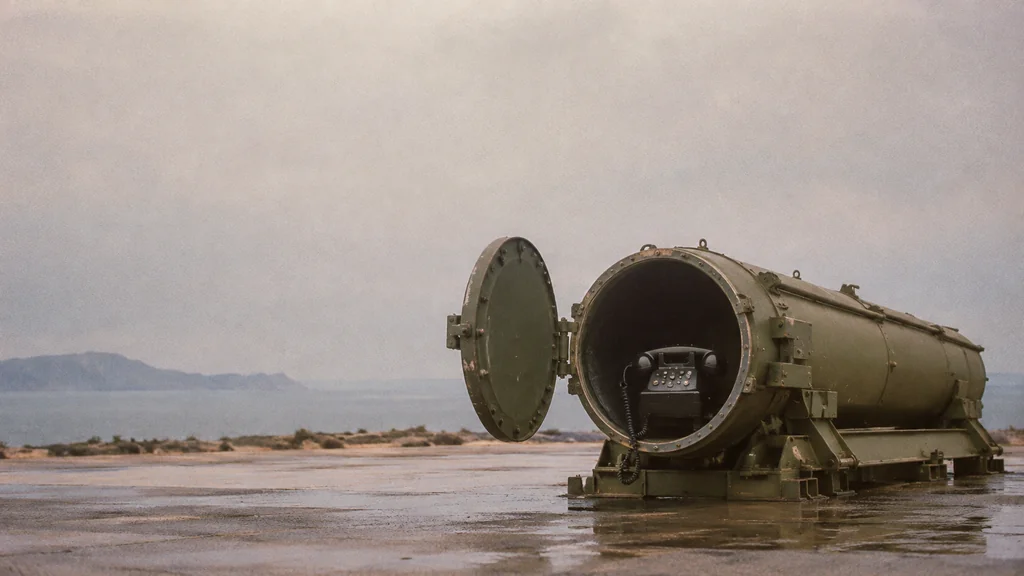
That is where it will become clear whether Bessent’s phrase becomes a rule. Washington and Beijing will need to say who picks up the phone and what would prompt the call.
Details about this article
- Model:
- claude-opus-5-5
- Generated:
- 11/21/2026, 4:20:30 AM
- Pipeline run:
- incremental_20261121_033011
- Watermark:
- SynthID (Google's invisible watermark)
- Human review:
- None before publication