Climate conference extended over fossil fuels
AI Daily Synthesis
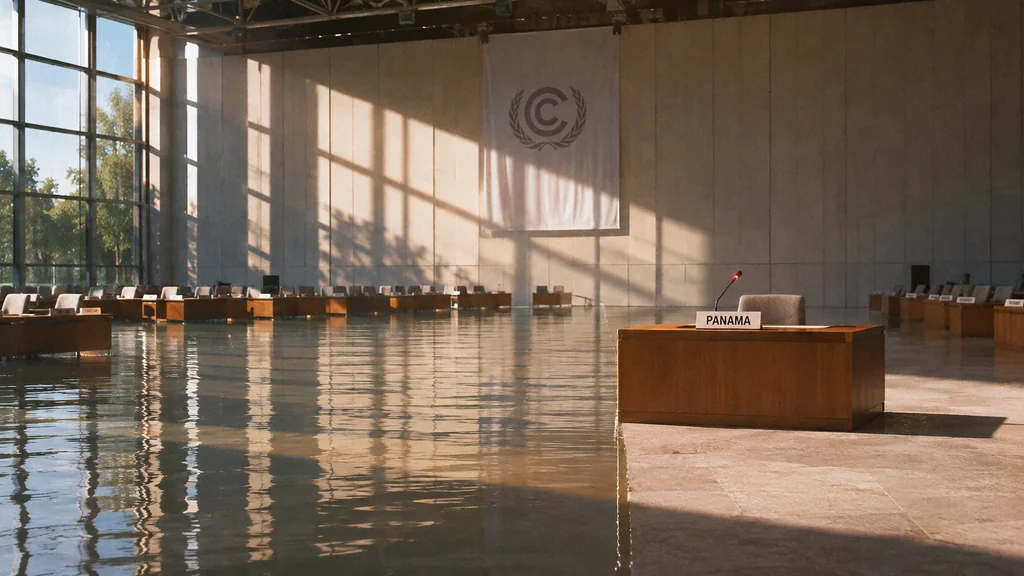
Image composition · tobriefCOP31, the annual Conference of the Parties where countries negotiate how to implement the international climate agreement, officially ended at 18:00 on Friday in Antalya, a city in southern Turkey, without a political agreement (AFP). By 16:00 on Saturday, no new text had been published. Meanwhile, Panama is threatening a formal objection that would block the final decision (Climate Home News, Euronews/AP).
Fossil fuels and funding to adapt to climate change are at the centre of the deadlock. Conference president Murat Kurum, Turkey’s environment minister, also listed emissions cuts and a just transition as unresolved issues (Haberler). The presidency’s 16 November draft reaffirmed the commitment made at COP28 in Dubai to transition away from fossil fuels “in a just, orderly and equitable manner” and called for their faster phaseout (UNFCCC, 16/11). Three days later, the reference had been removed (To Brief), and the new draft contains no equivalent commitment (UNFCCC, 19/11, Down To Earth).
The conference presidency writes the drafts, but countries decide in plenary, by consensus. One formal objection is therefore enough to prevent the text from being adopted.
The presidency that writes the text is also publicly defending the deletion. Kurum argues that the transition was already agreed in Dubai and that COP31 should focus on putting it into practice (Bloomberg, republished). Saudi Arabia has strongly resisted such wording, according to AFP/RFI, while the government that requested the deletion has not been publicly identified. The COP28 decision remains in force (UNFCCC, COP28). The dispute is over whether the new decision will name it again.
Consensus as a small country’s weapon
Panama is responding with the same rule. Environment Minister Juan Carlos Navarro said on Thursday that “from now on Panama will begin exercising its veto right”. He added that he had instructed his negotiator not to approve a decision without the points he considers essential (EFE via Ensegundos). There is no formal veto mechanism; there is a formal objection in plenary. Navarro himself proposes allowing a simple majority when consensus fails (El País). He is using a rule he wants to change.
A letter attributed to the Panamanian delegation calls for a freeze on global oil production at current levels as a “first verifiable step” (El Nuevo Diario/AFP). The demand shows why the wording is more than symbolic for producers: it is a first step towards limits on production.
The tone softened on Friday. Navarro said “COP can still be saved” and reduced his demands from eight to six in a joint intervention with France and a group of countries (Caracol). French minister Monique Marbou had called a text without fossil fuels unacceptable. On Saturday, she asked for at least one positive outcome and cited linking the electrification target to clean energy as an example (RCF). AFP also presents electrification as a possible route to compromise.
Tripling, but from what baseline?
The same revision affected the funding. The first draft specified at least $120 billion a year by 2035 for adaptation, meaning protection against effects already being felt, such as floods and droughts (UNFCCC, 16/11). The second keeps the word “tripling” but removes the amount and asks a committee to examine the baseline from which it will be measured (UNFCCC, 19/11).
Ministers from five African countries called on Friday for precisely what the text lacks: a baseline, annual milestones, public monitoring and funding primarily through grants. Ghana’s environment minister presented the statement (Ghana News Agency). The gap can be measured. Public funding flows for adaptation to developing countries were $28 billion to $32 billion in 2024, while their needs are estimated at $305 billion a year by 2035, almost ten times as much (Health Policy Watch).
Darragh O’Brien, head of the European delegation, said the EU had not come to Antalya with additional money. European Commissioner Wopke Hoekstra argues that the EU has already provided $30 billion of the existing $100 billion commitment and that other wealthy countries must contribute more too (CDS News).
At Friday evening’s plenary, countries approved only rules for international carbon markets before the session was suspended (IETA). Kurum promised a third draft for Saturday morning. It was expected before 09:00, but had not appeared by midday (Irish Times). At 16:00, Climate Home News reported that no new text had been published.
Electrification is the only common ground publicly on the table. On fossil fuels, the consensus rule gives Panama the same power to demand the wording that producers have to reject it.
Details about this article
- Model:
- claude-opus-5-5
- Generated:
- 11/21/2026, 5:34:15 PM
- Pipeline run:
- incremental_20261121_163010
- Watermark:
- SynthID (Google's invisible watermark)
- Human review:
- None before publication