Pentagon studies Poland base as brigade waits
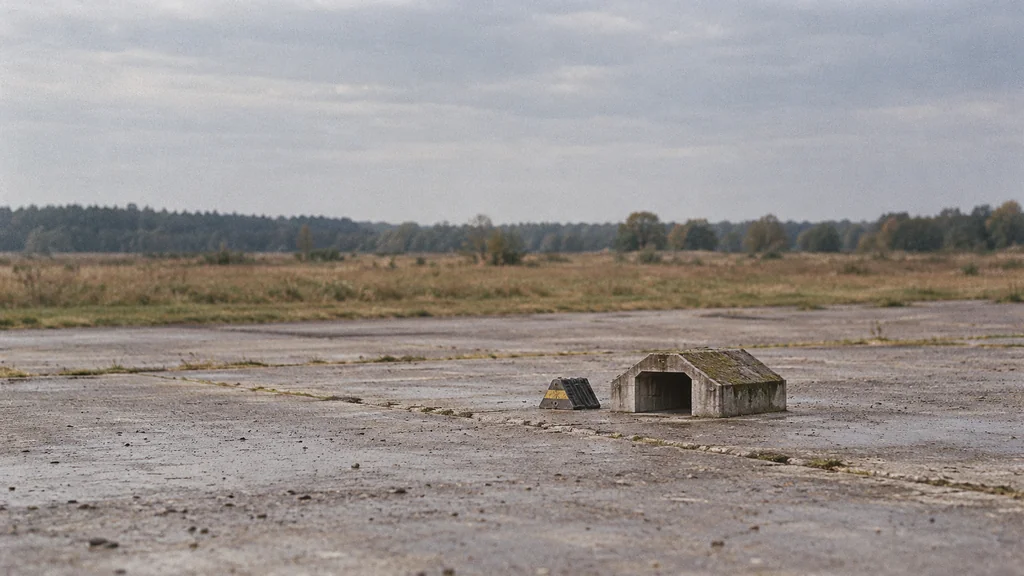
Washington studies a permanent home while Poland waits for its brigade.
Image composition · tobriefThe US Army cancelled the deployment of more than 4,000 armoured soldiers to Poland in May (Defense News). On 25 September, Poland's deputy defence minister said they still had not arrived (RMF24). In the meantime, the Pentagon's policy chief, Elbridge Colby, has told the US Senate that Washington is examining permanent basing in Poland (WNP/PAP). A base would be harder to cancel than a deployment, but nothing on the record says it would bring more American soldiers.
A brigade with no arrival date
The missing unit is an armoured brigade: tanks, infantry fighting vehicles and their crews, sent for a rotation of roughly nine months (Task & Purpose). A rotation means a unit serves for a fixed period, goes home and is replaced by the next one.
Warsaw's reassurances shifted over the summer. On 17 September, reporting said the Pentagon had reversed the cancellation and told Poland the brigade would come (POLITICO). Deputy minister Paweł Zalewski's later account still placed the brigade outside the country, with no public arrival date. Last week we reported that the rotation was still on hold (To Brief).
What a base would and would not mean
Permanent basing means troops stationed at a fixed installation for years, not units passing through. Washington's own wording is cautious. It is "examining" the idea. Zalewski goes further, saying the political decision has effectively been made and describing a base with room for roughly 5,000 Americans (TVN24).
His colleague Magdalena Sobkowiak-Czarnecka says the final call belongs to President Donald Trump, after a Pentagon review of where US forces should be stationed worldwide (Polskie Radio). No site, assigned unit or opening date has been made public.
Warsaw's apparent aim is a presence that is harder to reverse. May showed that one Army order can postpone a rotation. Walking away from a permanent installation takes much more.
Washington's case, at its strongest, is about dividing the work. Colby argues that Europeans should supply more of their own conventional defence, meaning ground forces, tanks and artillery, while the US remains an ally with other major roles (Bloomberg).
Power runs through Washington and Warsaw, not Brussels. Poland can agree to host. The US decides which troops to station there, pays for them and gives the orders. No EU institution has a vote.
That is why the size of the building settles little. A base with room for 5,000 Americans (TVN24) does not guarantee 5,000 more of them. It could house forces moved from elsewhere in Europe. It could also give a permanent home to troops who would have rotated through Poland anyway.
Fewer brigades, depending on who counts
Polish news agencies also report that Colby described US combat brigades in Europe falling from five to three (WNP/PAP, RMF24). These are press accounts of his statement. The underlying Pentagon text was not available to check.
That reporting points to two apparent losses. One is the Polish brigade. The other is in Romania, where a US Army rotation ended in October 2025 without a replacement (Europa Liberă).
The baseline does not match earlier figures. In May, a Pentagon account described US brigades in Europe falling from four to three (ZEIT). No public breakdown explains the difference. The direction is still clear: fewer American heavy units on NATO's eastern edge than a year ago.
The US armoured brigade still has not reached Poland, and Washington has only said it is studying a permanent base. Nothing published so far shows whether that base would add troops or relocate existing ones. Only Washington can answer that, by naming the unit a Polish base would hold and giving the delayed brigade a date to cross the border.
Details about this article
- Model:
- claude-opus-5-5
- Generated:
- 9/30/2026, 1:51:24 AM
- Pipeline run:
- eu_pipeline_20260930_005007
- Watermark:
- SynthID (Google's invisible watermark)
- Human review:
- None before publication