Personalised melanoma vaccine cuts recurrence, survival unproven
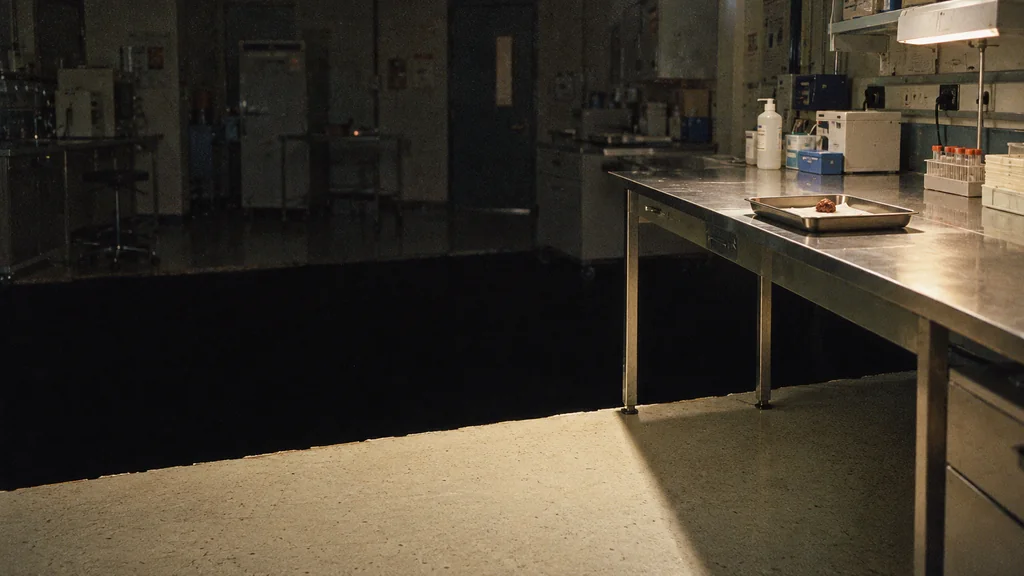
After surgery, treatment searches for melanoma cells beyond the visible specimen.
Image composition · tobriefA surgeon can remove every visible trace of melanoma and still leave behind scattered cancer cells too few to detect, and those cells can later grow back. In the INTerpath-001 trial, adding a treatment made from each patient's own tumour to standard immunotherapy left 82.2% of high-risk patients alive and free of melanoma two years after surgery, against 70.0% on immunotherapy alone (ESMO). The trial has not yet shown that the treatment helps people live longer.
Wanted posters from your own tumour
Doctors already give extra treatment after melanoma surgery. It works like insurance, aimed at cells that scans cannot see. The new candidate, intismeran autogene, comes from a partnership between Merck and Moderna and is designed to make that insurance personal (Merck and Moderna).
It starts with the tumour the surgeon removed. Cancer cells carry mutations, small errors in their DNA. Some of those errors produce protein markers that healthy tissue never makes.
The treatment uses mRNA to point the immune system at those markers. mRNA is a short-lived set of instructions that the body's own cells can read. Each patient's injection carries the instructions for markers taken from their own tumour, so it works like a wanted poster made for one fugitive. The goal is for the immune system to recognise any leftover cancer cells carrying the same markers. That is the reasoning behind the design. The trial itself measured whether patients did better.
Every participant also received pembrolizumab, sold as Keytruda, an established immunotherapy drug. The trial asked one question: does adding the tailored injection beat Keytruda alone? It enrolled 1,137 adults with stage IIB to IV melanoma whose visible cancer had been removed. The comparison group got placebo injections, and neither patients nor doctors knew who received which (ClinicalTrials.gov).
What the 42% measures
The trial watched for the first bad event, either melanoma coming back or a patient dying from any cause. Over the follow-up period, the tailored treatment brought a 42% relative reduction in the measured risk of recurrence or death (Melanoma Institute Australia). "Relative" means it compares how quickly events piled up in each group over time. It is not a share of all patients. The two-year figures in the lead give the real-world scale.
A second measure pointed the same way. At two years, 88.5% of the combination group were alive with no cancer spread to distant organs, against 80.2% of controls (The ASCO Post).
Survival on its own is a separate question, and the answer is not in yet. An early look at deaths leaned in the treatment's favour, but the estimate is still too uncertain to tell a real benefit from chance (CancerNetwork).
That difference got lost in some coverage. On 27 October, Estonia's Postimees Tervis ran a headline describing the result as a 42% cut in the risk of death (Postimees Tervis). It made the same slip as a Hungarian headline we examined that day (To Brief). The figure covers recurrence or death combined.
The results so far come from a company announcement and a conference presentation. Lead investigator Georgina Long presented them in Madrid on 24 October (Melanoma Institute Australia). A full paper has been accepted but had not yet been reported as published. The findings match what a smaller randomised study had suggested earlier (KEYNOTE-942 study).
Made to order, with a cost
Making each treatment from a patient's own tumour has practical limits. Some people who were screened could not join because their tumour sample was not good enough. Patients also waited weeks into treatment before their first personalised dose (CancerNetwork). The injections caused more side effects than placebo, mainly fever and pain where the shot went in (OncLive).
The treatment is still investigational, and the companies say they are talking to regulators. UK specialists pointed out that it is not available on the NHS and warned against assuming any timetable (Science Media Centre).
For a medicine built separately for every patient, that is a solid result. More high-risk patients stayed free of melanoma after surgery when the tailored injection was added to Keytruda. Whether it also extends life is for the trial's survival follow-up to show and for regulators to weigh.
Details about this article
- Model:
- claude-opus-5-5
- Generated:
- 10/28/2026, 1:30:13 AM
- Pipeline run:
- eu_pipeline_20261028_005008
- Watermark:
- SynthID (Google's invisible watermark)
- Human review:
- None before publication