Poland arrests man over threat to Tusk
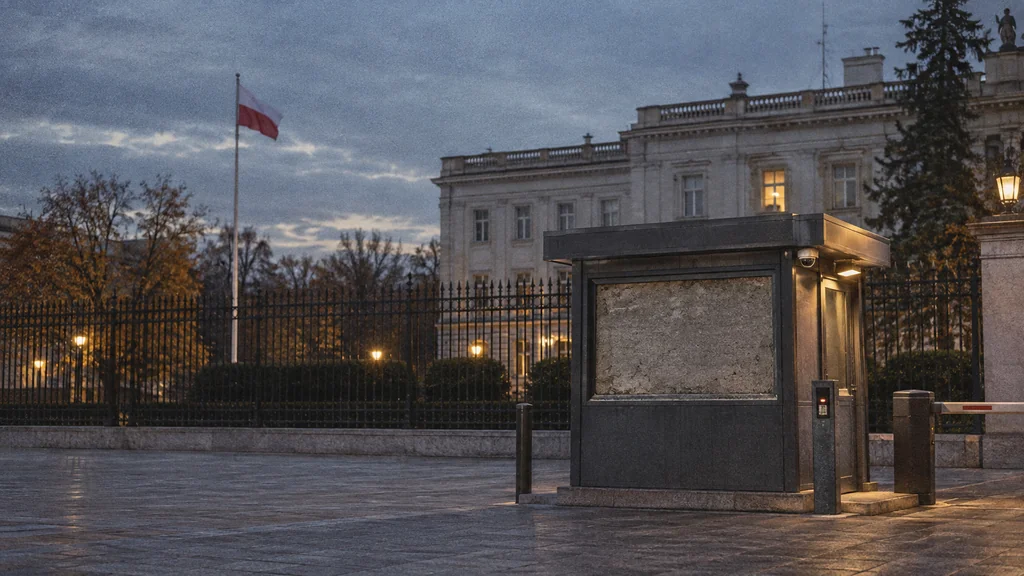
Poland calls the threat credible while its grounds remain behind closed doors.
Image composition · tobriefPolish police detained a man on 11 October, the same day authorities received a warning of a possible attack on Prime Minister Donald Tusk and his defence minister, Władysław Kosiniak-Kamysz (Reuters, AP). Government spokespeople said there was a "high probability" that the threats would be carried out (TVN24). Prosecutors had announced no charge, and officials had released no evidence of a concrete plan (AP).
The government made a serious public judgement about risk. The grounds for that judgement remain private.
From an email to an arrest
The warning arrived by email early on Sunday morning, according to TVP World. It went to the State Protection Service, the agency that guards Poland's prime minister and deputy prime ministers. The guards checked the warning and passed it to police. The interior ministry then ordered action, and Poland's domestic counterterrorism service joined the response (TVN24).
Karolina Gałecka, the interior ministry's spokesperson, said the email contained "concrete" information with a strong indication of credibility. She did not say what the information was (Rzeczpospolita).
That afternoon, Interior Minister Marcin Kierwiński announced that police had detained a man. He described the man as having threatened and planned an attack on Tusk (Onet). His first statement named only the prime minister. A later statement attributed to Gałecka extended the allegation to both men (Interia).
Kierwiński said the suspect is about 60 and was detained in Lower Silesia, in south-west Poland (RMF24). Investigators found him by analysing material online. They are still examining his contacts in radical online circles. Police searched his home but have not said what they found.
What remains unproven
The arrest does not show who did what. Before it, police were still trying to identify the person who sent the email (TVP World). Rzeczpospolita cited its own sources in reporting that the author was not the would-be attacker. According to those sources, the author knew of the alleged plans (Rzeczpospolita). Officials have not said whether the detained man is the person the email described. They have also not said how its author learned of him.
The most vivid details come from unnamed sources. Polsat News reported that the person who raised the alarm had been in contact with a radical group that claimed to be planning an attack (Polsat News). Other unofficial accounts described talk of armed volunteers and weapons (Interia).
Officials have not confirmed any of this. They have named no group and confirmed no weapon. They have not disclosed a date, place or method of attack, and no prosecutor had confirmed charges by Sunday evening (Fakt).
Covered abroad on Polish terms
One of the men named in the threat sits on the European Council, the body where the EU's heads of government set the bloc's direction (Treaty on European Union). News of the arrest spread beyond Poland. Lithuania's public broadcaster LRT reported it, relying on statements from Polish ministers and broadcasters rather than its own inquiries (LRT). Germany's Tagesschau also carried the Polish account. It reported Kierwiński's statement that it was too early to speak of any foreign link (Tagesschau). Neither outlet reported independent evidence of a plot or of foreign involvement.
Polish authorities went from an emailed warning to an arrest within hours. They also told the public that the danger was real. When a prime minister and a defence minister are named, acting fast is a defensible choice. Publicly rating the threat as highly likely before showing any evidence is a heavier commitment. The public now has the government's assessment and an arrest, but not the facts behind either. Prosecutors owe the public the charge and the evidence. Only then can anyone judge whether the threat was a planned attack or violent talk online.
Details about this article
- Model:
- claude-opus-5-5
- Generated:
- 10/12/2026, 1:39:16 AM
- Pipeline run:
- eu_pipeline_20261012_005007
- Watermark:
- SynthID (Google's invisible watermark)
- Human review:
- None before publication