Poland clears €7.9bn with 20 days left
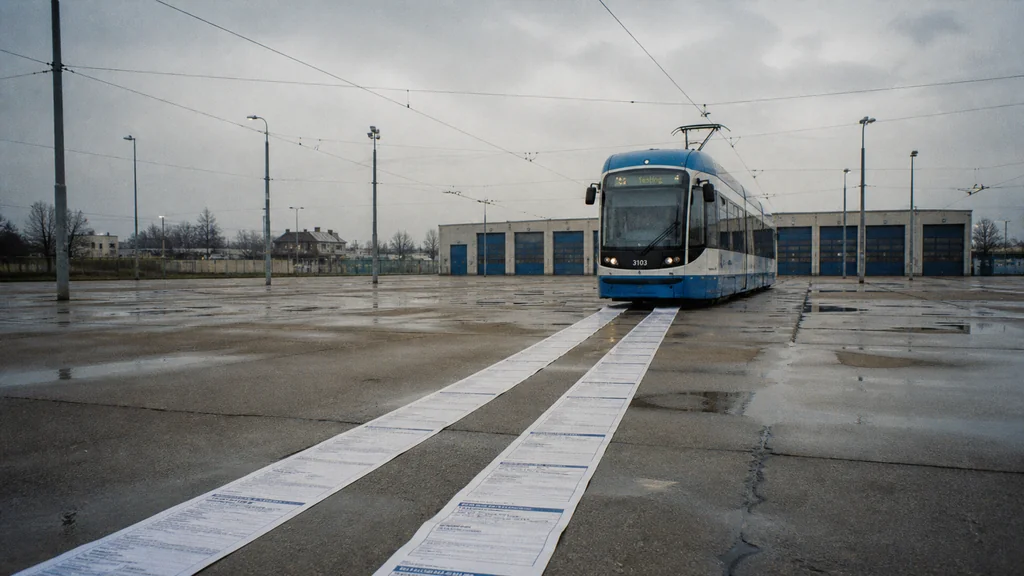
Poland clears the paperwork while Europe’s investment deadline closes in.
Image composition · tobriefThe European Commission approved Poland's €7.9 billion payment request from the Recovery and Resilience Facility, the EU's post-pandemic investment fund, on 10 August (European Commission). Warsaw proved it had completed 16 milestones and 13 targets tied to the instalment (TVP World). But passing the exam is not the same as getting paid. Several more steps stand between approval and actual money, and the distinction matters because the entire €577 billion fund is now weeks from its finish line.
How the money actually moves
The RRF does not work like a grant. Governments do not submit invoices. Instead, they agree to a list of reforms and investments upfront. When a country proves a law entered into force, a system was built, or equipment reached people, the Commission signs off and an instalment follows. Poland submitted its evidence on 19 June; the Commission assessed it on 10 August (gov.pl).
Next comes a four-week consultation with the Economic and Financial Committee (an advisory body of member-state finance officials), then a formal payment decision, and only then a transfer. Polish official Jan Szyszko said the money should arrive in October (MSN/PAP).
If paid in full, total EU disbursements to Poland would reach €42.05 billion, or about 76.85% of the country's €54.7 billion plan (TVP World, gov.pl). No reduction or partial withholding was flagged. The Polish Ministry of Funds says this is the penultimate request, with the last planned for September.
Laptops, trams and grid access
The items behind this instalment are concrete: laptop vouchers for more than 500,000 teachers (over 65% of the teaching workforce), 88 new trams for Kraków, Poznań and Wrocław, and reforms to how electricity producers connect to the national grid (TVP World, Rzeczpospolita). That last one sounds bureaucratic but has real consequences: it changes the rules for connecting renewable energy or storage projects to the grid, which determines how fast Poland can add clean power capacity.
These are the kinds of projects the RRF was designed for. Schools, transit systems, and grid operators get investment that a tight national budget might delay. The economic logic is straightforward: conditional EU transfers let governments finance investment without borrowing the money themselves. But the benefit only lands if the projects actually get finished.
Twenty days to prove the whole fund worked
The RRF is temporary. Member states must finish all outstanding reforms and investments by 31 August 2026, submit final payment requests by the end of September, and all disbursements must close by 31 December (EUR-Lex). By late July, roughly €177 billion of the fund had not yet been paid out (The Economy).
The pressure differs sharply across capitals. Portugal has already received 78.67% of its allocation and is well ahead of schedule (European Commission Portugal). Italy revised its plan to shift unfinishable projects onto other funding mechanisms (ANSA). Romania faces a harder problem: a parliamentary vote to extend coal-plant operations put a cleared decarbonisation milestone at risk, potentially exposing billions in pending requests (EUObserver). Bulgaria recently received only a partial payment after one milestone went unfulfilled (European Sting). The RRF regulation gives the Commission power to suspend or reduce any payment where milestones fall short (EUR-Lex).
Poland passed this checkpoint cleanly. No money was withheld, and the next step is routine. But a cleared instalment does not prove the broader programme delivered value. Whether Poland's earlier tranches financed genuine new investment, or mostly eased the government's cash position without producing infrastructure that inspectors can verify, remains an open audit question this instalment does not settle.
NextGenerationEU was the EU's biggest experiment in common borrowing, where the bloc raised debt collectively and paid it out based on results. Its credibility now depends less on approved plans and more on whether the final claims, across all 27 member states, match work that is finished and verifiable. Poland's clearance is one data point in that closing argument. The implementation deadline is 20 days away.
Details about this article
- Model:
- claude-opus-4-6
- Generated:
- 8/11/2026, 10:32:27 AM
- Pipeline run:
- eu_pipeline_20260811_005006
- Watermark:
- SynthID (Google's invisible watermark)
- Human review:
- None before publication