Poland hosts Ukraine force drill, won’t join
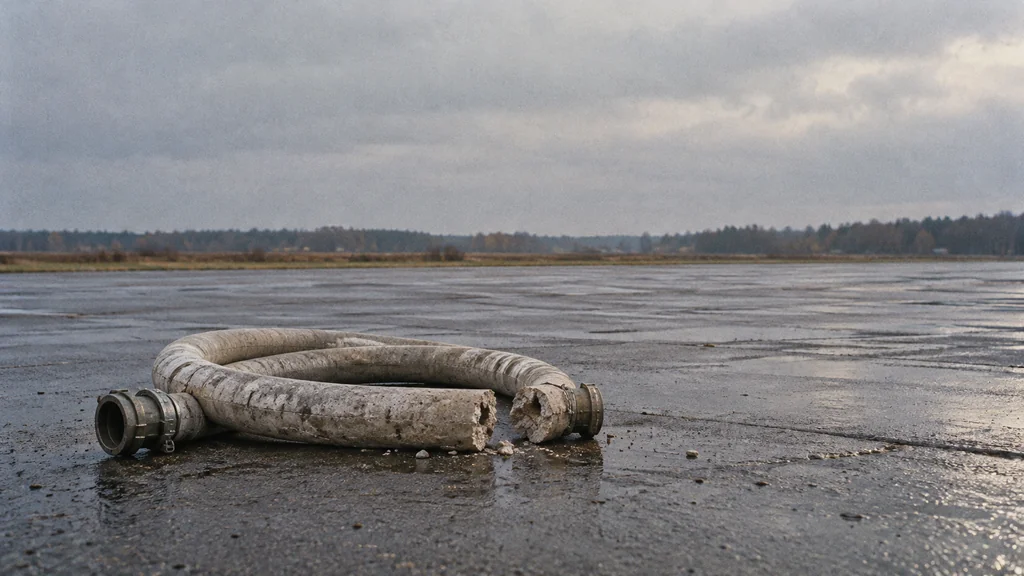
Poland prepares the route while keeping its soldiers on its side.
Image composition · tobriefPoland is preparing to host the first exercise of the Coalition of the Willing, a voluntary group of countries planning security guarantees for Ukraine, at ranges in its southeast in November 2026 (Rzeczpospolita). Warsaw will help move and supply the force during the drill, but says its own soldiers will not enter Ukraine. Practising how to move a force does not authorise anyone to deploy it.
What the drill will test
According to The Times, at least 1,500 British, French and German troops are due to train alongside Polish forces. That figure comes from anonymous sources, and no government has published its own headcount. Polish officials say only British and French participation is certain so far, and the exact date waits on the participants' agreement.
Germany's place is less settled than the Times figure suggests. Government spokesman Stefan Kornelius said on 15 July that Germany would join the first exercise while Berlin was still working out how (ZDF). No German unit or role has been named since.
Poland's job is to move equipment and people, repair vehicles on the road, refuel them, feed and house the troops, and provide medical care. The drill tests whether units from several armies can come together and move fast. Any later deployment would depend on exactly that.
Poland's line
Warsaw has drawn a clear boundary around its role. Its defence ministry calls the drill a coalition initiative, not an exercise of NATO, the transatlantic military alliance. It also says Polish forces will not enter Ukraine "either in reality or in the exercise scenario" (Rzeczpospolita).
That refusal matters because of how the coalition works. The group can plan an exercise together, but each government decides on its own whether its soldiers go to Ukraine. Poland is where European support for Ukraine already turns into roads, fuel and repair depots. Its decision means the country carrying the logistics has ruled out joining the force itself.
Who decides whether troops go
Britain and France have gone furthest. In January they signed a declaration of intent with Ukraine to deploy units after a ceasefire and at Kyiv's request (UK government). The text names no troop numbers, locations or dates. It also requires a separate agreement on the soldiers' legal status, meaning whose laws would govern them on Ukrainian soil.
Other capitals stand further back. Chancellor Friedrich Merz suggested in January that German troops might serve from neighbouring NATO territory rather than inside Ukraine. He said that would need a ceasefire, a cabinet decision and a vote in the Bundestag, Germany's parliament (German government). Italy's Giorgia Meloni said the same month that Italian troops would not go onto Ukrainian soil (Sky TG24).
The coalition has also set a condition that no drill can meet. Its 13 July statement says the force would act at Ukraine's request after a credible cessation of hostilities (Élysée). No such ceasefire exists. Russia keeps striking Ukrainian power plants, and the Kremlin denies agreeing to any energy truce (To Brief).
Washington's role adds another gap. In January, the Paris text described American support only as proposed, and reporting at the time found the United States had not promised to defend European troops if Russia attacked them (DW). Nothing in the current reporting shows that has changed. Moscow has no formal say over Kyiv's invitation, but its opposition to Western forces in Ukraine shapes how much protection any deployment would need.
A clean run in November would show that Europe can gather a joint force and move it across a frontline ally. It would not change who is willing to send soldiers into Ukraine. Even a flawless drill leaves Poland's refusal untouched, and each government whose troops rehearse the route still has to take its own decision on deploying them.
Details about this article
- Model:
- claude-opus-5-5
- Generated:
- 10/18/2026, 1:32:45 AM
- Pipeline run:
- eu_pipeline_20261018_005006
- Watermark:
- SynthID (Google's invisible watermark)
- Human review:
- None before publication