Poland reinforces Kaliningrad border over sabotage warning
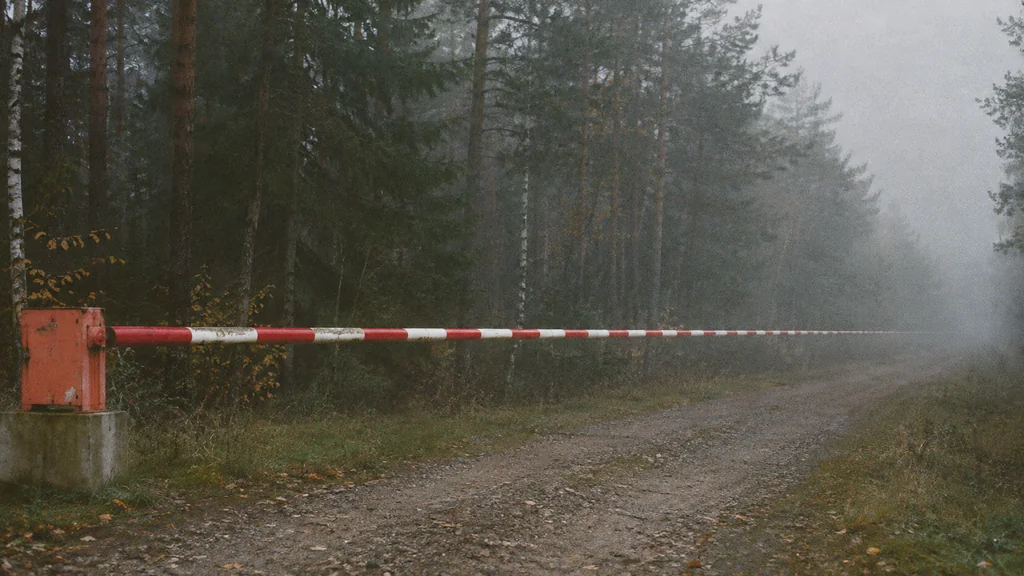
A national alert stretches across a border where the intelligence remains unpublished.
Image composition · tobriefPoland has moved police reinforcements, counterterrorism officers among them, into Warmian-Masurian province, which borders Russia's Kaliningrad exclave, and into neighbouring Podlaskie (RMF24). The stated reason is an intelligence warning of possible sabotage that only the national police chief has described in public. Nothing in the public record shows that Poland's neighbours received the same warning or responded to it.
A warning the public has not seen
Marek Boroń, Poland's inspector general of police, calls the operation preventive. He says officers from several provinces are working with the army, the Border Guard and intelligence services to protect residents and key sites. When TVN24 asked for details, police headquarters replied that the operation was secret (TVN24). Boroń has given no headcount, no patrol locations and no end date.
He is the public source for the warning itself. In his account, Poland's Military Intelligence Service and allied services flagged possible sabotage near the Russian border during the last week of October, with armed groups crossing the border as one scenario (RMF24). He has not said which ally raised the alarm, what the target might be, or how likely he considers a crossing.
Warsaw's strongest argument lies in the kind of threat it describes. Small sabotage teams, the sort a government can disown afterwards, do not gather visibly at a border before they act. Guarding facilities in advance is therefore a defensible choice. Poland had already kept its national alert levels raised, and has now extended them until 30 November (Government Security Centre).
The neighbours moved earlier, on their own reading
Kaliningrad's position explains why a threat there concerns more than Poland. The exclave sits between Poland and Lithuania, beside the Suwałki corridor, the narrow strip of land allied reinforcements would use to reach the Baltic states. Moscow has already turned it into a pressure point, warning NATO in a letter that it would use its full arsenal, nuclear weapons included, if allies tried to isolate Kaliningrad (To Brief).
Lithuania offers the clearest comparison. It sent a small army unit to help its border guards on 8 October and extended the mission on 16 October. Its Defence Ministry said at the time that military intelligence saw no significant change in Kaliningrad (Lithuanian Defence Ministry, Lithuanian Defence Ministry). Both decisions came before the week in which Boroń says the warning arrived.
Other activity in the region was either ongoing or scheduled in advance. German electronic-warfare troops stationed in Lithuania were monitoring military movements around Kaliningrad and Belarus, Reuters reported on 28 October. Latvia had planned a NATO exercise in its east for 26 October to 8 November (Latvian Defence Ministry). None of these governments has publicly confirmed Poland's specific warning or announced a new step because of it.
The one public military assessment from that week addresses a different danger. Germany's army chief, Christian Freuding, said on 29 October that he saw no indicators of a limited Russian attack (FAZ/dpa). His remark concerns a military incursion rather than a covert sabotage plot, so it neither supports nor refutes Boroń's warning.
What the record supports
Poland's response so far remains national. Boroń describes intelligence passing between allies. What followed, according to the public record, was a Polish police operation run from Warsaw.
The finding holds with one caveat. Poland has made a real deployment on an intelligence claim the public cannot assess, and the neighbouring moves on record do not corroborate that specific claim. The caveat is that secrecy may have sound reasons, since naming an ally or a target could expose sources or tip off the people being watched.
That reasoning does not cover everything. Police headquarters and the government in Warsaw can say what kind of threat the deployment is sized for, and when they will review whether it is still needed, without exposing anyone. Until they do, the armed crossing remains one scenario in an unpublished briefing, and no crossing has been publicly reported.
Details about this article
- Model:
- claude-opus-5-5
- Generated:
- 11/3/2026, 1:40:00 AM
- Pipeline run:
- eu_pipeline_20261103_005009
- Watermark:
- SynthID (Google's invisible watermark)
- Human review:
- None before publication