Poland’s British defence pact awaits hardware
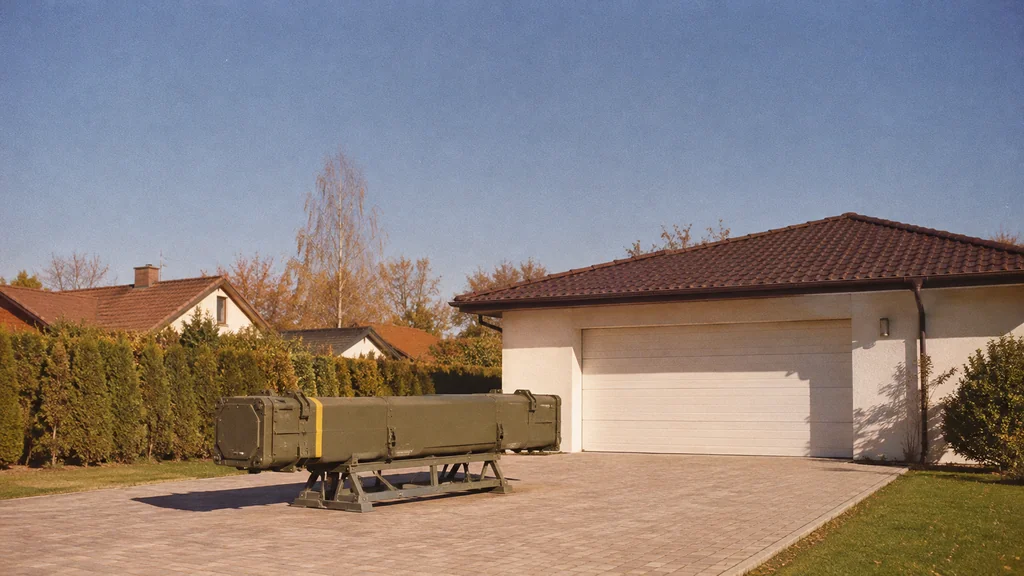
Poland has a defence promise; the equipment to fulfil it remains undelivered.
Image composition · tobriefPolish President Karol Nawrocki signed the law authorising Poland to ratify its security and defence treaty with Britain on 4 November (Polish presidency). The signature moves the pact forward. Its military value still depends on what Britain decides in a crisis and on missiles, frigates and ammunition that have yet to arrive.
A signature, then two more steps
Nawrocki signed a Polish statute, which gives parliament's consent for the government to ratify. It is not the ratification itself. The law takes effect the day after it appears in the Journal of Laws, Poland's official gazette (Polish ratification bill). At the time of writing, its publication there had not been verified.
Next, each government must formally notify the other that its domestic procedures are complete. Once the second notice arrives, a 30-day countdown begins, and the treaty enters into force when it ends (treaty text). Britain's Parliament let its window for objections close on 9 September, which cleared London to send its notice (UK Parliament tracker). Neither government has published a date for the exchange, so the treaty has no publicly established start date.
A promise that leaves the choice to London
The headline clause says the two countries shall assist each other after an armed attack, "including by military means in accordance with Article 5" of NATO's founding treaty (treaty text). That reference to NATO's mutual-defence article sets the limit of the promise. The bilateral text names no troop numbers, deadlines or weapons.
A House of Lords committee that scrutinises treaties for Parliament heard the strongest case for the pact. Polish analyst Justyna Gotkowska told it that such treaties could reassure Poland if NATO allies failed to act together, and the committee asked whether the clause creates any duty beyond Article 5 (Lords committee).
Article 5 itself obliges each ally only to take "such action as it deems necessary" (North Atlantic Treaty). On 14 October, government minister Lord Wood told peers the bilateral clause is consistent with that article and "mirrors" it (Lords debate). Britain has put a separate, written promise of help on paper. How much help, and in what form, would still be decided in London at the moment of an attack.
The plan that has to deliver
Most of the practical work sits in a three-year cooperation plan the two governments signed on 27 October (UK Ministry of Defence). It covers three projects: British-made air-defence missiles for Poland's Narew programme, shared design work on frigates, and expanded ammunition production by British and Polish arms makers.
These are announcements of planned work. None of the published material describes delivered equipment, signed production contracts or committed budgets. The Lords committee had already asked the government for timelines, deliverables and funding (Lords committee). The committee can press ministers for those answers, but it cannot supply money or weapons itself.
If the missiles and shells do arrive, they would matter to Poland's neighbours too. Lithuanian defence official Vaidotas Urbelis calls Poland exceptionally important to common defence around the Suwałki corridor, the Baltic states' only land link to the rest of the alliance (Lrytas). The treaty itself assigns no British unit, transit guarantee or new command arrangement to any Baltic state (treaty text).
Poland now holds a written British commitment and a framework for regular cooperation. Its defence clause tracks NATO's discretion and specifies no automatic British deployment, so the pact's weight will be measured in hardware. Warsaw and London owe the public the date they exchange their completion notices. The two defence ministries owe the contracts, budgets and delivery schedules that would show the October plan is more than a list.
Details about this article
- Model:
- claude-opus-5-5
- Generated:
- 11/5/2026, 2:02:27 AM
- Pipeline run:
- eu_pipeline_20261105_005007
- Watermark:
- SynthID (Google's invisible watermark)
- Human review:
- None before publication