Poland’s online takedown powers hit a veto
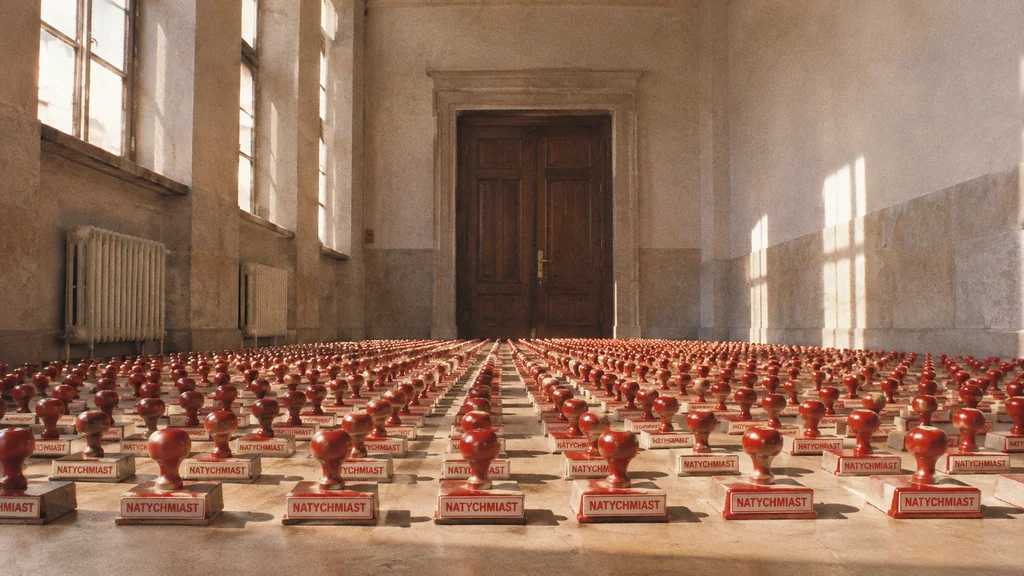
In Poland, immediate removal orders could take effect before a judge hears an objection.
Image composition · tobriefPoland can still police online platforms under EU rules, but President Karol Nawrocki has stopped officials from ordering some posts taken down before a judge looks at the decision. He vetoed the bill on 13 November, arguing that it joined an EU obligation to a tool that could be used to censor political speech (President of Poland). EU law is unaffected. The open question is domestic: how fast a Polish regulator may act against speech before a court has a say.
What Poland's watchdog can already do
Since 6 November, the Office of Electronic Communications (UKE) has served as Poland's Digital Services Coordinator, the national enforcer of the Digital Services Act (DSA, the EU law setting duties for online platforms) (UKE). It can investigate and sanction platforms, and it takes user complaints, including complaints about companies based elsewhere in the EU.
Those powers come from a law Nawrocki signed in September (Dziennik Ustaw), and the DSA itself applies directly in every member state, so no national veto suspends it. UKE still has no procedure for ordering action against one particular illegal post. The regulator says that piece was deliberately left for a later bill.
The fast lane Nawrocki objected to
The vetoed bill was that later piece. It would have let UKE, or the broadcasting regulator KRRiT for video services, order platforms to act against content linked to listed offences, from child sexual abuse material and grooming to fraud and trafficking. The poster and the platform could challenge an order in an ordinary court within 14 days, but some orders took effect immediately, so a judge would see them only after the content was gone (Sejm bill text).
The Senate, Poland's upper house, extended that fast lane to political threats. Under its amendment, violence or threats motivated by grounds including political affiliation could draw an immediate order whenever police or prosecutors asked for one. The Sejm, Poland's lower house, accepted the change on 22 October (Senate amendments).
That change gives the president's objection real footing. A bill presented as a shield for children and fraud victims would also have let police trigger takedowns of speech touching on politics, with the court arriving afterwards.
His sharper warning was that one illegal comment could take down an entire news site (President of Poland). That points to a separate clause letting internet providers block whole domains. One trigger applied when a service ignored a removal order after a warning of at least 24 hours (Sejm bill text). A single comment could not cause a block on its own, but a site that refused to remove it and kept refusing past the warning could lose its whole domain.
The government's strongest case rests on the top of the offence list, where abuse material and grooming spread in hours and a slow court route helps no one. Deputy Digital Affairs Minister Michał Standerski called the veto a black day for internet users (Polskie Radio 24).
What the next draft has to answer
France has already tested this trade-off. In 2020 its Constitutional Council struck down parts of the Avia law, France's online speech law, reasoning that short deadlines across a broad range of offences push platforms to remove first and leave challenges too late to matter (Conseil constitutionnel). The ruling identifies the risk in the Polish design, immediate action with late review. It does not predict how a Polish court would judge a different text.
Member states also split this job in different ways. Germany's coordinator, the Bundesnetzagentur, tells users it does not delete or block posts itself; police and specialist authorities issue removal orders, and the coordinator forwards them (Bundesnetzagentur). A DSA coordinator can therefore work without takedown powers of its own, as long as another authority holds them. The vetoed bill was Poland's attempt to decide who that authority would be.
Standerski says a new proposal will come in early 2027 (Polskie Radio 24). The president drew his line at political threats and immediate orders. The government's next text has to name the offences for which removal can take effect before a judge hears an objection, and say how quickly that judge must rule.
Details about this article
- Model:
- claude-opus-5-5
- Generated:
- 11/14/2026, 1:53:49 AM
- Pipeline run:
- eu_pipeline_20261114_005009
- Watermark:
- SynthID (Google's invisible watermark)
- Human review:
- None before publication