Polish MPs vote to rerun judgeships
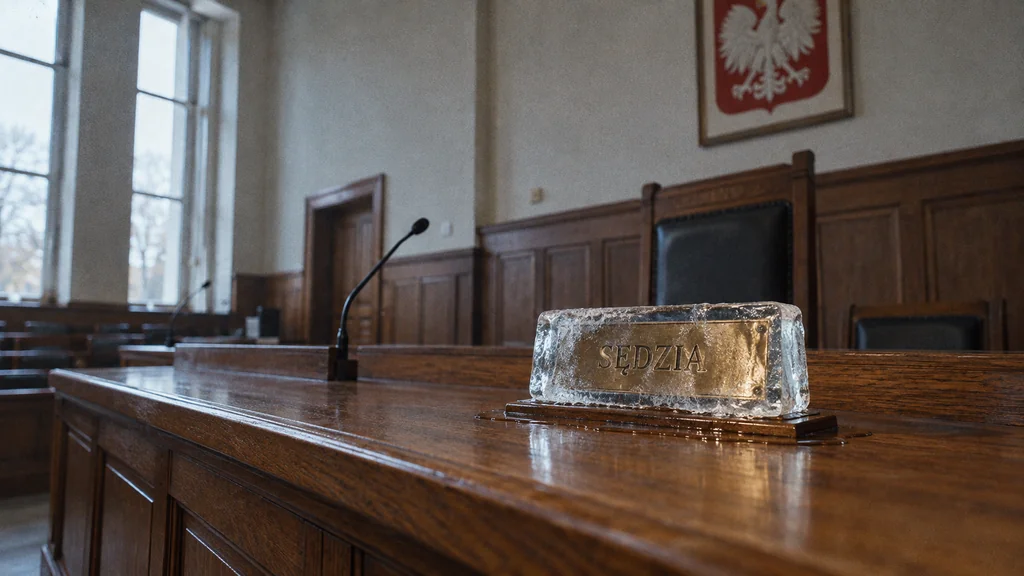
Poland’s vote leaves contested judicial appointments in place for now.
Image composition · tobriefPoland's lower house voted on 22 October to cancel a whole class of contested judicial appointments and rerun them through new competitions (vote register). No judge has lost a post yet. The bill still needs the Senate and President Karol Nawrocki, who can veto it, and the governing coalition lacks the votes to overrule him.
The Sejm, the lower house, passed the bill 231 to 200, with six abstentions (vote register).
What the bill would do
The disputed appointments all passed through the National Council of the Judiciary (KRS). This constitutional body recommends candidates, and the president then appoints them as judges. Fifteen of its members must be judges (Polish Constitution). Under the previous Law and Justice (PiS) government, parliament took over choosing those judge-members from the judiciary itself, which is why the council's recommendations are contested.
If enacted, the bill would strip legal force from KRS recommendations made between 7 March 2018 and 15 May 2026, and the posts would be advertised again (committee text). Judges who held a properly obtained post before a disputed promotion would return to that earlier post. They would then be delegated back to their current court while the new competition runs.
The committee draft limited that delegation to two years (committee text). An amendment adopted in the Sejm deleted the limit (amendment report). Without it, a judge could sit for an open-ended period in a court they no longer formally belong to, on an assignment that can be withdrawn. The Venice Commission, the Council of Europe's panel of constitutional lawyers, warned that delegating large numbers of judges can weaken their protection from removal (Venice Commission).
People who were not judges before their contested appointment would generally leave judicial service. They could apply again in the new competitions (committee text).
Past judgments generally stand. Only two groups could challenge a ruling: parties who objected to the judge in time, and parties whose cases at the European Court of Human Rights were paused after its Wałęsa judgment. That Strasbourg ruling found a systemic problem in Polish judicial appointments and required Poland to fix it (ECtHR). These parties would have one month from the publication of a justice-ministry list to file, and they would pay no court fee (committee text). The deadline starts there because the list tells litigants whether their judge's appointment falls within the bill.
The tension with Luxembourg
The government leans on the EU Court of Justice in Luxembourg. On 24 March 2026, the court told Poland to build a legal framework for deciding whether irregularly appointed judges can keep their posts (CJEU press release). The same ruling said KRS involvement does not automatically disqualify a judge. Courts must look at all the circumstances.
That is where the bill is exposed. Luxembourg asked for case-by-case judgment, and the Sejm drew a date range and cancelled every recommendation inside it. The text does not show how the two fit together. PiS and the Rozwój Plus group moved to reject the bill outright (Bankier).
A veto at the palace, and courts elsewhere
The Senate has 30 days to act (Senate guide). Nawrocki then has 21 days to sign, refer the bill to the Constitutional Tribunal or veto it. Overriding a veto takes three-fifths of the votes cast, 276 if all 460 MPs vote (Polish Constitution). Rzeczpospolita expects a veto (Rzeczpospolita), but the president has not yet ruled on this text.
The outcome reaches beyond Poland through the European arrest warrant, a request from one EU country for another to hand over a suspect. Before surrendering someone to Poland, a court must first find a systemic problem with judicial independence and then a concrete risk to that person (CJEU). In 2023, Amsterdam's court accepted the KRS concerns but still allowed surrender, because the person showed no concrete effect on their own case (Rechtspraak). A Sejm vote does not change that analysis. Only a law in force would change the facts those courts examine.
Brussels cannot push the bill through. The Commission can bring infringement cases and the EU court can impose fines (Commission), but neither can override a Polish veto.
The vote changes no appointment by itself, and Nawrocki can stop the reset from taking effect. Even if it became law, Luxembourg's insistence on individual circumstances means courts in Poland and across the EU would still have to judge contested appointments case by case.
Details about this article
- Model:
- claude-opus-5-5
- Generated:
- 10/23/2026, 1:29:51 AM
- Pipeline run:
- eu_pipeline_20261023_005007
- Watermark:
- SynthID (Google's invisible watermark)
- Human review:
- None before publication