Portugal’s investment drops 31% in budget
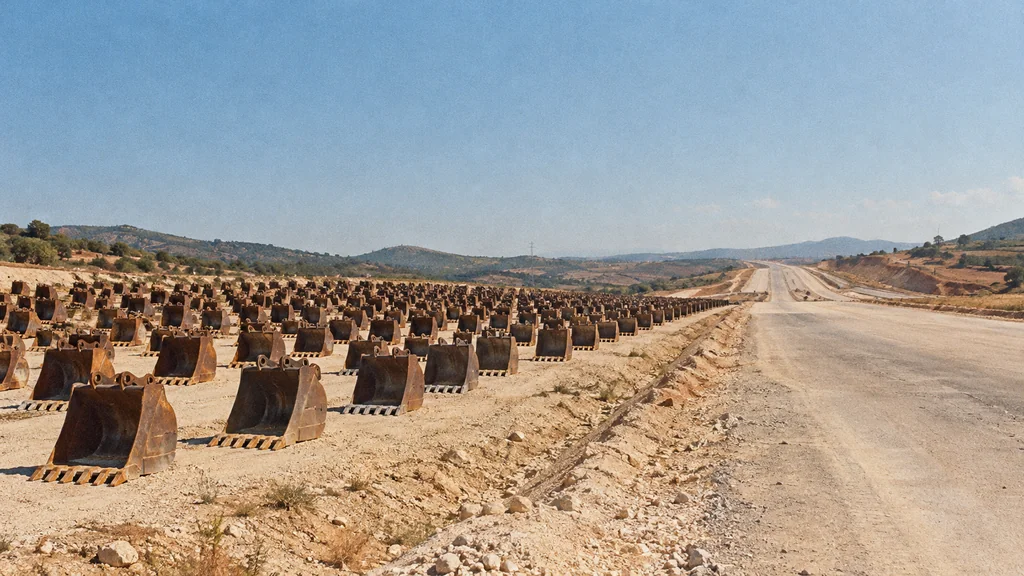
Portugal’s investment plans contract as EU recovery funding comes to an end.
Image composition · tobriefPortugal's 2027 budget plans €9.687 billion of public investment, down from €14.035 billion this year. That is a fall of 31% in nominal terms, meaning before adjusting for inflation (CFP, ECO). The same budget promises a surplus of just 0.1% of GDP (Budget annex), and that figure rests on faster growth than Portugal's fiscal watchdog expects.
Finance minister Joaquim Miranda Sarmento delivered the proposal to parliament on 8 October, and deputies have not yet approved it (Government).
Why the money stops
Public investment covers the roads, hospitals, schools and other lasting assets the state builds or buys. In the proposal, its share of GDP falls from about 4.3% to 2.8% (Budget annex).
The drop follows the end of the PRR, Portugal's share of the EU's post-pandemic Recovery and Resilience Facility. That fund paid grants only when agreed milestones were met, and EU law gave national plans until 31 August 2026 to meet them (RRF Regulation). Lisbon declared its plan complete in August, after Brussels made its final payment (To Brief).
Investment paid for outside the PRR does grow, by 6.8% in nominal terms, according to Jornal Económico. It starts from a smaller base, though, so it replaces only part of the recovery money that disappears.
The government says it will fill more of the gap by speeding up Portugal 2030, the EU cohesion programme that funds projects in poorer regions (Government). On paper, that programme has room. "Approved" projects have money allocated to them, while "executed" money has actually been spent. By 31 August, Portugal 2030 had approved about €14.3 billion of projects but executed only €5 billion (Portugal 2030 dashboard).
That unspent balance is not a spare pot. Cohesion money is earmarked for specific regions and purposes, and the rules let eligible spending run until 31 December 2029 (EU cohesion rules). Faster spending can help, but the programme cannot simply take over work designed for the recovery fund.
A surplus that depends on growth
The 0.1% surplus is a forecast, not a result. The government assumes real growth (output growth after stripping out inflation) of 2.1% in 2027 (Budget annex). The Conselho das Finanças Públicas (CFP, Portugal's independent fiscal watchdog) expects 1.8% (CFP). The OECD's first Economic Outlook of 2026 was lower still, at 1.7% (OECD).
The CFP still judged the government's figure statistically probable. It warned, however, that the risks lean towards weaker growth (ECO).
Growth matters for revenue through specific channels. Social contributions, the payments workers and employers make on wages, are budgeted to rise 7.8%, according to SAPO. The budget expects 1.4% more jobs and 4.5% higher pay per worker. These receipts depend on employment and pay before inflation, so a weaker GDP figure does not cut them automatically. A slowdown that cooled hiring or wage rises would.
The investment cut also frees up less room than its size suggests. Most of the vanishing spending was paid for with EU grants, and that grant income ends at the same time. Lower spending is therefore largely matched by lower revenue, rather than adding to the surplus. With a margin of 0.1% of GDP, even a modest shortfall in growth or contributions would turn the surplus into a deficit.
What deputies still need to know
The funding drop is clear. Its effect on individual projects is not. Aggregate budget tables show how much investment falls, but not whether any recovery-fund projects remain unfinished or how they would be paid for.
Before the final vote, the finance ministry owes deputies an answer. They need to know which projects, if any, still need money, and which budget line will cover them.
On the evidence so far, the proposal cuts public investment sharply as EU recovery money ends, and other funds replace only part of it. Its narrow surplus depends on growth faster than either the watchdog or the OECD expects. If growth comes in closer to their forecasts, little margin remains.
Details about this article
- Model:
- claude-opus-5-5
- Generated:
- 10/9/2026, 1:26:55 AM
- Pipeline run:
- eu_pipeline_20261009_005006
- Watermark:
- SynthID (Google's invisible watermark)
- Human review:
- None before publication