Putin turns tanker boardings into piracy
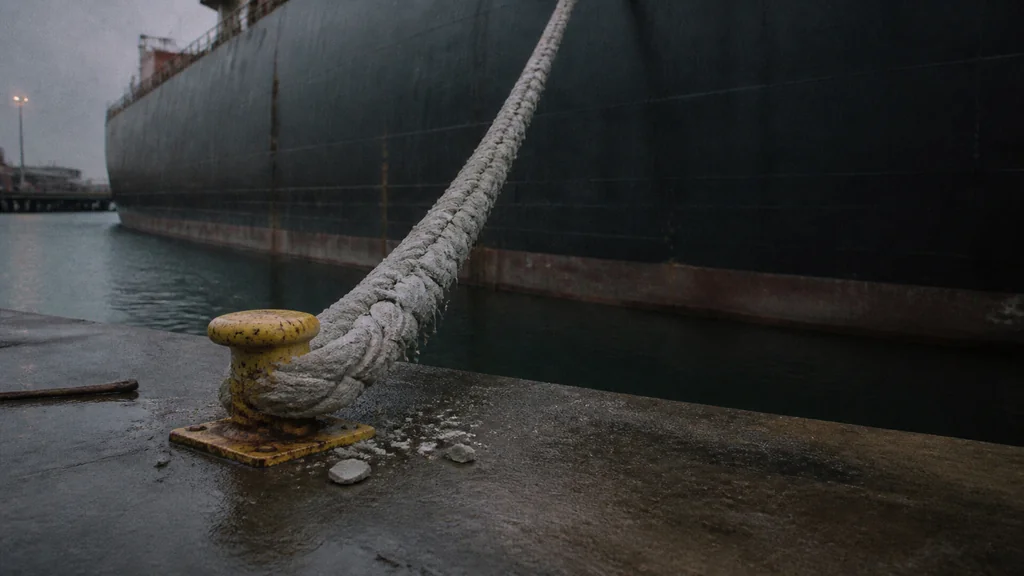
Europe’s strongest maritime pressure begins when the tanker reaches port.
Image composition · tobriefVladimir Putin warned on Tuesday that Russia would respond "in kind" if European states seized Russian-linked merchant vessels, calling recent boardings piracy (Reuters). Dmitry Medvedev went further, suggesting Russia had the right to attack Western merchant ships militarily (Portfolio). But the confiscation campaign Moscow describes — European navies seizing tankers and selling their cargo — does not match what has actually happened at sea. Russia is turning limited European boarding powers into a piracy story because the political effect is more useful than the legal claim.
What Europe has actually done
The EU's most visible action was the Toa Payoh boarding on 2 August. An Italian-led force under Operation IRINI (the EU's Mediterranean naval mission) boarded a Cameroon-flagged tanker west of Pantelleria after the captain refused radio checks (Reuters/KFGO). IRINI's own report describes the legal basis as "exercising the right of visit to verify flag state" (EEAS). In plain terms: checking whether a ship is flying its real flag. That is not a power to seize oil.
The pattern holds elsewhere. The UK intercepted the Smyrtos in the English Channel in June, an interception, not a confiscation (BBC). France has immobilised several suspect tankers since September 2025, but released the Boracay within days. No public court record confirms cargo seizure in any case (Le Figaro, Il Foglio). Boarding and temporary detention are documented. Permanent confiscation of a ship or its cargo through a legal process is not.
Ports, not the open sea
The EU's 21st Russia sanctions package, adopted 23 July, added 41 shadow-fleet vessels to its blacklist and broadened criteria to cover ships servicing listed tankers (Council, Finnish government). Some coverage suggested the package gave member states the power to sell seized Russian oil. Published EU texts do not show that power. The Commission presents its Russia sanctions as measures against named ships, companies and services, not a standalone permission to stop tankers at sea (Commission).
Europe's most reliable tools are administrative: port bans, insurance denial, refusal to supply fuel and docking services. These work quietly and effectively. On the open sea, the law gives navies far fewer options. UNCLOS (the UN Convention on the Law of the Sea) grants warships boarding rights only on narrow grounds, like a ship flying a disputed flag (UNCLOS). Norway's coast guard illustrates the gap: it asks transiting tankers for insurance documents on a voluntary basis, because it lacks the legal power to compel them (Kystverket).
Why Moscow's framing matters more than its threat
"Piracy" has a specific meaning under international law, and sanctions enforcement is not it. But as political messaging, the label serves a purpose. EU foreign-policy sanctions require unanimity (every member state must agree), and Greece already used that leverage to secure an LNG exemption in the 21st package (Euronews). Hungary has no coastline and no direct role in maritime enforcement, but its energy dependence on Russia gives the "enforcement costs too much" argument real domestic weight.
The more Moscow raises the perceived price, the more ammunition dissenting capitals hold for the next unanimity vote. According to Denmark's Børsen, Russia is already assembling a replacement shadow fleet, meaning each enforcement cycle triggers the next evasion round rather than delivering a clean stop (Børsen).
Both sides overstate their position. Europe has boarded tankers but not confiscated cargo. Russia has threatened retaliation but not seized EU vessels. Europe's real leverage sits in ports, insurance offices and service denial, where quiet refusal does more than any naval boarding. Moscow's real target is not European warships. It is the unanimity vote behind the next sanctions package.
Details about this article
- Model:
- claude-opus-4-6
- Generated:
- 8/13/2026, 1:54:21 AM
- Pipeline run:
- eu_pipeline_20260813_005005
- Watermark:
- SynthID (Google's invisible watermark)
- Human review:
- None before publication