Romania blames Russia for Brașov fire
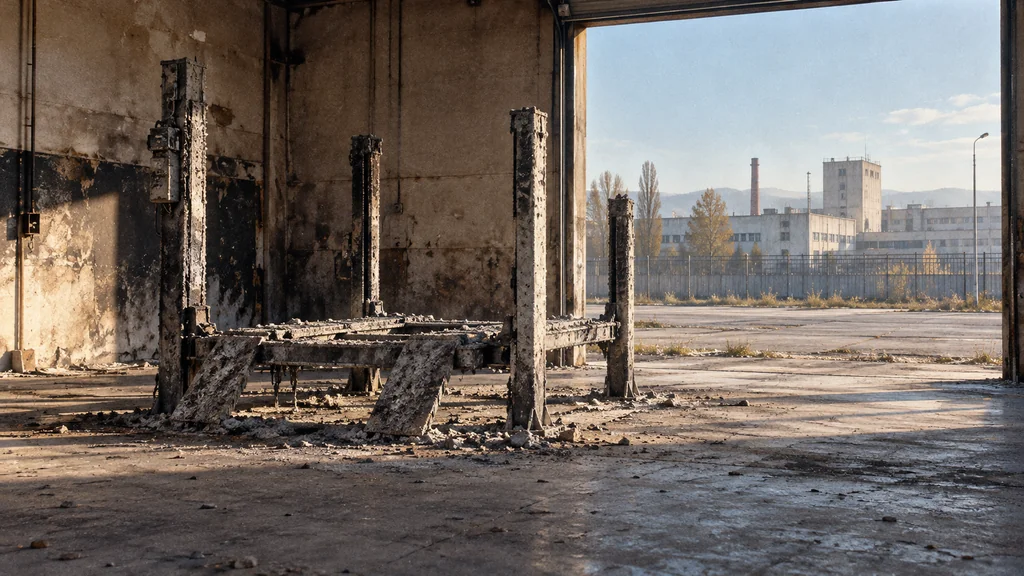
The documented losses lie beside Brașov’s arms plant, not inside it.
Image composition · tobriefRomania's foreign ministry summoned the Russian ambassador on 27 October and accused Moscow of organising a sabotage fire in the city of Brașov (Romanian foreign ministry communiqué). The public record supports a narrower story. It shows damaged civilian businesses next to a state arms factory and suspects wanted across the EU, but it does not yet show Russian state direction or lost arms production.
What burned, and what the video shows
The fire broke out before dawn on 14 September in a civilian hall beside CARFIL, a factory owned by the state arms company ROMARM (Radio România). The hall housed car-repair shops, a vehicle-inspection station and a laundry. No one was hurt.
Some headlines described a destroyed weapons or drone factory. The official announcements don't say that. Neither SRI, Romania's domestic intelligence service, nor DIICOT, its organised-crime prosecutors, said in their 26 October statements that a CARFIL production hall burned or that output stopped (SRI, DIICOT).
The only losses on record are the tenants' own estimates, which Romanian television reported as running to hundreds of thousands of euros per business (ProTV). Neither CARFIL nor ROMARM has said publicly whether production was affected.
According to the Associated Press, footage released by SRI shows a person climbing a fire escape, brief flashes and fire, then two people leaving on bicycles (AP). That supports the claim that someone set the fire on purpose. It cannot show who those people were or who sent them.
Suspects in court, Russia in an intelligence claim
Romania is running two cases that rest on different evidence. The first is criminal. DIICOT says two Belarusians and a Ukrainian living in EU countries are defendants, and that two of them were detained in Germany, allegedly while preparing similar acts (DIICOT). The third has so far only been located in Poland, so headlines saying all three were caught got ahead of the facts.
A Bucharest court issued European Arrest Warrants for the three. Under EU law, such a warrant asks another member state to arrest a person and hand them over. It settles neither guilt nor who ordered the crime (EU arrest-warrant law). German judges now decide whether the detained men go to Romania. Nobody in that process rules on Russia.
The second case is diplomatic, and it rests on SRI alone. The service says coordinators in the Russian Federation assigned targets across the region, including public and private arms makers (SRI). It has not publicly named a Russian agency, a handler, a payment route or an intercepted order. Coordinators sitting in Russia would not, on their own, prove that the Russian state gave the orders.
The foreign ministry maintains that its evidence proves Russian responsibility. The Russian embassy calls the charge unfounded and says it was shown no evidence (Romanian foreign ministry communiqué, Russian embassy response). Summoning an ambassador is a protest. It does not disclose anything.
Other governments have shown more when publicly naming Russia. In April 2024, Czech police tied officers of Russia's GRU military intelligence to the 2014 Vrbětice depot explosions by setting out forged passport copies and the operatives' movements (Czech police). Bucharest has published nothing comparable.
Who carries the cost
As we reported when SRI first made its claim (To Brief), Romania's answer has been more guards. The Interior Ministry says it stepped up patrols around critical infrastructure, arms plants, major transport routes and large logistics depots (News.ro). It has published no list of sites and no staffing figures.
That leaves out the people who actually lost money in Brașov. The reported damage fell on the civilian neighbours of a defence plant. Romania has not said whether its extra security covers premises like theirs.
The European dimension comes from where the suspects are and what Romania is asking of its allies. The suspects sit in Germany and Poland, and Bucharest wants other capitals to read Brașov as part of a Russian campaign against arms production. So far, Romania has pursued named suspects across borders. Its public evidence has not established Russian state direction or any loss of arms production. SRI may hold intelligence it has not released. Until it shows some of it, and ROMARM says whether its factory lost output, other European governments have only Bucharest's word for the larger claim.
Details about this article
- Model:
- claude-opus-5-5
- Generated:
- 10/28/2026, 1:27:49 AM
- Pipeline run:
- eu_pipeline_20261028_005008
- Watermark:
- SynthID (Google's invisible watermark)
- Human review:
- None before publication