Romania faces winter with both reactors off
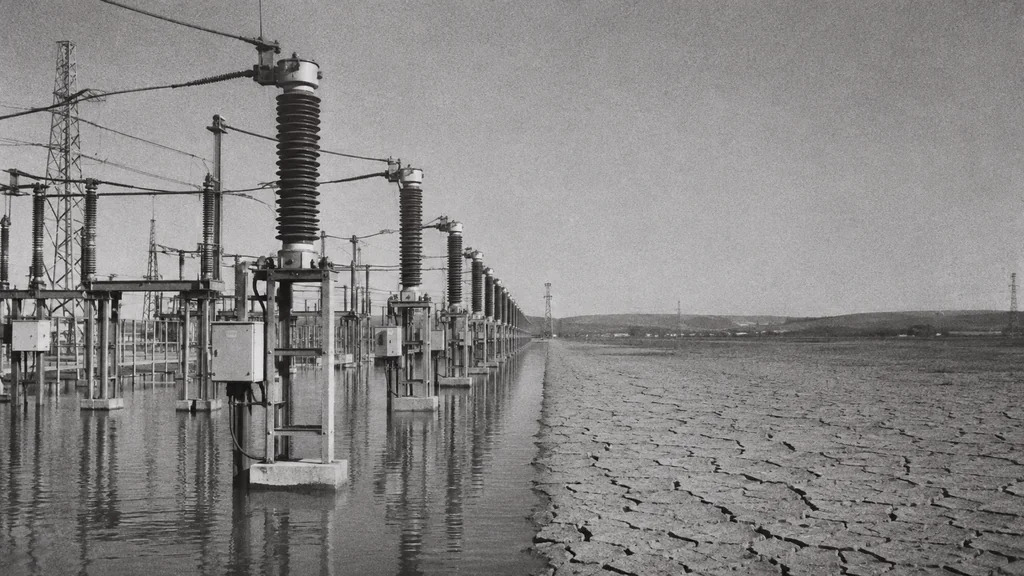
At Cernavodă, the grid waits for water that has yet to return.
Image composition · tobriefRomania is entering winter without its only nuclear plant, and imports are filling the gap. On 28 October its power plants produced an average of 5,462 megawatts (MW, the rate at which power is delivered) while the country used 6,648 MW. Net imports of about 1,185 MW covered the difference (grid-data compilation), and the figures differ by one megawatt only because each average is rounded. The government has a winter plan. It has not shown that the plants still running, plus imports, can carry a cold evening.
Why the reactors stay off
Both units at Cernavodă remain shut with no restart date. Together they have a rated capacity of about 1.41 gigawatts, meaning the most they can produce at full power, which is not the same as the output the grid has actually lost (Nuclearelectrica). Unit 1 stopped on 28 July and Unit 2 on 13 August (Profit.ro).
The cause is cooling water. The plant pumps Danube water through its system to carry away waste heat, and the drought has left the river too low to feed those pumps reliably. On 29 October the operator reported a rise of about 10 centimetres in its intake basin. It called the rise local and said the level must hold for several days and keep climbing before it asks to reconnect (operator statement).
Energy Minister Dumitru Chisăliță floated a return for one unit around 15 November, warning that any change in forecasts could push it back (HotNews). The national emergency committee, CNSU, is not counting on it. Its 28 October decision plans November on the assumption that neither unit returns (decision text). The national hydrological institute expects below-average Danube flows into Romania through January (INHGA). There is no nuclear safety risk, as we reported when the shutdown was extended (To Brief). The risk is a shortage of electricity.
The evening Romania has to cover
A daily average blends busy hours with quiet nights, so it hides the hard part. Demand peaks between 17:00 and 21:00, when solar output fades just as households switch on lights and heating (HotNews). For November evenings, CNSU planned for demand of up to 8,500 MW (Agerpres), well above October's daily average.
Coal is the main backup. Its dependable contribution is roughly 900 MW, because limited fuel stocks cap how long units can run; a higher figure is possible only for short bursts (Profit.ro). Hydropower, normally Romania's flexible reserve, has less to give, with reservoirs below half full and a weak Danube (B1TV).
Government Decision 945/2026 creates a winter energy command for 1 November to 31 March. It aims to keep four CE Oltenia lignite (brown coal) units at Rovinari and Turceni commercially available (decision text). Available means ready to sell power. It does not guarantee full output through a cold snap.
New supply will not arrive in time. Mintia's new gas plant reached 135 MW on its first turbine's first test day, and grid operator Transelectrica expects more than 1,000 MW from it only by the end of 2026 (Transelectrica). On 30 October the government said the system was balanced and no consumption limits had been triggered (government account). That holds for the mild evenings so far.
Who pays first
Getica 95 Com, a supplier run by a court-appointed judicial administrator, had contracted power from Cernavodă. After losing it, the administrator reportedly proposed higher prices for 173 business clients and projected losses of 165.7 million lei even if the plant restarts mid-November (Cotidianul, Libertatea). The reports do not say whether clients accepted, so it remains a proposal.
Replacement power has to be bought on the market. Romania's day-ahead price (the auction for next-day delivery) was €310.02 per megawatt-hour, the energy of one megawatt running for an hour, for 2 November (price aggregator). One day's price cannot show how unusual that is. How quickly it reaches a customer depends on the contract. Fixed-price deals delay it, while deals linked to the market pass it on sooner.
Romania is covering demand today with imports, drought-hit hydropower and coal held in reserve. Decision 945 names the units to keep ready, but its published text does not estimate how many megawatts those units and imports can dependably deliver against CNSU's evening demand figure (decision text). Transelectrica and the Energy Ministry hold that calculation. Until they publish it, the plan is a list of preparations, not proof that a freezing evening is covered.
Details about this article
- Model:
- claude-opus-5-5
- Generated:
- 11/3/2026, 1:40:56 AM
- Pipeline run:
- eu_pipeline_20261103_005009
- Watermark:
- SynthID (Google's invisible watermark)
- Human review:
- None before publication