Romania’s €770 million deadline slips away
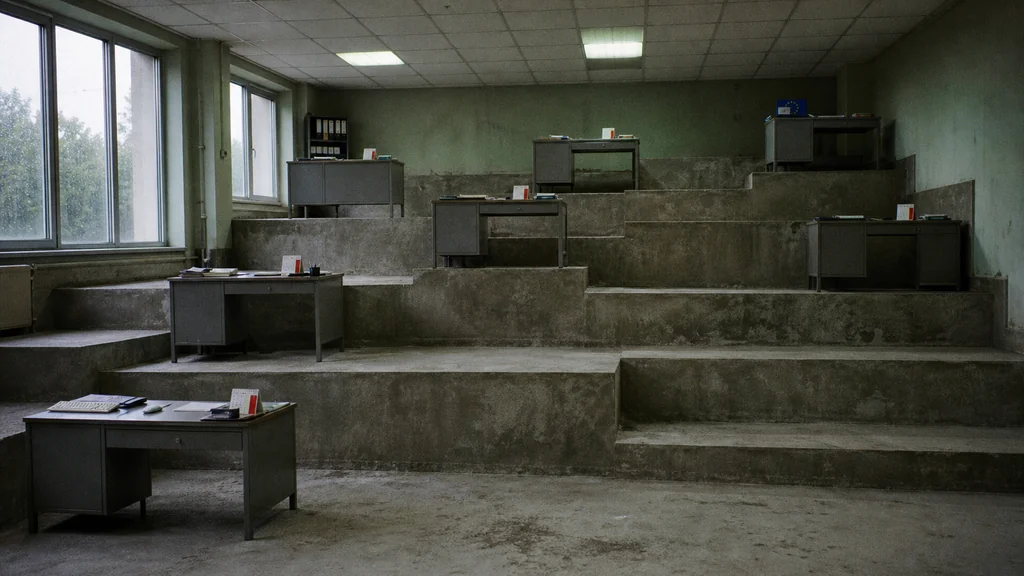
Romania’s unequal pay system puts promised European funding beyond reach.
Image composition · tobriefRomania's four main parties failed to agree on public-sector pay reform on 26 August, five days before the EU's post-pandemic recovery fund shuts its books (Romania Insider, Bloomberg). To keep €770 million in grants, Romania would need to pass the law, have the president sign it, and give the European Commission time to verify the reform, all by 31 August. That is no longer realistic.
How the payment system works, and why it's stuck
The RRF (the EU's Recovery and Resilience Facility, a post-pandemic fund worth hundreds of billions across member states) pays countries only after the European Commission confirms that a specific reform or investment target has been met (European Commission, Council of the EU). Romania wrote public-sector wage reform into its plan as one of those targets.
On 16 August, Bucharest submitted its fifth payment request, worth €2.84 billion and covering 75 milestones (Radio Romania International, Mediafax). The wage law sits inside that live file.
Normally, when a country misses a milestone, the Commission can suspend part of the payment and give the government six months to fix the problem. If nothing changes, the money is permanently reduced (EUR-Lex). But the fund's closure calendar kills that correction window. All milestones must be completed by 31 August 2026, final requests filed by 30 September, and all payments made by 31 December (Commission closure guidelines, Brussels Times). A reform adopted too late simply cannot be assessed in time. There is no six-month grace period when the whole fund closes in four months.
The Commission has not yet formally cut the €770 million. At a 20 August briefing, spokesperson Maciej Berestecki pointed to the assessment process rather than declaring the money gone (Commission briefing). But the calendar leaves almost no path back.
A broken pay system nobody could agree to fix
The wage law was supposed to solve a real problem. Romania's public-sector pay is a patchwork of base salaries, sector-specific bonuses (called sporuri) and institutional exceptions that produce wildly different pay for comparable jobs (Adevărul). The reform would create a single national grid: each job gets a multiplier applied to one reference value, so comparable work would be paid from the same scale. Many existing bonuses would shrink or disappear, capped at around 20% (Știrile ProTV). That is why unions fought it.
The fiscal problem made agreement harder. Minister Dragoș Pîslaru's drafts pushed the additional cost from an initial RON 8 billion toward roughly RON 12 billion, and the Commission asked Romania to explain how it would finance the gap (Digi24). Every leu above the envelope becomes a permanent spending commitment, not a one-off. Romania's public debt has already crossed 60% of GDP, and Fitch holds the country at BBB-, the lowest investment-grade rating, with a negative outlook that signals downgrade risk (Actmedia, SeeNews). The room for a poorly financed wage increase is thin.
PSD, PNL, USR and UDMR each found different reasons to walk away. UDMR's Kelemen Hunor argued Romania should not legislate just to satisfy Brussels. Education unions called the draft disrespectful. Court clerks threatened to shut down courts from 1 September (RRI, Digi24).
Who gains, who loses
If the €770 million lapses, the immediate losers are the schools, roads and local projects that RRF grants were meant to finance. Romania would have to borrow to replace those funds at rates shaped by a credit rating on the edge of junk, or cancel the projects outright. The fifth payment request was designed to push grant absorption toward 78% of Romania's total €13.57 billion in RRF grants (Agerpres). A failed milestone shrinks that number.
The short-term winners are the parties themselves, who avoid union backlash before elections, and every group that keeps its existing pay exceptions if reform dies. The Commission also stands to gain credibility: Bulgaria faces its own late-reform risks around governance laws (Mediapool), and enforcing Romania's milestone would show the payment system means what it says.
The unions have a real argument: a rushed pay grid can lock in new inequities, freeze real wages behind nominal ceilings, and force financing through unpopular measures like extending health-insurance contributions to pensioners (Gândul). But delay has its own price. Romania already lost €458.7 million from an earlier payment dispute, recovering only €350.7 million (Agerpres). The pattern is becoming familiar: domestic politics turns a fixable reform into forfeited EU money, and the bill lands on the communities waiting for the projects that money was supposed to build.
Details about this article
- Model:
- claude-opus-4-6
- Generated:
- 8/27/2026, 1:51:49 AM
- Pipeline run:
- eu_pipeline_20260827_005006
- Watermark:
- SynthID (Google's invisible watermark)
- Human review:
- None before publication