Russia puts NATO troops on Ukraine’s table
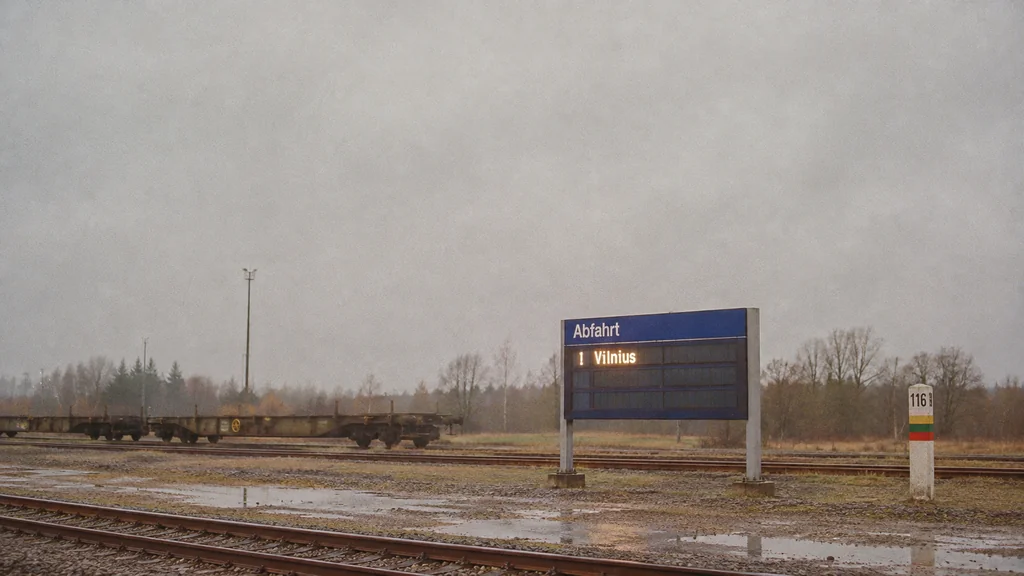
Moscow proposes a departure that Berlin and Vilnius must decide.
Image composition · tobriefA Russian negotiating paper from this week's Abu Dhabi round of Ukraine talks asks NATO to pull its forces back to their 1997 positions, according to separate reporting by the New York Times and the Washington Post (New York Times, Washington Post). Taken literally, the demand covers allied soldiers stationed in countries outside the negotiation, sent by other countries that are also outside it. Russia has put NATO's eastern deployments on the peace table, and the United States has no power to hand them over.
The Times calls the paper an informal opening position. It says a second person familiar with the talks confirmed the document is authentic, though the newspaper has not published the text (New York Times). Neither newspaper reports that Ukraine, the United States or any European government accepted the demand. According to Kyiv, the Europeans held separate meetings rather than joining the three-way session with Russia (Ukrainian presidency).
What a 1997 line would reach
Moscow's earlier position offers a clue. Its December 2021 draft treaty proposed that countries already in NATO on 27 May 1997 station no forces on other European states' territory beyond that day's levels (2021 Russian draft). In plain terms, Poland, the Baltic states and the other countries that joined later would keep their own armies. The allied troops they host would have to go.
Lithuania shows what that means. Germany is moving its 45th Armoured Brigade there permanently, and Vilnius expects nearly 5,000 German military and civilian personnel by the end of 2027 (Lithuanian defence ministry). Under the 2021 formula, that brigade would become a bargaining chip in talks Lithuania does not attend. How far the new paper reaches depends on wording nobody has published.
The proposal also rewrites what NATO promised. In the 1997 NATO–Russia Founding Act, the alliance said that under the security conditions of the time it would rely on reinforcement rather than permanently stationing substantial combat forces in new members (NATO–Russia Founding Act). That promise depended on circumstances. Moscow's version turns a date into a permanent cap.
Who can actually say yes
Talking about military restraint has a serious case behind it. The 2021 draft would have limited Russian deployments abroad as well (2021 Russian draft). The Post reports that the new points include de-escalation in international waters and airspace, and Carnegie analyst Eric Ciaramella told the paper that negotiators should test the workable elements (Washington Post). The rollback is different, because it would send allied soldiers home from NATO's eastern members.
Those soldiers answer to several decision-makers, and apart from Washington, none of them sat in the session with Russia. Each government decides where its own troops serve, so Berlin decides about the German brigade. A host country must consent to foreign forces on its soil, which lets Vilnius refuse them but not oblige Germany to keep them there. NATO itself acts by consensus, meaning any single ally can block, and that matters only if the alliance is asked to adopt a common commitment such as a deployment cap (NATO).
The most exposed governments have already answered, mostly to Russia's security demands in general rather than to the leaked paper, as they did when only unverified summaries were circulating (To Brief). Latvia's Foreign Minister Baiba Braže said on 14 November that her country would not accept limits on allied forces (LETA). In Dublin on 12 November, Bulgaria's Prime Minister Rumen Radev called the Russian position "unrealistic" and "unthinkable" (Bulgarian government).
Steve Witkoff and Jared Kushner, the US envoys who carried the talks to Putin, shape what Washington does next. They can keep the rollback alive as a term worth exploring or rule it out early. Whichever they choose, the troops stay under the control of the capitals that send them and the countries that host them. The United States can discuss Moscow's demand, but it cannot promise the withdrawal of other allies' forces.
Details about this article
- Model:
- claude-opus-5-5
- Generated:
- 11/15/2026, 1:49:08 AM
- Pipeline run:
- eu_pipeline_20261115_005007
- Watermark:
- SynthID (Google's invisible watermark)
- Human review:
- None before publication