Russia’s war dead approach 400,000
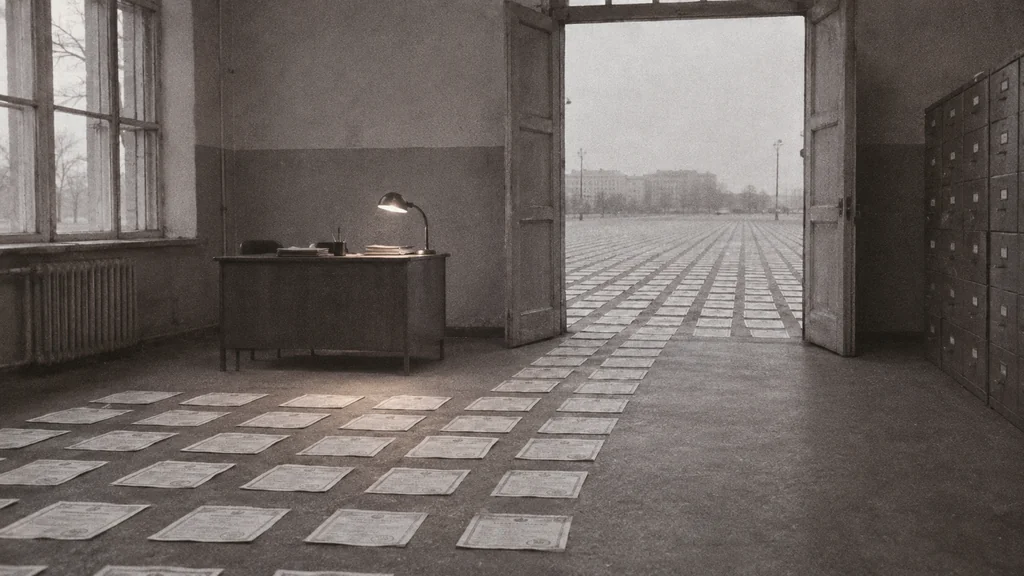
Russia’s death register records the toll, but leaves its limits unresolved.
Image composition · tobriefBloomberg examined more than 11 million Russian death certificates obtained by hackers and identified almost 392,700 records, dated from the invasion on 24 February 2022 through late August 2026, whose cause-of-death codes or written notes explicitly link each death to the war (Bloomberg). A broader reading of the same file reaches 450,100 by adding deaths that are inferred rather than recorded, such as men who died near the front without a stated cause (The Moscow Times). The material is Russia's own death registry, not an outside estimate, and the gap between the two figures is the story. One counts records; the other partly counts assumptions.
What the certificates prove
Russia's civil registry offices record age, residence and cause of death on every certificate, and some entries now carry codes or notes linking the death to the war. That does not prove the dead person was a soldier. The Belarus Cyber Partisans, one of two groups behind the breach, counted 393,881 war-linked deaths through 27 August 2026, within 1,200 of Bloomberg's total, and said a small share may be civilians or fighters in other conflicts (reform.news).
The register fills late, which undercuts recent months. The median delay between death and registration exceeded four months in 2025, and more than 2,500 war-related entries added in August 2026 concerned people who died the year before (Bloomberg). Soldiers listed as missing, never recovered, or registered under another cause never enter any tally drawn from this file.
How one file became 450,100
The larger figure adds deaths that no certificate ties directly to the war: soldiers who died of illness, accidents or suicide, civilians killed in strikes and during Ukraine's 2024 incursion into Kursk, and a block of men with unspecified causes near the front (The Moscow Times). The last category is statistical inference, not a record of individual deaths.
Rosstat, Russia's statistics agency, confirmed targeted attacks on its systems between 29 October and 1 November but denies that databases were breached or protected data leaked (The Record). The statement cited so far concerns the attack, not the death figures. Bloomberg could not cryptographically authenticate the file (Bloomberg), but its aggregates matched Rosstat's published totals within 0.1% for 2021, 0.2% for 2022 and about 1% for 2023 (LiveMint). That fit argues against wholesale fabrication.
Paying to replace the dead
A toll this large matters for the war only if Russia can replace it. Regional payment data tracked by researcher Janis Kluge recorded about 263,000 new contract signatures between January and September 2026, down from 292,000 a year earlier, while the average signing bonus approached 2 million rubles, nearly 30% higher (Foreign Policy). Fewer men, bought at a higher price.
In September, Germany's SWP institute judged that roughly 1,000 contracts a day could replace the soldiers killed or wounded at the front, keeping units near their current strength, but were too few to build the reserves a new offensive would need (SWP). The number matters in European capitals because it feeds a practical debate over how long Russia can sustain the fight, and how long Western support for Ukraine must run.
Every method lands in the same order of magnitude, though each covers a different population and period. Mediazona and BBC Russian have identified 285,881 dead soldiers by name, a documented minimum, while a statistical model estimates about 352,000 military deaths through December 2025 by comparing the number of fighting-age men in inheritance records against pre-war levels (en.zona.media, en.zona.media). The strongest conclusion the records support is that the toll is in the hundreds of thousands, whether the leaked file is trusted or not. Moscow has absorbed that cost so far, paying a rising price for replacements. The register shows the size of the bill; what no one can read from it is how long Russia can keep paying.
Details about this article
- Model:
- deepseek-v4-pro
- Generated:
- 11/9/2026, 2:12:02 AM
- Pipeline run:
- eu_pipeline_20261109_005008
- Watermark:
- SynthID (Google's invisible watermark)
- Human review:
- None before publication