Russia shifts fire to Ukraine’s substations
Europe races to replace the grid before Russia strikes again.
Image composition · tobriefRussia's defence ministry announced on 30 August it was preparing "massive strikes" against Ukraine's energy infrastructure, calling it retaliation for Ukrainian attacks on Russian refineries (Euronews, The Irish Times). The statement gave no strike date, target list or weapons package. Moscow's threat is credible because Russia has spent two winters proving it can hit the parts of Ukraine's energy system that European money, spare equipment and air defence cannot restore fast enough.
Where Russia learned to aim
What changed between last winter and this one is target selection. Nearly 60% of verified Russian energy strikes from October 2025 to April 2026 hit smaller substations, up from 31% the previous winter (The Washington Times). The shift matters because Ukraine has only about 120 major high-voltage substations. Those can be individually hardened and defended. Smaller distribution nodes number in the thousands. No air-defence system can cover them all.
Russia exploits detailed knowledge of Ukraine's Soviet-era grid to disconnect generators and slow repairs (IEA). OSW, the Polish security think tank, found the 2025–26 heating season was the first in which Russia disrupted district-heating systems at scale, turning blackouts into failures of heat, water and sanitation (OSW). The campaign no longer just cuts electricity. It makes cities unlivable.
The exchange is escalating. Zelenskyy on 29 August ordered long-range drone strikes against Russia tripled to 1,000 per day (The Guardian). Ukrainian forces hit Russian refineries at least 21 times in August, including the Kirishi facility near St Petersburg (NV). Moscow's announcement reads as both retaliation threat and winter leverage play.
Three tools, all with bottlenecks
Europe has three ways to help Ukraine survive another energy campaign. Each has limits that matter more than the announcements.
The first is electricity imports. Ukraine's grid has been synchronized with continental Europe since March 2022, allowing power to flow across the Slovak, Hungarian, Romanian and Polish borders. The amount Ukraine can actually buy and receive sits at about 2.1 GW (Green Deal Ukraina). In February 2026, imports hit a record 1,262.8 GWh, using nearly 90% of available capacity (DiXi Group). That lifeline is real but capped: imports cannot substitute for destroyed power plants.
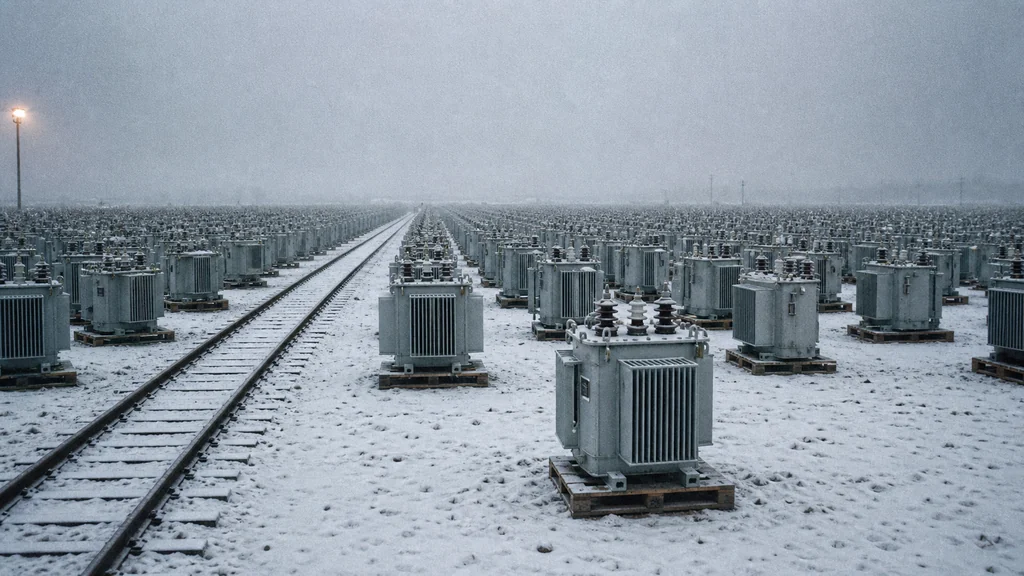
The second is the repair chain. The European Commission says previous support delivered more than 7,000 transformers, six autotransformers, more than 11,000 generators and thousands of electrical components (European Commission, EEAS). On 24 August the Commission approved €6.1 billion for Ukrainian air and missile defence (European Commission). But a June donor call acknowledged the Ukraine Energy Support Fund was fully allocated, with unfunded winter needs exceeding €650 million (energy.ec.europa.eu). The physical bottleneck is worse: large 330–750 kV transformers take 12–18 months to manufacture (DIIS). Money arrives in weeks. Working equipment does not.
The third is air defence, and the gap here is widest. Zelenskyy said on 8 August that a US agreement for monthly Patriot interceptor deliveries existed but volumes were insufficient (Euromaidan Press). A Swedish-Danish short-range air-defence system won't arrive for another 12 months (regeringen.se).
The replacement race
The Nordic and Baltic response is the most concrete. Sweden committed nearly SEK 1.5 billion (about €130 million) in June for Ukraine's energy supply, channelled through generators, batteries and IAEA nuclear-safety work (regeringen.se). Lithuania delivered 28.31 tonnes of grid equipment to Kyiv and Zhytomyr on 28 August, including transformers and surge-protection gear (Ukrainska Pravda, Censor.NET). Finland put €40 million into PURL, a NATO purchasing route that buys US-made air-defence kit for Ukraine (defmin.fi).
Russia's advantage is time. Europe can fund Ukraine faster than it can manufacture transformers or widen air-defence coverage over thousands of small targets. If deliveries of interceptors and grid hardware arrive before sustained strikes begin, that advantage narrows. The production cycles suggest it will not narrow enough.
Details about this article
- Model:
- claude-opus-4-6
- Generated:
- 8/31/2026, 1:48:46 AM
- Pipeline run:
- eu_pipeline_20260831_005006
- Watermark:
- SynthID (Google's invisible watermark)
- Human review:
- None before publication