Second strike hits Ukrainian aid shelter
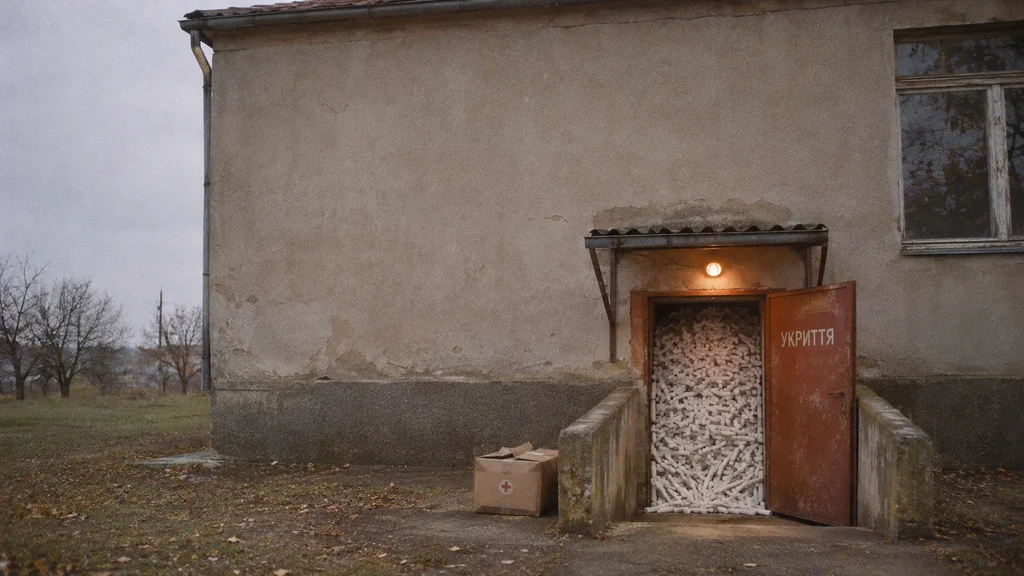
A weekly aid point became the place people sought shelter.
Image composition · tobriefUkrainian officials say Russian bombs struck a former school in Komyshuvakha, a village in the Zaporizhzhia region, where residents collected aid every week. A later strike then hit the shelter where survivors and responders had taken cover. By the evening of 2 November, President Volodymyr Zelenskyy put the death toll at 26 (Zelenskyy on Telegram, Star Advertiser). The reporting establishes who died. It does not establish what the attackers knew about who was inside.
How the strikes unfolded
The school had stopped teaching because the front line is close. The village kept using the building and its shelter to hand out aid (BBC). According to Zelenskyy, residents gathered there every Monday (Zelenskyy's evening address).
The first bombs fell as people arrived on 2 November, Ukrainian officials told Reuters. Rescuers and police then drove to the site to help.
Andriy Danyk, head of Ukraine's State Emergency Service, described what happened next. When another attack threatened, the responders went down into the shelter. A later strike then hit the school complex (Ukrinform).
Zelenskyy said the shelter sat inside the school building itself, so the follow-up strike landed on the place people had gone for safety (Zelenskyy's evening address).
Who was killed, and who is counting
Officials raised the death toll several times during the day as their accounting caught up with the search. Zelenskyy's evening figure of 26 is the latest available (Zelenskyy on Telegram).
He also said others remained under the rubble. An early tally from the regional administration listed 27 people missing, but that snapshot predates the later death counts and has not been updated (Ukraine News).
The emergency service said the dead included two rescuers and four police officers (Interfax). The rescuers were Denys Konovalenko and Oleksiy Sushchevskyi (Radio Svoboda).
International outlets reported that a school used for aid was hit and that civilians and responders died (Reuters, BBC). Every casualty figure, and the order of the strikes, still comes from Ukrainian officials.
Zelenskyy goes further. He says Russia could not have been unaware that people gathered at the school each week (Zelenskyy's evening address). That is his accusation. The reporting offers no independent evidence of how the target was chosen.
Moscow had made no public comment as of early 3 November, according to ABC. None of the coverage describes an independent examination of the site, whether by the UN's human-rights office or anyone else.
Europe's newsrooms carried the toll
Newsrooms in several EU countries covered the attack. Poland's Rzeczpospolita and Germany's Tagesschau reported 26 dead (Rzeczpospolita, Tagesschau). Belgium's VRT NWS reported at least 24 (VRT NWS). Most of these stories repeated a single news-agency dispatch, so the breadth of coverage is not independent confirmation.
None of these reports documents a statement about this strike from the Polish, German or Belgian governments. Last month, guided bombs on apartment blocks in the city of Zaporizhzhia produced the same pattern of shifting counts and little recorded official reaction (To Brief).
On the Ukrainian officials' account, which international reporters have relayed but not independently confirmed, people who came to a known weekly aid point were killed. So were the rescuers and police who came for them, struck again in the shelter where they had taken cover. Whether the attackers knew who was inside remains Zelenskyy's charge, and nothing in the reporting so far verifies it.
Details about this article
- Model:
- claude-opus-5-5
- Generated:
- 11/3/2026, 1:40:38 AM
- Pipeline run:
- eu_pipeline_20261103_005009
- Watermark:
- SynthID (Google's invisible watermark)
- Human review:
- None before publication