Serbia’s main refinery seeks state crude
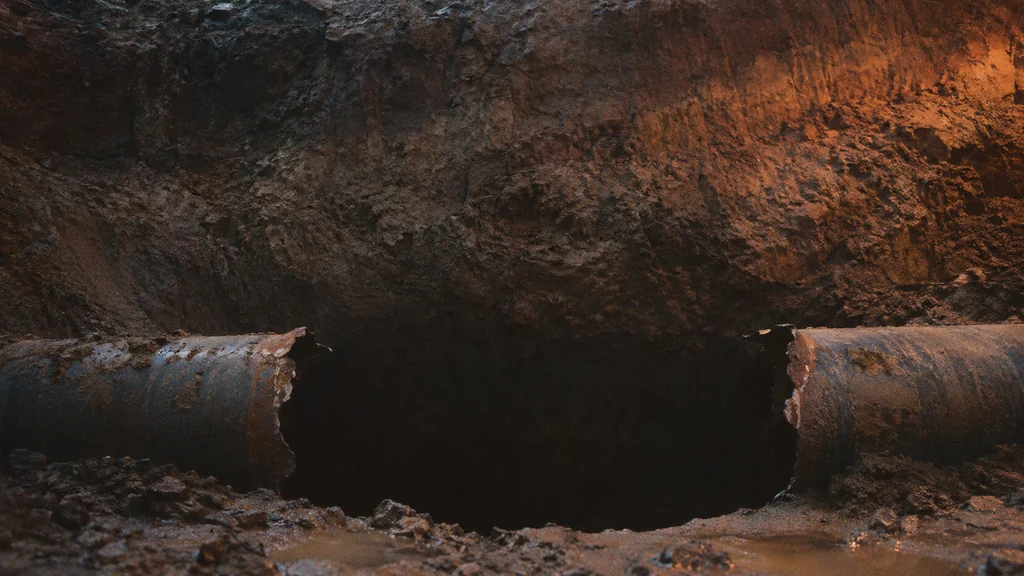
A short break in Croatia stops crude on its way to Serbia.
Image composition · tobriefA crack about 50 centimetres long in a field in eastern Croatia has stopped crude oil reaching Pančevo. That refinery supplied about 80% of Serbia's fuel market, according to a 2025 IMF estimate (Croatian environment ministry, IMF). The line has been shut since the accident on 6 November, and JANAF, the Croatian pipeline operator, has given no date for restarting it (JANAF, HRT). Until crude flows again, Serbia has to cover the gap with state reserves and possibly more expensive imported fuel, for a period nobody can yet measure.
A break on the branch that serves Serbia
The damage came from routine work. An outside contractor working on JANAF's Adriatic crude pipeline hit the line near Nova Gradiška, and JANAF closed the valves on either side of the break (JANAF). A large volume of oil leaked onto farmland. That spill is a local clean-up job. Serbia's problem is the crude that can no longer get through.
Tankers unload crude on the Croatian coast, and the pipeline carries it inland to Sisak, where it splits. One branch runs north to Hungary. The other runs east to the Serbian border, where Serbia's pipeline company Transnafta takes the oil on to Pančevo (Transnafta). The crack sits on the eastern branch, which is why MOL, Hungary's main oil company, said Hungary's supply was unaffected (Telex).
What the refinery is saying
NIS is the Russian-controlled Serbian oil company that owns Pančevo. On 9 November it told N1 that processing was running to plan, but by 12 November it said only that it was adapting operations to information from JANAF (N1, N1). Unnamed refinery sources told the same outlet that output had already been cut and that a full stop was being prepared.
The same sources expected no crude before early December. JANAF has confirmed nothing of the kind: its update that day had crews still draining oil from the isolated pipe, with repairs to follow and no restart date (HRT).
The firmest move came on 12 November, when NIS asked the Serbian state for access to crude from state reserves (Tanjug). The request shows NIS is preparing for a longer disruption. Because it published no quantities, the request does not show when its stocks would run out.
Who pays if the repair drags on
Serbia's own oilfields cannot replace the pipeline. In 2025 Pančevo processed 2.278 million tonnes of imported crude, against 700,000 tonnes from domestic fields (NIS annual report).
The fallback is to buy finished petrol and diesel abroad and bring them in by road and river, leaving the refinery idle. In 2025 the IMF modelled a hypothetical outage of this kind. It found that such imports could cover at most 80% of consumption, and that they would cost roughly 25% more than producing the same fuel at Pančevo (IMF). Even in that scenario, imports alone leave part of demand unmet. The extra cost is a model estimate for the economy, not a pump price, and no rise at the pump has yet been linked to this accident.
Who feels that cost depends on who absorbs it. If importers pass it on, motorists, hauliers and farmers pay more. The state could take some of the hit through lower fuel taxes, or distributors through thinner margins. Fuel importers and NIS's rival distributors would gain sales, while NIS would lose refining income for as long as Pančevo stands idle.
US sanctions on NIS play no part in this stoppage. The company holds a US Treasury licence that allows it to import crude and run the refinery until 11 December (NIS). The licence makes the trade legal. It cannot move oil through a broken pipe.
A long outage would leave Serbia relying more heavily on state reserves and on imported fuel that, in the IMF's scenario, costs more and cannot cover all demand. NIS has not said how long its crude stocks will last.
Details about this article
- Model:
- claude-opus-5-5
- Generated:
- 11/13/2026, 1:44:12 AM
- Pipeline run:
- eu_pipeline_20261113_005009
- Watermark:
- SynthID (Google's invisible watermark)
- Human review:
- None before publication