Serbia’s refinery runs on three US permissions
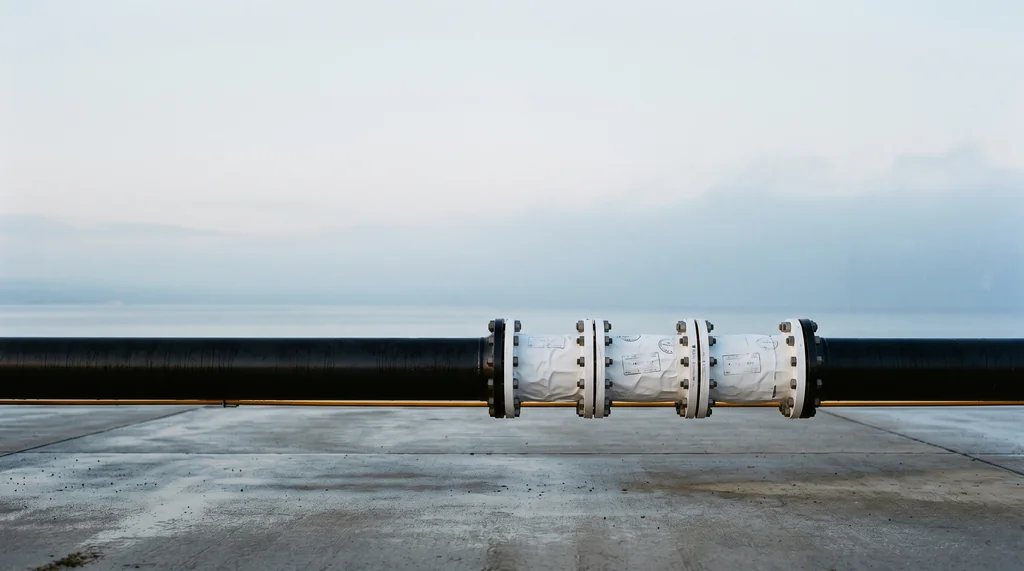
Serbia’s fuel supply holds together under three temporary American permissions.
Image composition · tobriefThe US Treasury's sanctions office, OFAC, extended three separate permissions on 28-29 August. Together they keep Serbia's only major refinery running, crude oil moving through Croatia, and Hungary's MOL group talking to Russia about buying out a majority stake. All three expire on 30 September (NIS, N1, Portfolio).
Coverage usually treats this as one headline. It is three distinct legal permissions, and any one of them failing would break a different link in the chain.
Three Permissions, Three Pressure Points
The first licence lets NIS, Serbia's national oil company, do the basics: import crude, refine it at the Pančevo plant south of Belgrade, sell fuel, pay workers and settle transactions. NIS is majority-owned by Gazprom Neft, Russia's state-linked oil producer. That Russian ownership is why the licence exists. Banks, insurers and shipping companies avoid doing business with sanctioned entities because handling their money can cost them access to the US financial system. Without the licence, no one processes NIS's payments, and the refinery stops (NIS, NIS).
The second licence covers JANAF, Croatia's state-controlled Adriatic pipeline company, which physically delivers crude from the port at Omišalj to Pančevo. JANAF's permission is narrower: the licence wording limits it to activities "customary and necessary" for transporting oil under its existing NIS contract (Index.hr). When a previous licence lapsed in late 2025, transport was blocked for weeks (Bloomberg Adria).
The third licence allows MOL, Hungary's oil group, to continue negotiating with Gazprom Neft over the Russian-controlled 56.15% majority stake in NIS. This is a talking permit, not a purchase approval (Telex, Portfolio). MOL and Serbia signed a conditional shareholder agreement in June. Under it, Belgrade would raise its stake by 5 percentage points and gain blocking rights over key corporate decisions (Caliber, Telex). But until OFAC approves the actual sale, no shares change hands. The logic for both sides is straightforward: MOL gains regional refining and retail scale, Serbia gets a non-Russian owner while keeping a say over the company.
Serbia Needs the Oil, Croatia Needs the Revenue
The stakes for Serbia are physical. Pančevo covers around 80% of the country's fuel demand, and crude reaches it largely through the JANAF route (Index.hr). NIS sold 3.023 million tonnes of petroleum products in 2025 and posted first-half 2026 net profit of 9.8 billion dinars (NIS IR, NIS IR). Serbian Energy Minister Dubravka Đedović Handanović has described the MOL-Gazprom Neft talks as being in their "final phase" (Biznis.rs). Serbian officials have said versions of "nearly done" before. Belgrade has also imposed a temporary export ban on oil products through 30 September, a sign that policymakers are managing domestic supply while the clock ticks (Newsmax Balkans).
For Croatia, the short-term interest is clear. The NIS contract accounts for more than a third of JANAF's revenue, according to Croatian public broadcaster HRT (HRT). Prime Minister Andrej Plenković has said a completed MOL-NIS deal would be "good for JANAF" because it would remove the sanctions trigger entirely (N1 Croatia). The longer view is less comfortable. JANAF earns because it is the route. A MOL-controlled refining network, which already includes Croatia's INA and Slovakia's Slovnaft, could eventually give Hungary and Serbia reason to build an alternative pipeline, shrinking Croatia's leverage as a transit country (Večernji list).
Continuity Without Resolution
The renewal record tells its own story. NIS has been re-licensed to 20 March, then to 31 July, now to 30 September. Each extension keeps fuel available and workers paid, but none brings Gazprom Neft closer to actually giving up control and exiting payment channels. The Serbian and Bulgarian cases show the same pattern: temporary licences can keep sanctioned refineries running month after month without resolving who owns the asset and where the money goes.
The licences buy continuity. They do not buy ownership change. MOL and OFAC are the two parties that can turn the talking permit into a closed deal. Until that happens, Serbia's fuel system runs on rolling US legal permission, one month at a time.
Details about this article
- Model:
- claude-opus-4-6
- Generated:
- 8/31/2026, 1:51:35 AM
- Pipeline run:
- eu_pipeline_20260831_005006
- Watermark:
- SynthID (Google's invisible watermark)
- Human review:
- None before publication