Serbia’s students have the votes, not a cabinet
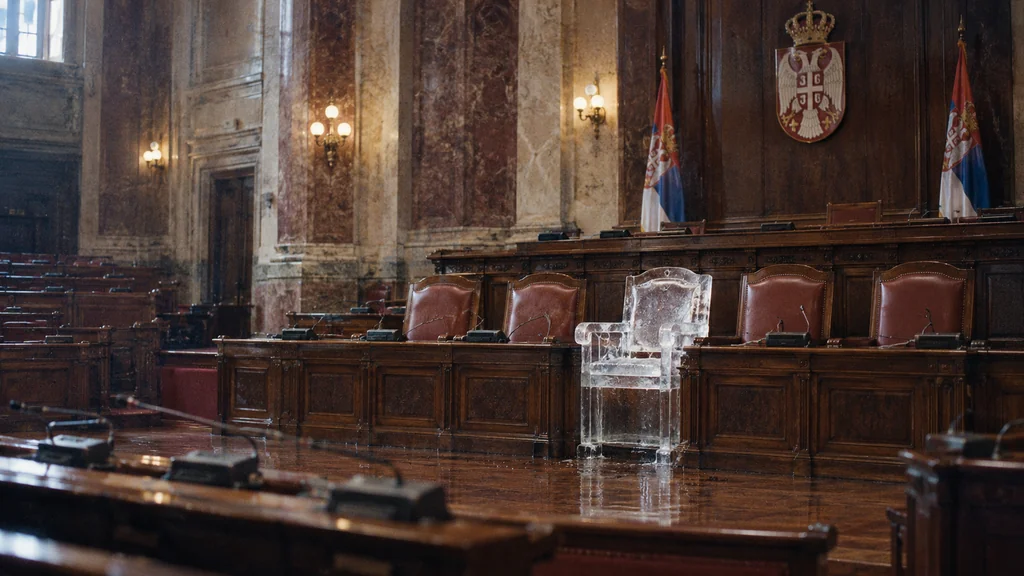
Serbia’s new majority has the votes, but no prime minister yet.
Image composition · tobriefSerbia's Students' List took 52.71% of the vote in Sunday's parliamentary election, against 39.17% for Aleksandar Vučić's United Serbia alliance, with 97.56% of polling places counted (RIK). Vučić conceded on election night (Reuters). Turning that win into a government now runs through officials from his camp, and the students have yet to say who they want as prime minister.
The government's own reading of the preliminary count gives the students a projected 140 of 250 seats and Vučić's alliance 104 (Serbian government). That clears the 126 needed to govern alone. These are projections, though, and no seats have been formally allocated yet.
The conduct of the vote also drew mixed marks, as we reported when the result came in (To Brief). OSCE observers rated election-day administration positively in most polling stations they visited. They also recorded misuse of public resources, biased broadcasting, pressure on voters and reports of violence (ODIHR).
Four steps between a vote and a cabinet
The first step is a certified count. On Tuesday, election commissioner Dušan Dinčić said about 100 polling places and the ballots from abroad were still being processed (N1). He added that no objections had been filed so far. The deadline for objections expires today, and he said final results could follow on Thursday (N1). Late complaints, or an order to repeat voting anywhere, would push that back.
Certification starts the constitutional clock. The outgoing speaker must convene the new Assembly within 30 days (Constitution). That speaker is Ana Brnabić, a Vučić ally whom the presidency described as acting president in a statement this month (Presidency). She stepped in after Vučić left the presidency to run for prime minister.
In that role, Brnabić consults the parties that won seats and proposes a prime minister. The Assembly then votes on the candidate and the whole cabinet together, and needs at least 126 of 250 deputies in favour (Constitution). That leaves her little room to override a majority. A nominee without majority support would lose, and if no government is elected within 90 days, the Assembly is dissolved and Serbia votes again (Constitution).
The students have not publicly named a candidate. Former central bank governor Dejan Šoškić, who ran on their list, told Croatia's Dnevnik that the movement will choose its government democratically (Dnevnik).
Until a new cabinet wins that vote, the old one stays on as caretaker, which is the constitutional default. The detail that matters is the police. They answer to interior minister Ivica Dačić, a Vučić ally who keeps the job through the handover, alongside caretaker prime minister Đuro Macut (Serbian government). Nothing reported since Sunday shows obstruction. Still, the people who control the police during the handover belong to the camp that just lost.
What Brussels can and cannot do
On 27 October, EU foreign-policy chief Kaja Kallas and enlargement commissioner Marta Kos called for certification and the prompt formation of parliament and government. They also asked the new government to act on the observers' recommendations, protect judicial independence and defend media freedom (European Commission).
Their welcome cannot speed up Serbia's EU membership bid by itself, because every member government must approve each step of the talks. The Netherlands has already said no to the next one. On 13 October, Dutch prime minister Rob Jetten told his parliament he would not back opening the next group of accession talks. He cited the rule of law, Kosovo and Serbia's weak alignment with EU foreign policy, and said he would watch whether the election changes things (Tweede Kamer).
That last objection touches the winners directly. In September, the Students' List said it would not join EU sanctions on Russia, citing Serbia's own historical experience (N1). That was a campaign position, and a government could revisit it. As long as it stands, it gives The Hague a reason to keep waiting.
A Slovenian threat is less solid. Janez Janša said he would block Serbia's progress until Belgrade hands over Yugoslav-era secret police and army archives, but his own office reportedly said the cabinet had neither discussed nor adopted the demand (Delo).
The projected majority gives the students a clear constitutional route to a cabinet, and the 126-vote threshold leaves Brnabić little power to steer it elsewhere. Two things still have to happen first. The election commission has to certify the count, and the Students' List has to pick its prime minister. The second step is the one only the students control, and they have not taken it yet.
Details about this article
- Model:
- claude-opus-5-5
- Generated:
- 10/28/2026, 1:27:24 AM
- Pipeline run:
- eu_pipeline_20261028_005008
- Watermark:
- SynthID (Google's invisible watermark)
- Human review:
- None before publication