Serbia’s students near power, EU vetoes remain
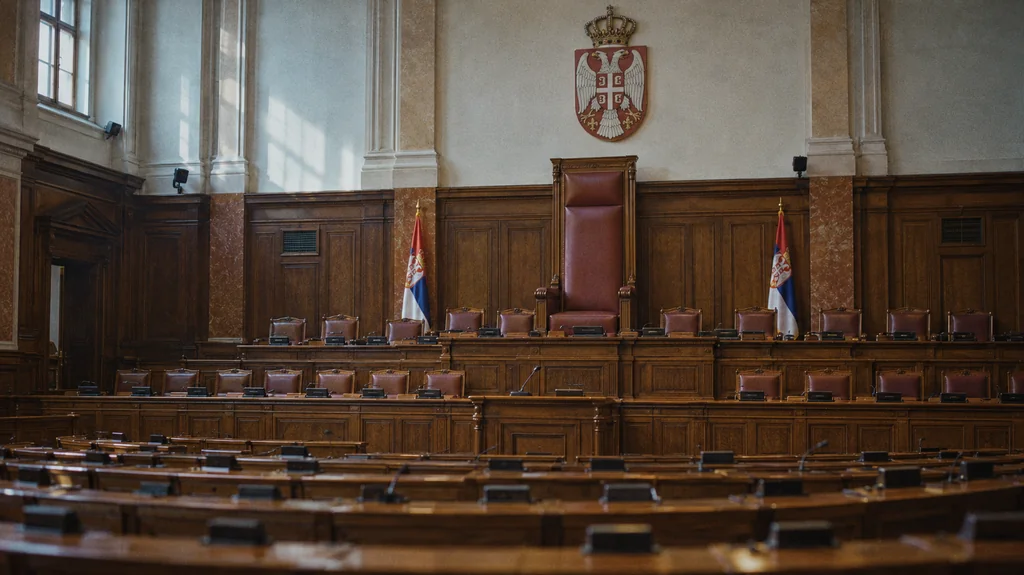
Serbia’s new majority must choose who will lead it.
Image composition · tobriefSerbia's student-led opposition appears to have won enough seats to govern alone. Preliminary results from the 25 October vote give the Students' List 52.71% of the vote and an estimated 140 of 250 seats (Serbian government), above the 126 needed for a majority (National Assembly). Two hurdles remain. The movement has not chosen who will lead it, and on Serbia's bid to join the EU, the voters do not have the final say. EU capitals do.
The result is a defeat for Aleksandar Vučić, who gave up the presidency in September to run for prime minister (AP). He conceded on election night (To Brief). His United Serbia bloc is projected to win 104 seats (Serbian government).
The figures are still provisional. By 26 October the electoral commission had processed 8,187 of 8,392 polling stations and had not proclaimed a final result (RTS). A lead of that size is unlikely to vanish in the remaining stations, but nothing is official yet.
The students still have to pick a leader
The movement has a name at the top of its ballot but no declared candidate for prime minister. Ilija Srdanović headed the list, yet no reporting identifies him as its choice for the job (Guardian).
Srdanović says the list's candidates include several credible people for premier and for ministries. He calls the choice a matter of "mutual democratic dialogue" (Avaz). No shortlist, procedure or internal vote has been announced.
That decision may matter more than any coalition talks, because the list needs no partners as long as its deputies vote together. A movement that kept power spread out during the protests now has to give one person the government.
What Brnabić can and cannot do
The nomination runs through Ana Brnabić, the Assembly speaker, to whom Vučić handed presidential duties on 28 September (Serbian government). Acting as president, she consults the elected lists and proposes a prime minister. The Constitution does not oblige her to choose the largest list's top figure (Serbian Constitution).
Her nominee must then present a programme and a cabinet and win at least 126 votes (National Assembly). That gives Brnabić room to slow things down or to put forward a name the students did not choose. On the projected numbers, it does not give her the power to impose one. A united student majority could vote down any nominee it rejects, and no majority exists without it.
Delay carries a real risk. If no government is elected within 90 days of the new Assembly forming, parliament is dissolved and Serbia votes again (Serbian Constitution). A prolonged internal fight among the students would run down the same clock.
Why a warm welcome does not reopen EU talks
Friedrich Merz, Germany's chancellor, congratulated the list and pledged active support for Serbia's European path. His spokesman added that expectations were now high (Tagesschau).
Support from Berlin cannot override an objection from another capital. Accession decisions require unanimity, which means any single member state can block (EUR-Lex). In July, eight governments, including the Netherlands, Sweden, Bulgaria and Croatia, resisted opening Serbia's next block of negotiating chapters (Euronews, RFE/RL). They cited democratic backsliding and Belgrade's refusal to join EU sanctions on Russia.
The election itself showed what that backsliding looks like. ODIHR, the OSCE's election-monitoring office, rated most of election day positively. It also documented grave misuse of public resources, voter intimidation and broadcast coverage tilted toward Vučić's bloc (ODIHR). Those practices were the outgoing government's record. A new government will be judged on whether they stop.
Another threat followed the vote. According to Delo, Slovenian Prime Minister Janez Janša said Slovenia would refuse consent to any progress until Belgrade hands over Yugoslav-era security service archives concerning Slovenia. Janša made this demand himself as a bilateral grievance. It is not an EU condition, but under unanimity it can still act as a veto.
On Russia, the winners have not moved. In September the Students' List said Serbia would keep its opposition to sanctions (N1). That is the same position several capitals objected to in July.
The vote may well change who governs Serbia. The record does not yet show that it has changed any of the obstacles EU governments named. The students act first, by agreeing on a prime minister Brnabić can put to parliament. After that, the case for reopening talks has to be made in the capitals that held back in July, and now in Ljubljana.
Details about this article
- Model:
- claude-opus-5-5
- Generated:
- 10/27/2026, 1:28:11 AM
- Pipeline run:
- eu_pipeline_20261027_005007
- Watermark:
- SynthID (Google's invisible watermark)
- Human review:
- None before publication