Serbia: Student List takes parliament and acting presidency
AI Daily Synthesis
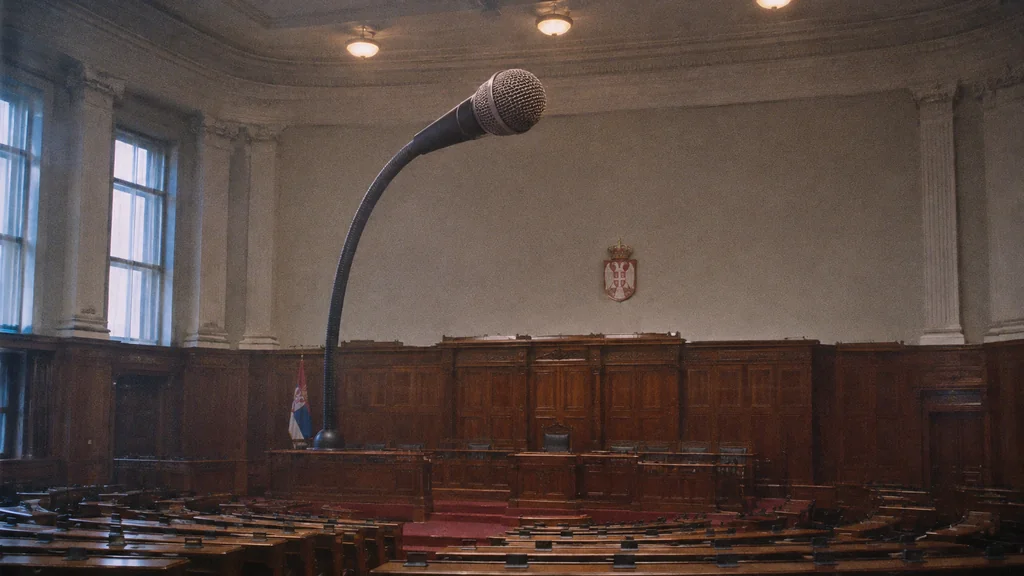
Image composition · tobriefAleksandar Cupic, a university academic from Serbia’s Student List, was elected speaker of the Serbian National Assembly on 19 November by 140 votes to 97. The post also makes him acting president, with the authority to propose the next prime minister (National Assembly, sitting, National Assembly, powers). According to Reuters, former President Aleksandar Vucic had left office to run for prime minister (Danas/Reuters). The powers of the presidency are now exercised by a candidate from the list that defeated him at the polls.
Vucic resigned on 27 September, but the early election on 25 October went against him. The Student List, which emerged from anti-corruption protests, won 140 of the 250 seats and finished more than 600,000 votes ahead of his list, which won 103 seats (Serbian Electoral Commission, BBC Serbian). Vucic conceded defeat. The transition began amid suspicion, however, after the Student List urged public employees to preserve documents that might implicate members of the outgoing government.
That suspicion reached the assembly chamber. The vote was public, and Vucic’s group nominated Stojan Radenovic against Cupic (N1, Blic). Before the MPs voted, Vucic called on the new majority to respect the Constitution, the assembly’s rules and the opposition’s rights (Tanjug). Cupic promised to be speaker for all MPs. From the speaker’s chair, though, he rebuked Vucic, and MPs from Vucic’s group stood up (RTS, Cupic’s statement, RTS, sitting). They later walked out during the vote for deputy speakers, saying they would not take part in a “farce” (Tanjug).
Five weeks until the presidential election
As speaker, Cupic convenes and chairs assembly sittings. The full assembly approves the agenda, however, and committees are formed in proportion to the strength of the parliamentary groups (National Assembly, glossary). His other office carries greater weight. Article 120 of Serbia’s Constitution says that when a president’s term ends early, the assembly speaker acts as president for up to three months (Constitution of Serbia). Until 19 November, that role was held by Ana Brnabic, speaker of the previous assembly. According to the Serbian magazine NIN, the change of officeholder does not restart the three-month period, which began when Vucic’s term ended (NIN).
The acting president’s powers are substantial: he represents the country abroad, receives the credentials of foreign ambassadors and commands the Serbian military (National Assembly). Those powers have an expiry date. The same article requires a presidential election no later than three months after the term ends, and the assembly speaker is responsible for calling it (Constitution of Serbia). Serbia therefore faces a presidential election by the end of December, in about five weeks.
The numbers for forming a government
The next step also falls to Cupic. He consults the elected lists and proposes a candidate for prime minister. That candidate presents a programme and ministers, and the assembly votes on them together, with at least 126 votes required (Constitution of Serbia). With 140 seats, the Student List does not need allies (Serbian government). The question is whether its own MPs will vote together.
The vote on 19 November offers an early indication. NIN reports that MPs from the Alliance of Vojvodina Hungarians, the Bosniak SDA Sandzak (Party of Democratic Action) and another minority party also voted for Cupic (NIN). If that account is correct, the 140 votes did not all come from the Student List. Some of its MPs did not vote for Cupic or were among the 11 absent, as 239 of the 250 MPs took part in the vote (N1). No roll-call record has been made public. We therefore do not know who they were, or whether they will also be missing from the vote that counts.
The deadline for forming a government is already running. The assembly was constituted on 17 November, and the 90 days to elect a government run from that date, not from Cupic’s election. That puts the deadline in mid-February (Politika). Cupic therefore faces two deadlines: a presidential election by the end of December and a prime minister who must win an assembly vote by mid-February. The Student List has the votes to elect a prime minister, provided it does not lose more than 14 of its own MPs (Serbian government).
Details about this article
- Model:
- claude-opus-5-5
- Generated:
- 11/20/2026, 4:26:21 AM
- Pipeline run:
- incremental_20261120_033010
- Watermark:
- SynthID (Google's invisible watermark)
- Human review:
- None before publication