Six states push refinery windfall tax
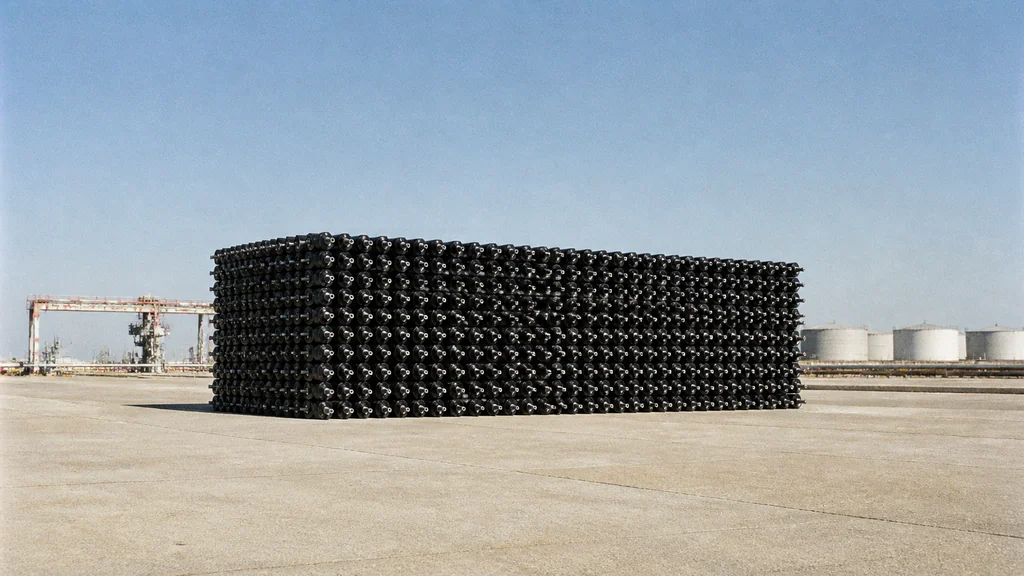
Refinery margins multiply long before drivers reach the pump.
Image composition · tobriefSix finance ministers have asked the EU to discuss taxing oil-company windfall profits. Germany, Italy, Austria, Poland, Portugal and Spain signed a joint letter to Ireland, which holds the rotating EU Council presidency (the country that chairs meetings for six months), requesting the topic be placed on the agenda at an upcoming finance ministers' meeting in Dublin (Business Recorder/AFP, DW).
The letter, initiated by Germany's Lars Klingbeil, argues that oil companies are earning profits and refining margins that outstrip the rise in crude prices (Les Echos, n-tv). But a letter requesting a discussion and a law imposing a tax are very different things.
Why six ministers cannot make a tax
EU tax measures require unanimity: all 27 member states must agree, after the European Commission puts forward a formal proposal (Article 113 TFEU, Article 115 TFEU). Any single government can block it. No Commission proposal exists, and no draft legal text has surfaced (Council decision-making).
The six do have a template. In 2022, the EU adopted a temporary "solidarity contribution" under Regulation 2022/1854 that required member states to skim at least 33% of fossil-fuel companies' taxable profits above a benchmark set 20% higher than their average over the previous four years. That levy targeted surplus profits in crude oil, natural gas, coal and refining. It was not a per-litre fuel tax. The current letter reportedly asks to draw on that precedent.
The tax case starts inside the refinery
Refining margins are the gap between the price of crude oil and the price of the petrol or diesel that refineries produce from it. When those margins widen, fuel gets more expensive before it even reaches the pump. An ECB analysis documented exactly that pattern during the recent price shock (ECB).
Bank Austria estimated that Austrian fuel prices in July would have been roughly 10 cents per litre lower without the margin widening (Leadersnet). Barclays put European refining margins at five to six times their normal level, naming Austria's OMV among the firms benefiting (Investing.com). Refiners, in other words, can make more money even when crude itself is not rising as fast as fuel.
Who gains, who loses? Drivers lose when margins widen. Oil companies and their shareholders gain. TotalEnergies repurchased nearly 1.6 million shares for about €120 million over just five trading days in mid-August (ZoneBourse). Governments may gain revenue if a levy sticks. Drivers gain only if the tax design prevents companies from passing the cost back through higher wholesale prices.
Some signatories are already acting alone
Portugal has approved a temporary 33% solidarity contribution on 2026 oil-sector profits exceeding a baseline, borrowing directly from the 2022 EU design (Xinhua, Jornal Economico). Poland tried a sharper instrument: a 60% levy on extraordinary fuel-sales profits, expected to raise around 4 billion zloty and cover 20–30 companies including state-controlled Orlen. President Nawrocki blocked it and sent it to the Constitutional Tribunal. Warsaw is now exploring a workaround: temporarily raising corporate tax for large energy firms to 30% in 2027 (Money.pl, Polsat News).
France, home to TotalEnergies, is the conspicuous non-signatory. Paris already runs a broad surtax on large-company profits covering around 300 firms and reportedly raising €7.3 billion this year (TF1 Info). It taxes big companies heavily but has chosen not to join a targeted oil levy aimed partly at its own national champion.
Would drivers actually pay less?
A surplus-profits tax is calculated after the accounting period and only on amounts above a benchmark. It is not mechanically added to each litre the way an excise duty is. Polish economists made exactly this point against the president's argument that the levy would show up at the pump (Radio ZET). But companies with pricing power can rebuild margins through wholesale pricing, and Austria's experience with a pump-price cap showed that firms offset the intervention through timing and pre-implementation price hikes (trend).
The case for the tax is real: ECB and market data show refining margins have widened beyond what crude prices justify, and several oil companies are returning that cash to shareholders. But the policy is still unbuilt. Six supportive ministers are not 27 unanimous votes, no legal text defines who pays or how much, and the ministers have identified the rent without solving the pass-through problem.
Details about this article
- Model:
- claude-opus-4-6
- Generated:
- 8/23/2026, 1:52:42 AM
- Pipeline run:
- eu_pipeline_20260823_005006
- Watermark:
- SynthID (Google's invisible watermark)
- Human review:
- None before publication