Škoda’s reactor deal awaits construction orders
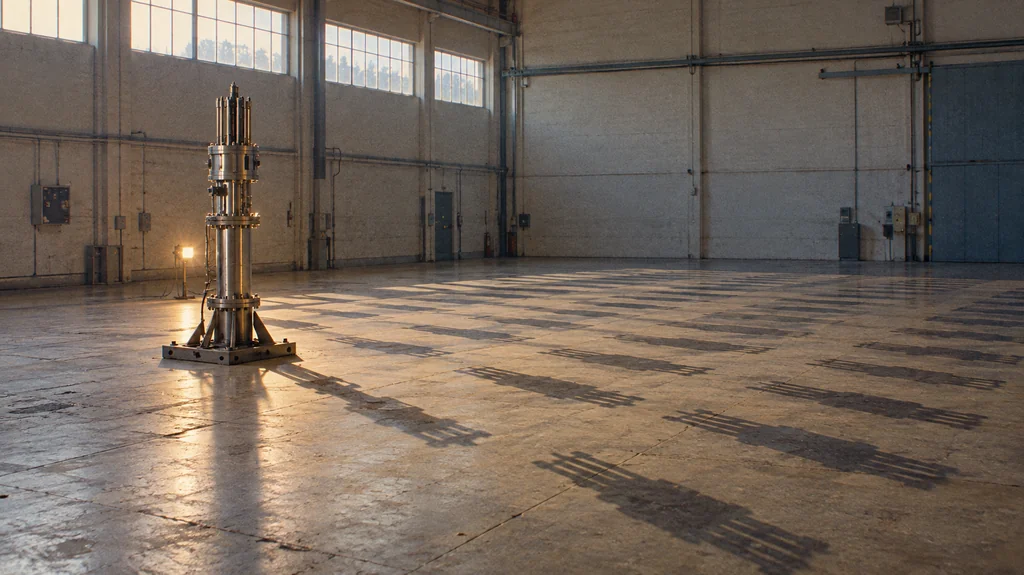
One supplier has its place; the reactors that would fill its order book await decisions.
Image composition · tobriefRolls-Royce SMR named Škoda JS, the Plzeň engineering firm owned by Czech utility ČEZ, as its only supplier of control-rod drives on 23 September (Rolls-Royce SMR). The deal covers design and testing work now. The bigger prize is repeat sales, which management put at more than a billion Czech crowns per reactor (Mugglehead), and those depend on proposed plants in Britain, Czechia and Sweden that nobody has yet ordered.
A control rod absorbs neutrons, the particles that keep a nuclear chain reaction going. Push it in and power falls; drop it fast and the reactor shuts down. The drive is the machine that moves it, and each Rolls-Royce reactor would need 89 of them (ČEZ).
Rolls-Royce's design is an SMR (a small modular reactor), meant to be built many times from factory-made parts rather than as a one-off on site. That repetition gives a single parts contract its commercial value.
What Škoda JS has actually won
The September contract covers development, prototype testing, qualification (proving the assembly meets nuclear safety standards) and preparation for repeat production (World Nuclear News). Škoda JS expected its prototype to be ready for tests around 2028 (Škoda JS). The announcement disclosed no price, no guaranteed number of units and no delivery schedule.
The commercial logic runs like this. Qualification is slow and expensive, but it only has to happen once. After that, every new reactor becomes an order for the same set of identical drives, built to a design Škoda has already proven, by a supplier competitors cannot easily replace.
That is where the billion-crown figure comes from. Chief executive Karel Bednář described more than one billion crowns per reactor as the potential value of future recurring orders (Škoda JS, Mugglehead). Without construction decisions, that fleet revenue does not exist.
ČEZ sits on both sides of the deal. The majority state-owned utility owns Škoda JS and holds a 20% stake in Rolls-Royce SMR (World Nuclear News), so its returns depend on the same reactors getting built.
The plants that would buy the drives
Britain is furthest along. On 13 April, state-owned Great British Energy–Nuclear signed a contract with Rolls-Royce SMR for the Wylfa site on Anglesey (UK government). That contract covers site design, regulatory work and planning. Equipment such as control-rod drives comes only after a final investment decision, the point at which owners commit to paying for construction.
In Czechia, environmental review at Temelín has begun: ČEZ submitted its impact documentation on 12 October (ČEZ). Its initial planning contract with Rolls-Royce excludes equipment, and the state and ČEZ had not settled who would invest.
Sweden is earliest. Videberg Kraft chose Rolls-Royce on 15 June for three units at Ringhals, signing a cooperation agreement that sets terms for design and construction contracts still to come (Mannheimer Swartling). The project still needs environmental and nuclear permits.
Who carries the risk
The public commitments differ in kind. Britain has allocated £2.6 billion to its SMR programme (UK government). Its state-owned National Wealth Fund also committed a loan of up to £599 million to finish the reactor design (National Wealth Fund).
Sweden's money is still a proposal. In April the government proposed up to SEK 1.8 billion for a 60% direct stake in Videberg, plus authority for up to SEK 34.3 billion more in equity during construction (Swedish government). Counting state-owned Vattenfall's share, public ownership would reach about 80% (SVT).
Whether any of this buys cheap electricity is unproven. The OECD Nuclear Energy Agency says factory savings need consistent designs and enough repeat construction, and warns SMR power can still cost more than alternatives such as renewables (OECD NEA). Repetition may lower manufacturing costs, yet no electricity price has been published, and Britain's assessment flags the cost uncertainty of a first-of-a-kind plant (UK government).
Škoda JS has secured real development work and the only supplier slot for a part every one of these reactors would need. The billion-crown figure is something else: prospective revenue that turns into sales only when Great British Energy–Nuclear, ČEZ and the Czech state, or Videberg decide to build.
Details about this article
- Model:
- claude-opus-5-5
- Generated:
- 11/1/2026, 1:26:39 AM
- Pipeline run:
- eu_pipeline_20261101_005008
- Watermark:
- SynthID (Google's invisible watermark)
- Human review:
- None before publication