Spain has 15 days to trace Ceuta warning
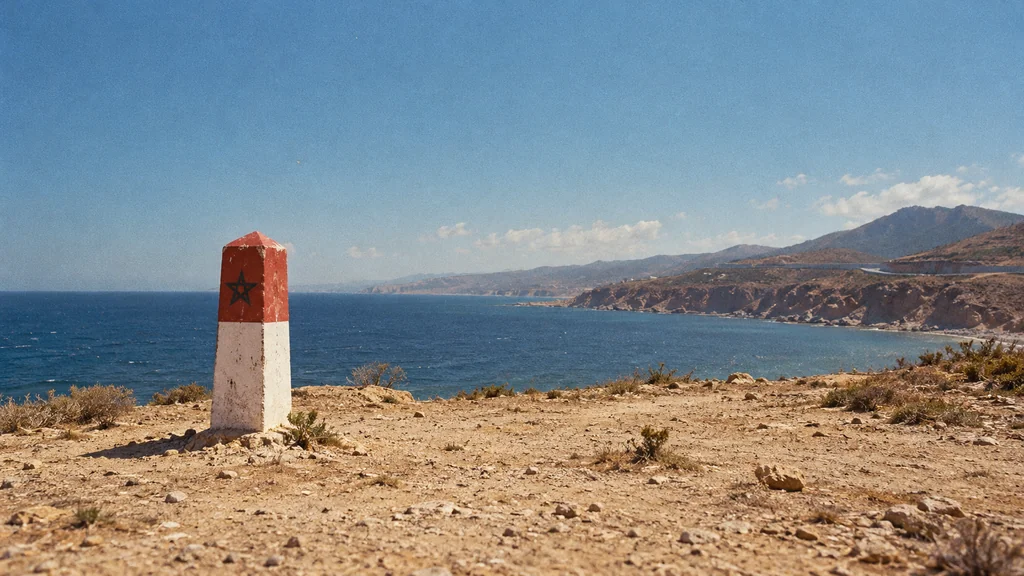
Spain traces a warning that reached Ceuta before the crossing.
Image composition · tobriefCeuta is a small Spanish city on the North African coast, and its land border with Morocco is also an outer edge of the European Union. In July, tens of thousands of people crossed into it from Morocco, and judge María Tardón has now given the Spanish government 15 days to name who received the intelligence warnings sent beforehand, when they received them, and with what proof (EFE). Her inquiry asks two questions: where did Spain's warning go, and did Moroccan officers direct the crossing or only let it happen?
A warning with a known first stop
On 29 July, an officer of the CNI, Spain's intelligence service, messaged the government delegation in Ceuta, Madrid's representative office in the city (La Moncloa). The message flagged a social-media call to cross by fence and by sea the next evening, Morocco's Throne Day. The same declassified file lists an urgent CNI note to Moroccan intelligence that night (La Moncloa).
On 27 October the Interior Ministry told the judge it had received no alert anticipating an entry "of the magnitude that occurred" (Europa Press). The wording is careful, and both statements can be true. Estimates of the crossing often ran to 70,000 or 80,000 people (EPRS), and nothing in the published file forecast anything on that scale.
Tardón wants two things the redacted file leaves out (Reuters). The names of officials who received the CNI notes would show whether the warning stopped at Ceuta's delegation or travelled up to Madrid. Spain's full exchanges with Moroccan intelligence would show what Rabat was told before the crossing, which matters because the judge is examining a possible offence against the Spanish state, and that charge depends on someone having organised it.
What the footage shows, and where it stops
A police file counts 34 visual profiles drawn from social media and news footage: 24 people in civilian clothes whom investigators suspect of organising the movement, and 10 uniformed officers (El País). The images reportedly show officers standing by, some appearing to point people toward Ceuta. The pointing is visible, but the intent behind it is investigators' reading. One clip of a man directing water-cannon trucks was filmed between Tangier and Tetouan, well away from the fence.
Three Moroccans who swam across were summoned to testify on 28 October (EFE via Infobae). Their earlier police statements are the closest thing yet to testimony from the Moroccan side. One, a former gendarmerie sergeant, picked out Youssef Haji, the senior local official in the border town of Castillejos, and described him on the phone "giving orders" (EFE via Infobae). He did not say which orders, or to whom, and said nobody told him to cross.
El País concluded that the statements place officials at the scene but describe no act proving they organised anything (El País). Other footage cuts the opposite way. RTVE geolocated video of Moroccan police firing anti-riot ammunition near Castillejos on 31 July (RTVE), which rules out any claim of total Moroccan passivity, though it shows the following day.
Prime Minister Pedro Sánchez told parliament on 3 September that the gendarmerie let people cross for roughly ten hours on 30 July (La Moncloa). In the same appearance, he said no institution had given his government solid proof that Moroccan authorities planned it.
How Ceuta reached Italy's border posts
Ceuta's fence is an outer border of Schengen, the zone in which most EU countries have dropped passport checks between themselves. Yet Moroccan police control the ground in front of it, and no EU body can give them orders. When that ground gave way, Italy imposed checks on travellers from Spain and renewed them repeatedly (To Brief). Spain answered with checks of its own until both interior ministers agreed on 22 October to let them lapse (Italian Interior Ministry).
The European Parliament's research service added a qualification that weakens the case for those checks. Most people who crossed returned to Morocco, and anyone travelling on from Ceuta to mainland Spain already faces separate controls (EPRS). The risk to Italy was narrower than its response implied, yet free movement for everyone else still took the hit.
Receipts can show who got the warning. They cannot by themselves show that Morocco stood down deliberately, or that anyone in Spain could have foreseen a crossing of that size. The record supports a narrower, firmer conclusion: Sánchez's government must account for where its warning went within the judge's deadline (EFE), and nothing presented so far establishes an order from Rabat.
Details about this article
- Model:
- claude-opus-5-5
- Generated:
- 10/28/2026, 1:27:59 AM
- Pipeline run:
- eu_pipeline_20261028_005008
- Watermark:
- SynthID (Google's invisible watermark)
- Human review:
- None before publication